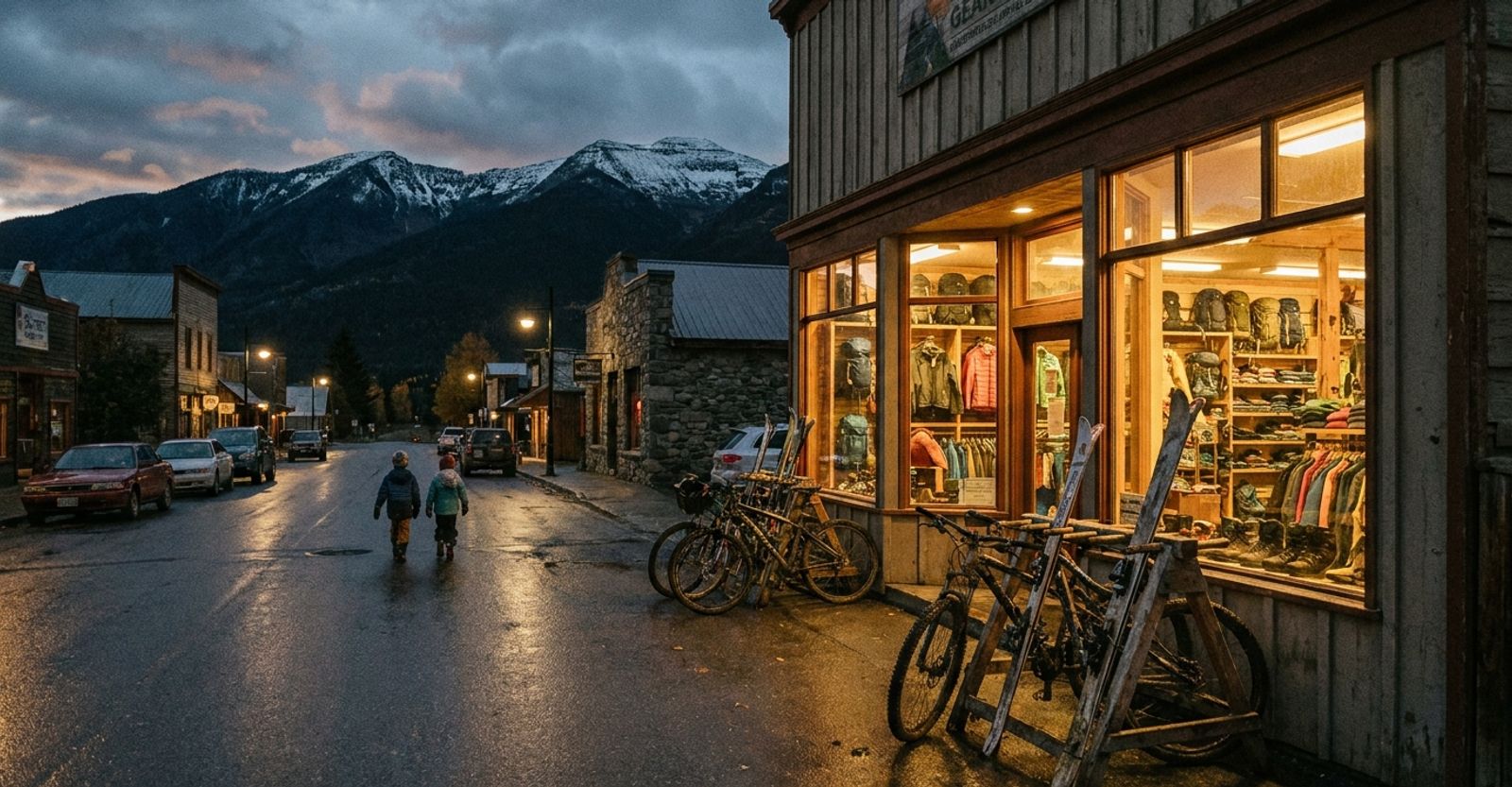
For most businesses, a slow month is an inconvenience. For an outdoor business, seasonality can define the entire economics of the company: how much capital it needs, how many people it employs, how it prices, and how much room it has to make a mistake.
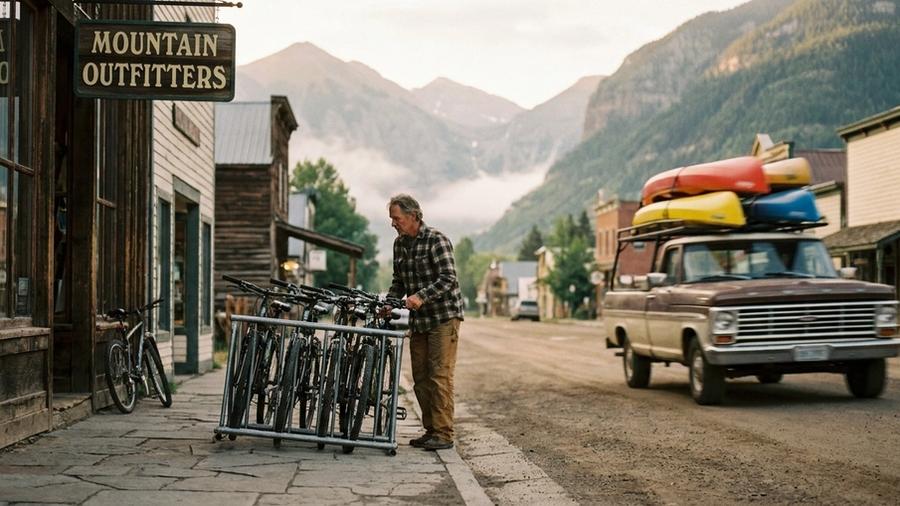
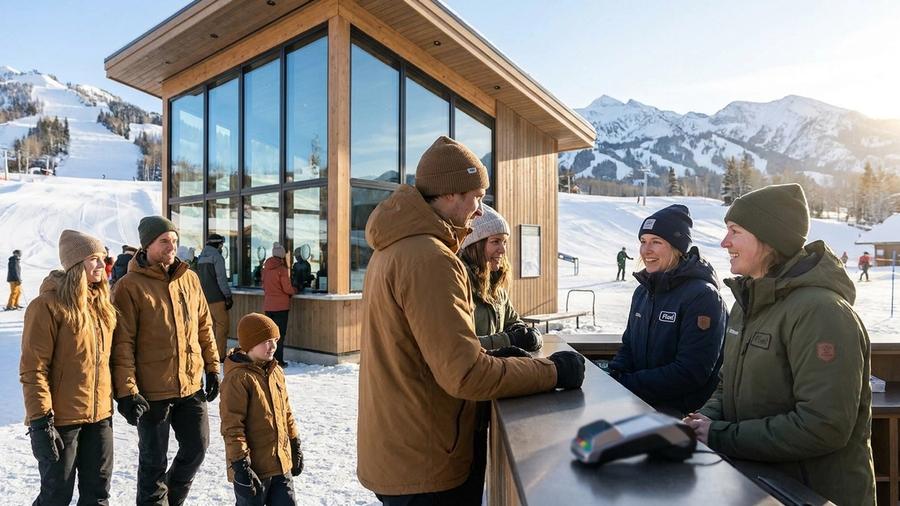
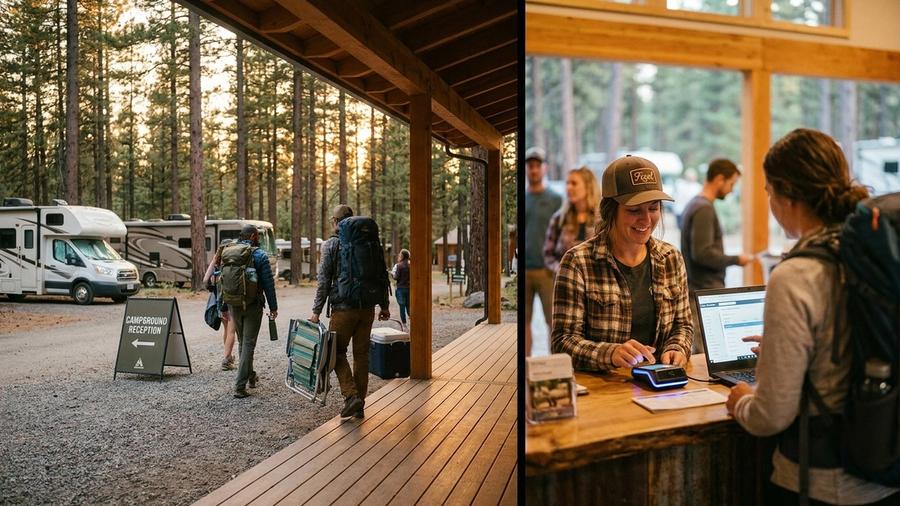
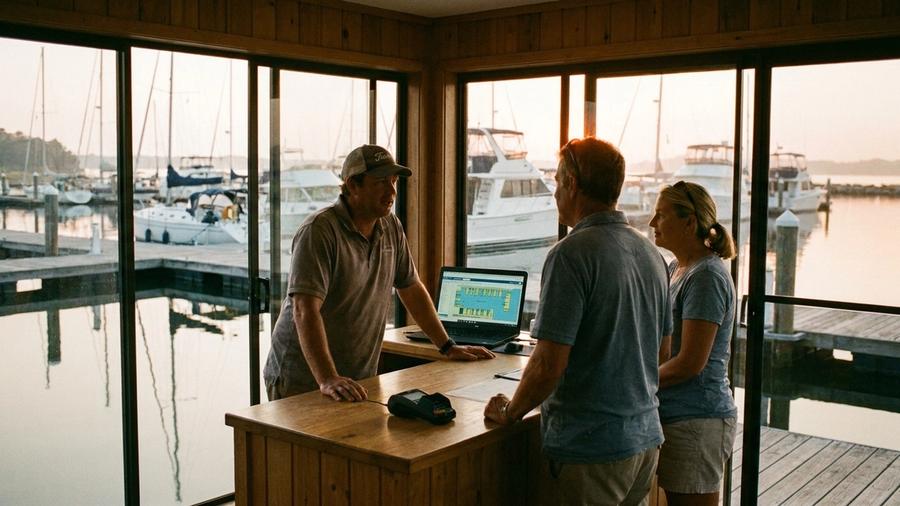
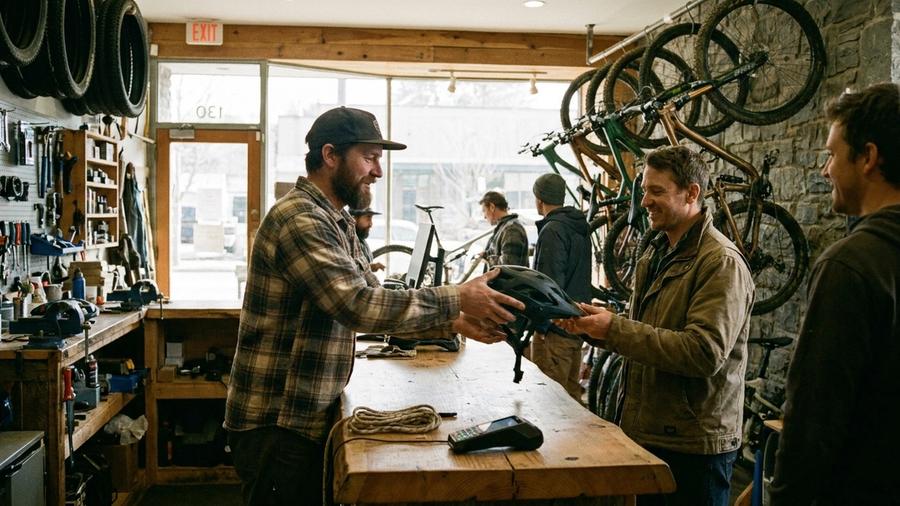
A ski resort may generate most of its annual revenue during a few winter months. A campground can go from nearly empty in April to fully booked on a July weekend. A bike shop may struggle to keep up with service demand in May while looking for ways to keep technicians productive in January. Marinas, fishing guides, golf courses, equipment rental operators, surf shops and powersports dealers all experience their own version of the same challenge.
Demand doesn't arrive evenly. It arrives in waves, and those waves affect nearly every decision an operator makes: hiring, inventory, marketing, pricing, cash flow, equipment purchases, operating hours and technology. Understanding seasonality isn't simply about knowing when customers arrive. It's about designing the business around when they arrive.
This guide looks at how seasonality shows up across the outdoor economy, what it does to revenue concentration, staffing, inventory and cash flow, and the practical tools operators use to work with it rather than against it. The figures throughout are illustrative working ranges drawn from published industry sources and operator norms, useful for planning and benchmarking, not a substitute for your own numbers.
Seasonality Across the Outdoor Economy
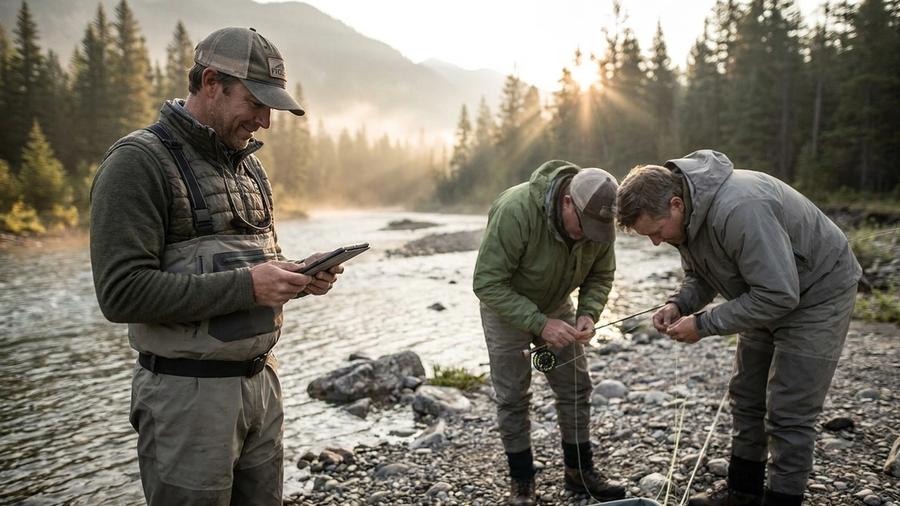
There is no single outdoor season. Snow drives demand for ski areas and snowmobile dealers. Warm weather drives campgrounds and marinas. Fishing seasons vary by species, watershed and regulation. Bike shops often begin accelerating before trails are even dry, because customers prepare equipment ahead of spring rather than during it.
Geography widens the differences further. A bike shop in Vancouver can operate close to year-round, while a shop in an interior mountain town may work with a much shorter riding season. Florida marinas run on a different rhythm from those on the Great Lakes. A coastal California campground faces a very different demand curve from one in Alberta, where the practical camping window may be four months long.
Yet the underlying structural challenge is remarkably consistent: outdoor businesses generally need enough infrastructure, equipment and staff to handle their peak, even though they only need that capacity for part of the year. The fixed cost of the peak is carried by the whole calendar.
| Business | Primary peak | Shoulder season | Typical slow period |
|---|---|---|---|
| Ski resort | Dec to Mar | Nov, Apr | May to Oct* |
| Nordic centre | Dec to Mar | Nov, Apr | May to Oct* |
| Campground | Jun to Aug | Apr to May, Sep to Oct | Nov to Mar |
| Marina | May to Sep | Apr, Oct | Nov to Mar |
| Bike shop | Apr to Aug | Mar, Sep to Oct | Nov to Feb |
| Fishing outfitter | May to Sep* | Apr, Oct | Nov to Mar* |
| Golf course | May to Sep* | Apr, Oct | Winter* |
| Outdoor retailer | May to Aug + holiday | Spring / fall | Varies |
| Ski shop | Nov to Mar | Oct, Apr | May to Sep |
| Equipment rental | Activity dependent | Activity dependent | Activity dependent |
| Powersports dealer | Product dependent | Varies | Varies |
*Highly dependent on geography and business model. The important lesson is that seasonality isn't a weakness. Many excellent, durable businesses are intensely seasonal. The challenge is making the economics work around the season rather than pretending the season is longer than it is.
How Concentrated Can Revenue Become?
Seasonal businesses can generate an extraordinary share of annual revenue inside a short window. A northern campground might earn 70% or more of its revenue between June and September. A ski operation may produce the overwhelming majority of operating revenue across a four-month winter. A marina may depend heavily on summer boating while carrying dock, insurance and property costs for all twelve months.
Event operators sit at the extreme end of this. Registrations build over months while a large share of in-person volume lands in a single morning. Our page on payments for outdoor events and races covers advance registration, event-day mobile acceptance and the month-to-month terms that suit event-driven volume.
Concentration creates both opportunity and risk. Peak periods can be highly profitable, because expensive infrastructure finally runs close to capacity and each incremental customer carries very little additional fixed cost. But a weak season caused by poor snow, wildfire smoke, a wet summer, a road closure or a softening economy is difficult to recover from: there is no second season waiting later in the year to absorb the shortfall.
| Business type | Approx. share of annual revenue in the core 4 to 5 months |
|---|---|
| Ski resort | 70 to 90% |
| Nordic centre | 75 to 90% |
| Northern campground | 65 to 80% |
| Northern marina | 60 to 80% |
| Seasonal fishing outfitter | 60 to 85% |
| Golf course, northern climate | 65 to 80% |
| Bike shop | 50 to 70% |
| Outdoor retailer | 40 to 60% |
| Powersports dealer | 40 to 70%, depending on product |
Illustrative working ranges. Actual results vary substantially by geography, product mix and operator. Treat them as a starting point for comparison against your own history rather than a target.
The Peak Weekend Effect
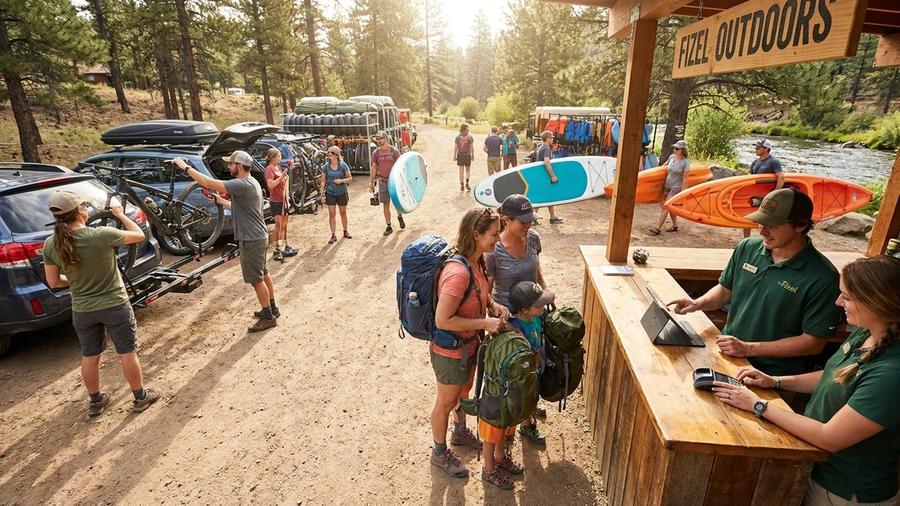
Annual seasonality is only half the story. Outdoor businesses also experience severe demand concentration inside their peak season, often at the level of a single day or a single hour. Friday evenings overwhelm campground check-in. Saturday mornings fill bike shop service counters. A powder day transforms resort traffic overnight. Long weekends push marinas, rental counters and outfitters close to maximum capacity.
Weather amplifies the effect. Three rainy weekends followed by one perfect one can compress weeks of pent-up demand into a matter of hours. Operators frequently describe a summer as a handful of days that mattered plus a long tail of ordinary ones.
| Business | Potential peak demand period |
|---|---|
| Bike shop | Spring Saturday |
| Campground | Summer long weekend |
| Marina | Warm holiday weekend |
| Ski resort | Fresh snow plus a holiday |
| Rental operator | Holiday or weekend morning |
| Fishing guide | Peak run or opening week |
| Golf course | Summer weekend morning |
| Outdoor retailer | Pre-holiday and seasonal opening |
This produces an unusual technology requirement. Outdoor businesses don't need systems sized for their average transaction volume: they need systems that hold up during the busiest three hours of the year, often operated by staff who were hired eight weeks ago.
Seasonality and Staffing
Labour is the hardest seasonal problem to solve, because a seasonal business effectively changes size several times a year. A resort may need hundreds of additional employees for winter. A campground may triple in headcount for July. Guides and rental operators may add staff only when bookings cross a threshold, sometimes with two weeks of notice.
That creates a recurring cycle: recruit, onboard, train, schedule, operate, and then wind down. Each turn of the cycle carries hidden cost. New employees need training. Experienced seasonal staff may not return. Managers spend peak-season hours rebuilding teams instead of running the operation. Temporary employees have to become productive while customer volume is already climbing.
| Business type | Off-season staffing | Peak staffing |
|---|---|---|
| Small campground | 2 to 4 | 8 to 15 |
| Large campground / RV resort | 5 to 10 | 20 to 50+ |
| Independent bike shop | 3 to 5 | 6 to 12 |
| Guide / outfitter | 2 to 4 | 10 to 30+ |
| Marina | 5 to 10 | 15 to 30+ |
| Ski resort | 50 to 200 | 500 to 2,000+ |
| Equipment rental operation | 2 to 5 | 10 to 25+ |
Illustrative ranges only; actual staffing varies significantly by operation and service model. The pattern matters more than the numbers: peak headcount is frequently three to five times off-season headcount, and for large resorts it can be ten times or more.
This is why operational simplicity is worth more to a seasonal business than it is to a year-round one. A system that takes a permanent employee three weeks to master becomes a genuine liability when a seasonal hire has three days. Practical tests for any tool: can a new employee complete a standard transaction unsupervised after one shift? Can a supervisor fix a mistake without calling the owner? Can permissions be set so that a first-week hire cannot accidentally do damage?
Operators who manage this well tend to do three things: they write short, visual procedures instead of long manuals; they hire a small core of returning seasonal leads and pay to keep them; and they front-load training into the pre-season rather than the first busy weekend.
Inventory Becomes a Timing Problem
Most retailers think about inventory in terms of what will sell. Outdoor retailers have to think just as hard about when it will sell. A ski shop holding excess winter inventory in April may wait seven months before demand returns, financing that stock the entire time. A bike retailer whose order lands in late July can miss most of the selling season for that product.
Seasonality magnifies the cost of inventory mistakes in both directions. Understock during the peak and the sale is simply lost: the customer buys elsewhere that weekend. Overstock and the capital is trapped until the next season, usually released through markdowns that erode a full year of margin.
| Stage | Bike shop | Ski shop |
|---|---|---|
| Pre-season | Build inventory | Build inventory |
| Early season | Strong demand begins | Strong demand begins |
| Peak | Replenish winners | Replenish winners |
| Late season | Reduce purchasing | Reduce purchasing |
| End of season | Markdown and selective clearance | Markdown and selective clearance |
| Off-season | Service and planning | Service and planning |
Inventory decisions also drive cash. Seasonal retailers usually buy product months before the revenue associated with it arrives, which opens a working-capital gap precisely when the bank balance is at its lowest. The more seasonal the business, the more valuable accurate forecasting and disciplined mid-season reordering become, and the more useful it is to have sell-through data by week rather than by quarter.
A practical approach many specialty retailers use: commit conservatively on pre-season orders for unproven products, protect open-to-buy budget for in-season replenishment of proven sellers, and set a hard calendar date for markdown decisions rather than waiting to see whether demand returns.
Cash Flow Doesn't Follow the Calendar Evenly
A seasonal outdoor company can be comfortably profitable across the full year while experiencing serious cash pressure in individual months. Profitability and cash availability are different things, and seasonal businesses feel the gap more than most.
Expenses don't disappear when customers do. Rent continues. Insurance continues. Software subscriptions continue. Debt payments continue. Maintenance and capital projects often happen in the off-season by necessity. Some permanent employees stay on payroll. And inventory may need to be purchased months before peak-season sales arrive.
Revenue distribution for a hypothetical northern campground generating C$1 million annually. The business looks healthy on an annual statement while still needing enough working capital to carry winter and spring.
- Jan to Mar3% · $30,000
- Apr to May12% · $120,000
- Jun to Aug60% · $600,000
- Sep to Oct20% · $200,000
- Nov to Dec5% · $50,000
Share of annual revenue
Illustrative example for planning purposes only.
In this example, roughly three-quarters of the year's revenue arrives in five months, while a meaningful share of the cost base is spread evenly. The operator's real question isn't whether the year works. It's whether there is enough cash in February to reach June without expensive borrowing.
Three habits help. Build a rolling thirteen-week cash forecast rather than an annual budget alone. Arrange seasonal credit before you need it, while the last strong season is still visible in the statements. And move as much revenue collection forward as the customer relationship reasonably allows, which is the subject of the next section.
Destination accommodation businesses feel this most sharply, because the package is sold long before the property opens and the whole cost base arrives in a few weeks. Our page on payments for fishing lodges looks at how deposits, scheduled balances, higher-value packages and off-season account pausing fit that pattern.
Advance Sales Can Change the Economics
One of the most powerful tools available to a seasonal business is selling ahead. Ski resorts sell season passes months before winter. Campgrounds accept reservations in February for July. Guides collect deposits. Marinas invoice seasonal moorage in advance. Golf clubs sell memberships. Rental operators take advance bookings. Gift cards convert December traffic into revenue for an experience that happens in June.
Advance revenue does three useful things at once: it funds pre-season inventory and payroll, it provides demand visibility that makes staffing and ordering less speculative, and it commits the customer, which materially reduces no-shows and late cancellations.
| Business | Advance revenue opportunity |
|---|---|
| Ski resort | Season passes, advance tickets |
| Campground | Reservations, seasonal sites |
| Marina | Annual and seasonal moorage |
| Guide / outfitter | Booking deposits |
| Equipment rental | Advance reservations |
| Golf course | Memberships |
| Bike shop | Pre-orders, booked service slots |
| Outdoor retailer | Gift cards |
| Adventure business | Gift certificates |
Selling ahead does introduce obligations: deposits need clear refund terms, stored customer details need to be handled securely, and balances need to be collected without friction on arrival. Those mechanics are covered in more detail in our guides to payments for guides and outfitters and payments for equipment rental businesses.
Trip-based operators feel this most acutely, because the season is short and the calendar fills months before the water is warm. Our page on payments for rafting and paddlesports operators walks through how reservations, deposits, group balances and end-of-season account pausing fit together across a compressed revenue window.
Seasonality isn't a problem to be solved. It's a structure to be designed around.
Pricing Can Respond to Demand
Hotels and airlines have priced by demand for decades. Outdoor businesses are steadily adopting the same thinking, and often find it easier than expected because customers already understand that a July long weekend is not a rainy Tuesday in May.
A campsite on a holiday Saturday is economically a different product from the same campsite midweek in shoulder season. A ski ticket during the last week of December has different scarcity characteristics from one in early December. Pricing can reflect that, provided the structure is transparent and easy to explain at the counter.
| Strategy | Example |
|---|---|
| Peak pricing | Higher holiday and weekend rates |
| Off-peak discounts | Midweek or shoulder-season offers |
| Early booking | Discount for booking months ahead |
| Dynamic pricing | Rates move with demand and remaining capacity |
| Membership | Discounted access in exchange for a recurring fee |
| Bundling | Rental plus lesson plus access |
| Minimum stay | Holiday weekends at campgrounds and lodges |
The objective isn't simply charging more. Good revenue management encourages flexible customers to shift into lower-demand periods, filling a Wednesday that would otherwise be empty, while capturing fair value from customers who specifically want scarce peak capacity. Start small: one shoulder-season offer and one peak-weekend minimum stay will teach you more about your demand curve than a full dynamic pricing project.
Extending the Season
Seasonality may be unavoidable, but its severity isn't fixed. The single largest strategic opportunity for most outdoor businesses is finding another credible reason for customers to show up outside the core season, usually by using assets that are already paid for.
Ski resorts are the clearest example. Chairlifts built for winter skiing now carry mountain bikers and sightseers in summer. Lodges host weddings and conferences. Resorts run festivals, races and dining experiences that have nothing to do with snow. Campgrounds add cabins and heated units to stretch into October. Marinas lean on storage, winterization and service. Bike shops pick up nordic or snow rentals, or build indoor training programs.
| Core business | Additional revenue opportunities |
|---|---|
| Ski resort | Mountain biking, hiking, weddings, events |
| Campground | Cabins, glamping, shoulder-season packages |
| Marina | Storage, service, winterization |
| Bike shop | Repairs, indoor training, winter sports |
| Golf course | Restaurant, weddings, events |
| Guide company | Different activities by season |
| Outdoor retailer | Ecommerce, workshops, service |
| Rental business | Multi-sport inventory |
Extending the season improves more than revenue. It helps retain good employees who would otherwise take a year-round job elsewhere, spreads fixed costs across more operating months, and keeps customer relationships warm between peaks. For operational detail by sector, see our guides to ski resorts and nordic centres and campgrounds and RV parks.

Technology for Seasonal Businesses
A business processing 100 transactions on a Tuesday and 2,000 on a Saturday needs technology that flexes. That makes the evaluation criteria different from a year-round retailer's. Scalability matters. Speed of training matters. Mobile capability matters. Reliability during the exact hours that carry the year matters more than feature depth.
Multi-revenue-stream operators, a marina with moorage, fuel, service and a store, or a resort with tickets, rentals, lessons and food, also need reporting that shows where money is actually generated, by channel and by season, without exporting three systems into a spreadsheet.
| Capability | Why it matters |
|---|---|
| Cloud POS | Manage the operation remotely, including from off-season |
| Mobile checkout | Add capacity anywhere during peak periods |
| Online reservations | Capture demand before arrival |
| Ecommerce | Generate revenue outside the physical season |
| Inventory management | Reduce seasonal overstock and markdowns |
| Recurring billing | Memberships, moorage and seasonal customers |
| Digital wallets | Faster checkout when lines are longest |
| Reporting | Understand revenue by channel and season |
| Customer database | Bring customers back next season |
For businesses with extreme peaks, simplicity outranks sophistication. Seasonal employees should be able to learn the system in a shift, not a semester. Our guide to choosing the right POS system for an outdoor business walks through how to evaluate that trade-off in practice.
Payments and Seasonality
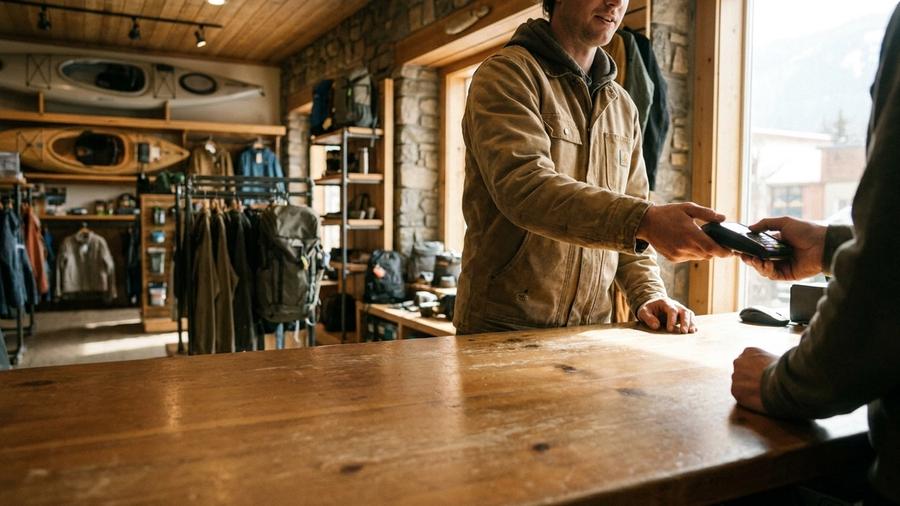
Payments are only one piece of the seasonal puzzle, but they sit at a decisive point in the customer journey. When demand is concentrated, friction becomes expensive: a slow checkout line on a resort's busiest weekend doesn't just annoy people, it reduces throughput at the precise moment capacity is worth the most.
Businesses taking advance reservations also need dependable ways to collect deposits, store customer details appropriately, charge balances and process refunds when weather cancels a trip. Seasonal operators typically end up accepting payments across several very different environments in the same week.
| Environment | Example |
|---|---|
| Counter | Outdoor retailer |
| Mobile | Guide or event |
| Online | Reservation |
| Recurring | Marina moorage or membership |
| Deposit | Equipment rental |
| Ecommerce | Specialty retailer |
| Multiple locations | Resort |
Cost matters too, and it moves with volume: a business that processes most of its year in four months should understand how its processing fees behave at peak volume, not average. Sector-specific detail lives in our guides for marinas and bike shops. The goal isn't to make payments more visible. It's the opposite. The best payment experience is the one the customer barely notices.
A Seasonal Planning Framework
Seasonality becomes far easier to manage when a business treats the year as a cycle with distinct phases rather than reacting month by month. Each phase has a different primary objective, and the most common operating mistake is carrying the wrong objective into the wrong phase, for example, attempting system changes during peak, or deferring analysis until the next pre-season crunch.
1. Off-season: analyze and build
Review the previous season while it's still fresh. Identify the bottlenecks that cost you revenue: the queue, the missing size, the double-booked cabin. Renegotiate supplier terms, upgrade or replace systems, recruit key returning staff, plan marketing and start building advance bookings. Anything that requires learning should happen now.
2. Pre-season: prepare
Receive inventory, hire seasonal employees, train deliberately, test equipment and systems under realistic load, launch campaigns and confirm reservations. Run a full dress rehearsal before opening weekend, including the payment and reservation flow on a busy-day scenario.
3. Peak season: execute
Protect reliability and customer experience above all else. Track capacity and utilization daily, monitor inventory weekly, replenish proven sellers, and minimize unnecessary operational change. This is the phase for execution, not experiments.
4. Shoulder season: optimize
Use promotions strategically to fill remaining capacity, clear excess inventory on a schedule, encourage repeat visits while the experience is recent, collect customer feedback and begin planning the next cycle. Shoulder season is where the difference between a good operator and a great one usually shows up.
Four phases, four objectives. Most of the work that determines a season's outcome happens before customers arrive.
- 01Off-seasonImprove: analyze, negotiate, upgrade, recruit
- 02Pre-seasonPrepare: stock, hire, train, test, promote
- 03Peak seasonExecute: protect reliability and throughput
- 04Shoulder seasonOptimize: fill capacity, clear stock, retain customers
The most important work for a seasonal business often happens before the customers arrive.
Five Metrics Seasonal Outdoor Businesses Should Track
Annual revenue alone tells a seasonal operator very little. What matters is how efficiently a limited number of operating days is converted into annual results. Five measures give most outdoor businesses a clear picture without a data project.
| Metric | What it tells you |
|---|---|
| Revenue per operating day | The value of each day inside the season |
| Peak vs off-peak revenue | The true degree of seasonality in your business |
| Advance-booking percentage | Visibility into future demand and cash |
| Revenue per customer | Your ability to monetize each visit |
| Repeat customer rate | The strength of customer relationships between seasons |
Add a sector-specific measure or two on top. Inventory-heavy businesses should watch inventory turnover and end-of-season inventory value. Capacity businesses, campgrounds, guides, rentals, resorts, golf courses, should watch utilization or occupancy by day of week. Labour-intensive operations should watch revenue per labour hour during peak weeks, which is where margin is usually won or lost.
Simple operating disciplines that consistently separate well-run seasonal businesses from stressed ones.
- 13Week rolling cash forecastUpdated weekly, not annually: the single most useful seasonal financial habit.
- 1Shift to competenceA new seasonal hire should complete a standard transaction unsupervised after one shift.
- 3xPeak capacity headroomPlan checkout and reservation capacity against your busiest hours, not your average day.
Illustrative planning heuristics, not industry standards.
Seasonality Isn't Going Away
Seasonality is part of what makes the outdoor economy distinct. Snow falls when it falls. Summer weekends are finite. Fishing runs happen on their own schedule. Customers want bikes when the weather turns. Trying to engineer those realities away misses the point of the industry.
The opportunity is to build businesses that work with them: understand when demand occurs, prepare capacity before it arrives, collect revenue earlier where it makes sense, control inventory tightly, choose technology that scales and trains fast, and find ways to extend customer relationships beyond a single season.
The strongest seasonal businesses don't necessarily have less seasonality. They're simply better designed around it, and when the next season arrives, they're ready. For broader context on the industry these businesses operate in, read The Outdoor Economy: Market Size, Statistics & Trends (2026).
For the numbers behind this pattern, Fizel Research estimates that ski resorts take 67% of annual payment volume in three months and campgrounds 52%, see the seasonality data in Outdoor Industry Payment Statistics 2026.