
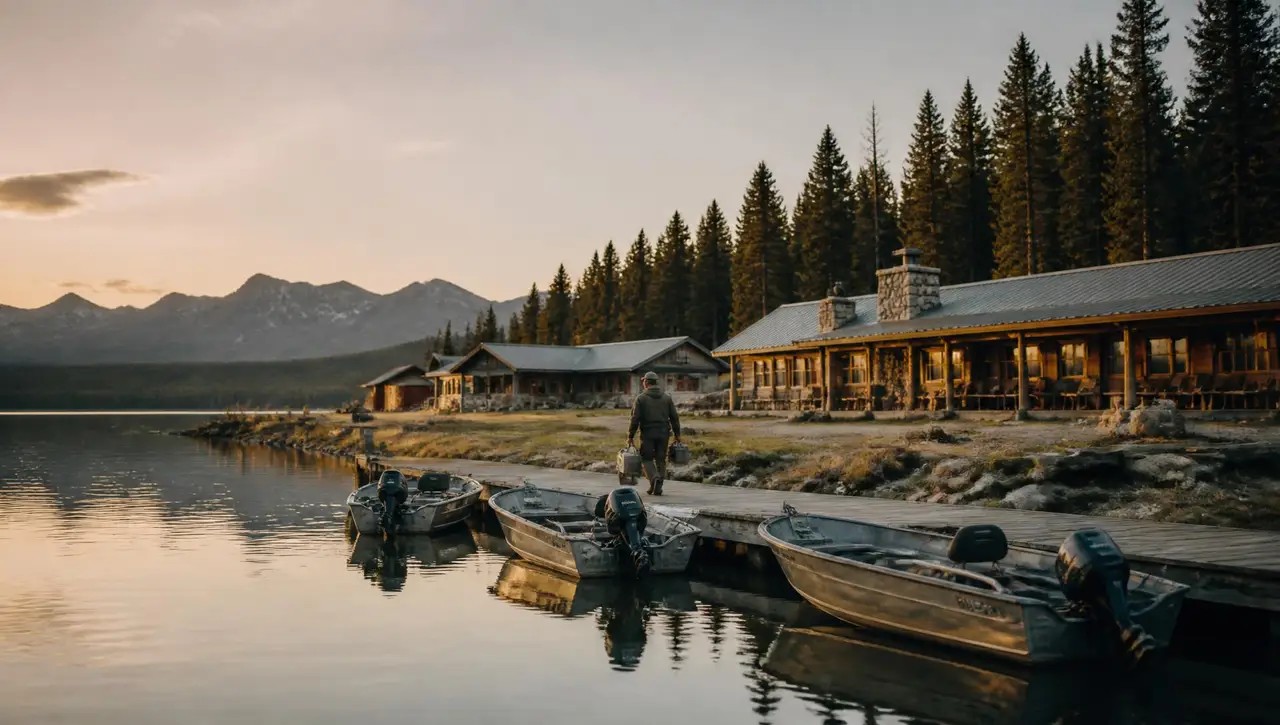
Fishing & Wilderness Lodges
Payment Solutions for Fishing & Wilderness Lodges
From advance deposits and multi-day packages to international guests and payments across the property, Fizel supports the different ways fishing and wilderness lodges get paid.
Deposits and final balances, higher-ticket environments, internationally issued cards, acceptance across lodging, guiding, dining and retail, funding that generally lands the next business day, and month-to-month terms you can pause when the season closes.
The operating reality
The stay is only part of the experience.
From the guest's chair it looks simple. Arrive, explore, eat, sleep, repeat, travel home. From the office it can be several businesses running at the same time: accommodation, guiding, food, a boat fleet, equipment, transport and a small retail counter, on a property that may be an hour from the nearest paved road, or a flight from it.
And most of the money was committed long before anyone landed. A week in July is often sold the previous autumn, paid in pieces through the winter, and finally topped up with add-ons during the stay itself. The revenue calendar and the operating calendar are not the same calendar.
Fizel specializes in the outdoor economy and brings enterprise payment capability to it. For a lodge that means advance payments and scheduled balances, higher-value packages, internationally issued cards, acceptance around the property and consolidated reporting across every revenue line, under one merchant relationship, with none of it treated as unusual.
Booking to departure
Six movements of money. Often less than one week of fishing.
A lodge booking is not a transaction, it is a sequence, and the gap between the first payment and the last can be longer than most businesses' entire sales cycle.
01
Enquiry
A returning guest asks about the same week next year, sometimes before this year's group has flown home.
02
Hold
Dates are held against the lodge's own terms. Nothing has moved yet except the calendar.
03
Deposit
A card paid online, by payment link or over the phone, frequently from another country, often several months out.
04
Scheduled balance
One payment or several, spread across the winter, closing out a package price well before travel.
05
Arrival
A guest adds a day, upgrades a cabin, buys a jacket, settles a transfer. New charges, different device.
06
Departure
A final folio, a tip run, a store purchase on the way to the plane, and often next year's deposit.
Online payments, hosted payment pages, payment links, deposits, scheduled payments, invoicing and a virtual terminal cover that whole arc. Fizel is the payment layer: room inventory, rate plans, guide rotations and the booking calendar stay in whatever system the lodge already runs.
Sound like your business? Tell us how you take payments today and we'll put together a quote built around it.
Who this is for
Destination properties where fishing is the reason people come.
Different water, different seasons, very different logistics, but a shared commercial shape: money in advance, a short operating window and guests who travelled a long way on purpose.
Fishing lodges
Rooms, guides and water sold as a week, usually to people who booked before the ice was off.
Wilderness and backcountry lodges
Properties reached by float plane, boat or a road that is open for part of the year, with everything that implies for logistics and cash.
Fly-fishing and salmon lodges
Operations built around runs and hatches, where a shifted window changes the whole shape of a season.
Remote adventure lodges
Hiking, paddling, wildlife and other legitimate outdoor experiences sold alongside beds and meals.
Lodge-based outfitting operations
A property that is also the staging point: guides, boats, gear and transport running out of one yard.
Multi-property lodge operators
Two or more destinations under one company, sold as a portfolio and reconciled as one set of books.
If the business is built around the guided day rather than the property, our fishing guides & outfitters page is the closer fit. For sites, cabins and seasonal stays without the guiding operation, see campgrounds & RV parks, and for higher-value bookable outdoor accommodation built around tents, domes, yurts and cabins, see glamping resorts. For destination properties where lodging sits alongside a wider mix of nature-based experiences and on-property spending, see eco & wilderness resorts. What follows is not conventional hospitality: these are destination outdoor properties, usually smaller and more operationally concentrated than a resort, and far closer to the boats, the guides and the weather than to a lobby.

Advance bookings
Most of the year's revenue is agreed in the off-season.
A guest may reserve nine months out, for a specific run or week, for a group of eight, as part of a tradition that has run for a decade, from a province, state or country you will never visit. The lodge is quietly financing an operating season with money collected across a winter, which is precisely why the collection has to be effortless.
Deposits, scheduled payments, invoicing, hosted payment pages and payment links handle that, with a virtual terminal for the booking taken by phone while you are standing in the boathouse. Card details are handled inside the payment environment rather than on a note beside the reservation book, and reporting ties every movement back to one booking.
What we do not do is set your policies. Deposit percentages, payment dates, weather calls, cancellations and refunds are the lodge's decisions, and they should stay that way. Our job is making sure payment mechanics are never the awkward part of a conversation with a guest you want back next year.
The deposit clears in November. The float plane lands in July.
Destination lodges
Package economics
One line on the invoice. Six businesses inside it.
A multi-day package can combine accommodation, guiding, boats, meals, equipment, transfers and whatever else the lodge includes. Priced as a week rather than a night, it lands as a transaction far above an average outdoor sale, and it is the best, most committed business on the calendar.
Fizel supports higher-ticket payment environments and configures the merchant account around the lodge's actual transaction profile: average ticket, high ticket, the booking-season spike, the advance-to-on-property split and international card share. A five-figure group booking should clear as the ordinary commerce it is.
One guest, many revenue streams
The room rate is rarely the whole folio.
Few lodges run all of these and some run only the first two. Where they exist, they can sit inside the same merchant environment rather than a separate arrangement each, with the software behind each service staying whatever you already use.
- Lodging and cabin nights
- Guided fishing days and add-on days
- Meals, bar and food service where the lodge runs it
- Boat and equipment rental
- Rods, flies, tackle and terminal gear
- Branded merchandise and apparel
- Transfers, charters and access logistics
- Premium or private-water services
One guest. Multiple revenue streams.
Lodge economics
Before the guest arrives
The guest arrives after most of the work has already started.
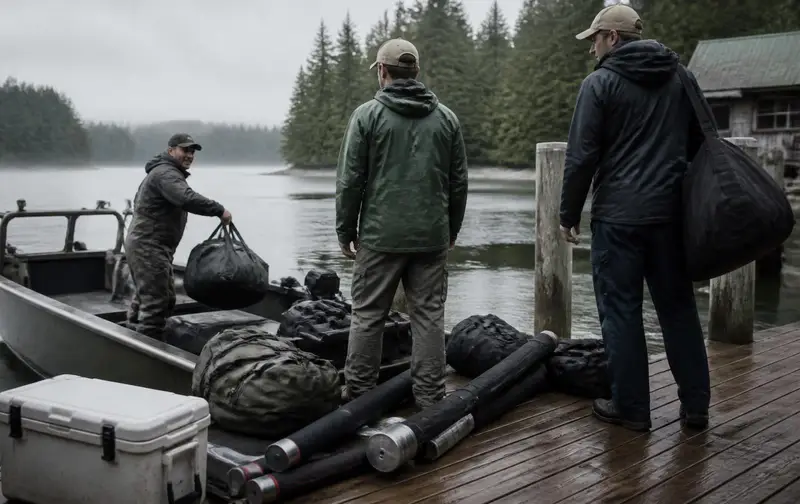
Cabins are turned over and aired out. Beds are made with linen that came in on the same boat as the groceries. Someone is down at the dock fuelling boats, checking motors and coiling lines. Someone else is laying out rods, waders, life jackets and rain gear in the gear room, sorting what goes with which party.
In the kitchen, a week of food is being unpacked and put away, because there is no second delivery. Guides are checking the rotation and the weather. The office is confirming flights, transfers and arrival times, and working out who is coming in on which run. Luggage and gear will be moved twice before anyone touches it again.
None of this is what the guest came for, and all of it decides whether the week works. By the time the first party steps onto the dock, the property has been running for hours, and, commercially, for months.
Guided experiences
The guiding operation is often the reason for the property.
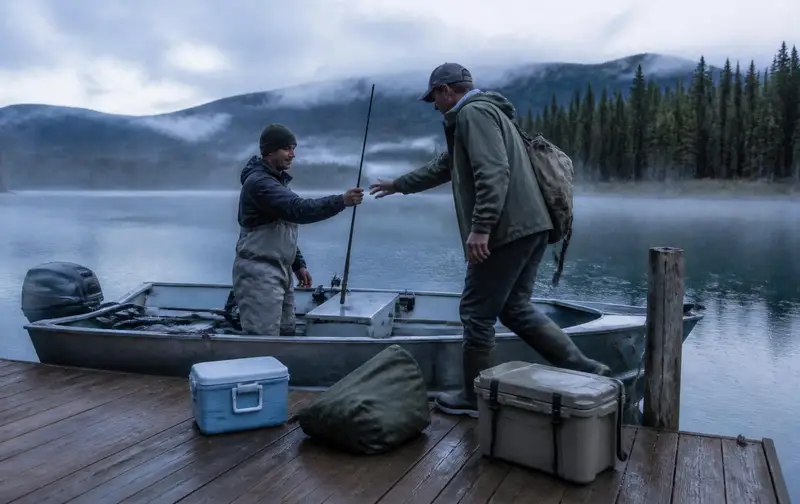
Depending on the lodge, guiding may mean fishing, hiking, paddling, wildlife viewing or other legitimate outdoor activities: sold inside a package, added on during a stay, or booked as extra days once a guest is already there. It is skilled labour, it is priced accordingly, and it is frequently what a guest is actually paying for.
On the payment side that means advance payments, deposits, payment links, invoicing and higher-ticket environments, with in-person acceptance for anything added on property. Fizel does not manage guides, rotations, itineraries or activities, and would not claim to: that is your operation and your judgement about water, weather and people.
Groups
One organizer, one week, several people paying.
Families, groups of friends, corporate parties and private groups are ordinary business for a destination lodge, and they change the payment shape: a larger deposit, a longer planning conversation, a headcount that moves twice before spring, and an organizer who may want one invoice or several payment links.
Deposits, invoicing, payment links, a virtual terminal, scheduled payments where they genuinely suit the booking and customer-not-present acceptance cover those arrangements. Fizel does not provide group-booking or split-payment functionality: how a lodge divides a bill stays a lodge decision, made in your own systems.
Food, drink and the store
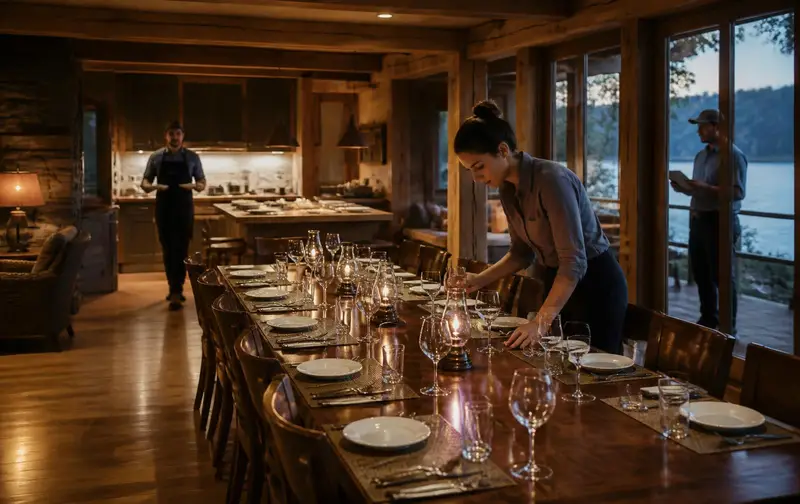
Some of the folio is settled twenty feet from the kitchen.
Many destination lodges include meals in the package. Others sell food and drink alongside it, or run a bar in the evening. Countertop terminals, wireless terminals and POS integrations handle those transactions wherever they happen. Fizel does not provide restaurant-management software.
Some properties also keep a small store: apparel and merchandise, flies, tackle, outdoor supplies, accessories, the rain shell somebody did not pack. In-person terminals, wireless terminals, Tap to Pay on supported devices and POS integrations cover it. Not every lodge has a shop, and where one exists it is usually a modest line next to lodging and guiding, but it should not be the part of the property where payment gets awkward.
International and destination guests
They booked the flight before they booked the week.
A destination lodge serves people who travelled deliberately and at expense, from another province or state, or from another country entirely. Their card was issued elsewhere, their deposit was paid from another time zone, and they will not stand in front of a terminal until the day they arrive, if at all.
Internationally issued cards, multiple currencies and FX/DCC are established Fizel capability, online and in person. Paired with ecommerce, advance payments and customer-not-present acceptance, an overseas guest is simply a guest, and the deposit that lands at two in the morning your time is simply revenue, not an exception to be worked around.
Remote operations
The front desk may be a dock.
Payments happen wherever the guest happens to be: the lodge office, the dining room, the store, the boathouse, the dock at departure, a satellite camp upriver. Wireless terminals, mobile payments, Tap to Pay on supported devices and payment links cover those moments without anyone walking a guest back to a desk.
Connectivity is still connectivity. Cellular and internet service are not guaranteed in the places these businesses operate, and no payment company changes that. Well-run lodges combine on-property acceptance with advance payments and payment links precisely because the bay has no signal.
When a few months drive the year
A short window, and everything depends on it.
A northern lodge may operate for ten or twelve weeks between ice and freeze-up. A coastal operation runs a different calendar entirely, and a southern lodge may do its best business when the north is closed. Runs, weather, water conditions, access, daylight and travel seasons all set the window, and none of them consult a fiscal year.
What these operations share is concentration. A large share of annual revenue arrives inside a narrow band, while staff wages, fuel, food, air charters and maintenance all land at once. Funding that generally arrives the next business day matters far more in that pattern than in a flat retail year: a lodge in week three of a twelve-week season should not be financing itself on a settlement delay.
And when the property closes, the account should be able to close with it.
Month-to-month. No locked-in contracts.
Seasonal businesses can pause their merchant account during the off-season.
- Pause when the lodge closes rather than carrying a dormant account
- Restart ahead of booking season, not from scratch
- Funding generally next business day while you're operating
- Booking-season deposit spikes expected, not flagged as unusual
- Pricing quoted on your season, not a flat annual average
Selling season vs operating season
The lodge may be closed. Bookings aren't.
The property shuts, the boats come out of the water, the staff go home, and the commercial year keeps moving. Enquiries for next season arrive. Returning groups confirm their week. Deposits get taken. Balances get scheduled. For many lodges the busiest selling months fall inside the quietest operating months.
So the honest version of seasonal pausing is this: pausing a merchant account means the account is not processing. It suits a lodge whose off-season really is closed, no card payments at all until the property reopens. A lodge that collects deposits through the winter needs the account live for exactly that reason, and its off-season is a low-volume selling season rather than a dark one.
Both are normal, and they are a conversation rather than a default. Fizel structures the payment relationship around your actual operating and booking cycle, including seasonal merchant-account pausing where it genuinely fits, instead of assuming twelve identical months.
An observation
The same eight people, the same week, for eleven years.
Destination lodges hold some of the most durable customer relationships in the outdoor economy. A guest comes once, returns the following season, brings a friend, then arrives as a group who have blocked the same week since before the current boats were bought. Some rebook at the dock on the way to the plane. Some come back for a different activity, or a different month, or bring their children to the water they learned on.
There is no product pitch in that. It is simply what the business is: a property people plan their year around. The commercial consequence is only that the awkward moments should be few: the deposit goes through first time, the balance is easy to settle from an office in another country, and nobody has to chase a receipt for a week they have already decided to book again.
Payment capabilities
Advance, remote, and around the property.
Reservations and advance payment run on online payments, hosted payment pages, payment links, deposits and scheduled payments. Remote and higher-value transactions use a virtual terminal, invoicing and customer-not-present acceptance. At the lodge, countertop and wireless terminals, mobile payments, Tap to Pay on supported devices and POS integrations cover the office, the store, the dining room and the dock.
Across the business: merchant accounts built for higher-ticket environments, internationally issued cards, multiple currencies and FX/DCC, recurring payments where they apply, multi-location environments, consolidated reporting and broad integrations. The full range is on our solutions page.
Existing systems
Keep the systems that already work.
By the time a lodge talks to us there is usually a reservation or property-management system in place, perhaps guide-scheduling software, a website taking bookings, a POS at the store and accounting software that all of it reconciles into. Replacing that stack is almost never the improvement anyone is actually asking for.
Fizel integrates broadly across commerce and business systems. We start with how the property runs today and build the payment environment around it; the specific integration for your stack is confirmed during setup. That software belongs to its vendors, and Fizel is the payment layer beneath it, not lodge-management software.
One lodge or several
The same capability, at the scale you actually run.
A single remote lodge with fourteen beds and a company operating three destinations need the same things to work, they just need them at different scales. Multi-location environments, consistent acceptance at every property, centralized visibility and consolidated reporting are available where they help, and stay out of the way where they do not.
Support, settlement and terms
A lodge shouldn't have to justify a December deposit for a July trip.
A generic support queue does not know why a lodge is taking large deposits in December for a week in July, why the guest's card was issued in Europe, or why the whole year's volume arrives inside a few weeks. Fizel provides knowledgeable human payments support from people who understand the businesses behind the transactions. Funding generally lands the next business day, terms are month-to-month with no locked-in contracts, and seasonal operators can pause the account when the property closes.

Nine months of planning, four flights, and about six minutes of this before anyone speaks.
The reason a guest pays a deposit to a place they have only seen in photographs.
How Fizel fits
- Package deposits
- Multi-day packages are held with a deposit taken months ahead of arrival.
- Payment plans
- Scheduled payments spread a package balance across the months before the trip.
- On-site spend
- Terminals for the lodge store, tackle, bar and guide gratuities during the stay.
- Remote locations
- Payment links and email invoicing collect balances when guests are hard to reach in person.
Pricing
Quoted on a twelve-week season, not a flat annual average.
A twelve-week lodge with weekly packages prices differently from a year-round fishing resort with cabins, a restaurant and a store. We quote on real volume, average and high ticket, the advance-to-on-property split, international card share, the number of properties and the systems already in place. Month-to-month, with no locked-in contracts.
Further reading
How Seasonality Shapes Outdoor Businesses
Why advance sales change the economics of a short season, how cash and staffing move out of step with revenue, and what operators do about the months between deposits and guests, plus our guide to deposits and advance bookings for guiding and outfitting operations.
Questions
Lodge payments, answered.
Can Fizel support deposits and final balances for multi-day lodge bookings?
Yes. Deposits, scheduled payments where they genuinely suit the booking, invoicing, hosted payment pages, payment links and a virtual terminal sit inside one merchant environment, so a deposit taken in October and a final balance settled the following May belong to the same payment relationship rather than two disconnected workarounds. Reporting reads the whole booking as one commercial event, and card details are handled inside the payment environment rather than written beside a reservation. The rules stay yours: deposit amounts, payment deadlines, cancellation windows and refund policy are the lodge's decisions. Fizel moves the money; your reservation or property-management system keeps the calendar.
Can Fizel support higher-value fishing and wilderness lodge packages?
Yes. A multi-day package that combines accommodation, guiding, meals, boats, equipment and transport is a substantial transaction, materially larger than a conventional hotel night, and a private group taking the whole property for a week can be several times that again. That is legitimate, well-understood commerce and we treat it as normal business rather than as an anomaly. Fizel supports higher-ticket payment environments and configures the merchant account around your actual transaction profile: average ticket, high ticket, booking-season concentration and the split between advance and on-property payments. Underwriting and reserve outcomes are always specific to the business and are never promised in advance.
Can lodges accept payments from international guests?
Yes, and for a destination property it should be routine. Fizel supports internationally issued cards, multiple currencies and FX/DCC where relevant, both online and in person, alongside ecommerce, advance payments and customer-not-present acceptance. In practice that means a guest can pay a deposit from another country months before entering it, settle a balance from an office in a different time zone, and then tap a card at the store on the last morning of the trip, all inside the same merchant relationship, with consolidated reporting across the lot.
Can Fizel work with our existing property-management or reservation system?
That is the starting point. Most lodges already run a property-management or reservation system, sometimes guide or outfitter scheduling tools, a website that takes bookings, a POS at the store or bar and accounting software everything reconciles into. Fizel did not build and does not own any of that software, and has no lodge-management, booking or guide-management product of its own. We integrate broadly across commerce and business systems, start with how the property actually runs today, and confirm compatibility with your specific platforms during setup rather than naming integrations in a brochure. Keep the systems that already work; we improve the payment environment around them.
Can Fizel support payments across lodging, guiding, retail and other lodge revenue streams?
Yes. Depending on the property, one guest may generate revenue through lodging, guided days, meals and drinks, equipment, transport, retail and merchandise, additional activities and extra nights, and few lodges run all of those while some run only the first two. Where they exist, they can sit inside one merchant environment instead of a separate arrangement each: ecommerce, hosted payment pages, payment links and deposits before arrival; countertop terminals, wireless terminals, mobile payments, Tap to Pay on supported devices and POS integrations around the property; a virtual terminal and invoicing for anything settled remotely. Consolidated reporting then shows the whole property rather than fragments of it.
Can seasonal lodges pause their merchant account during the off-season?
Yes. Terms are month-to-month with no locked-in contracts, funding generally arrives the next business day while you are trading, and a genuinely seasonal lodge can pause its merchant account during the off-season rather than carrying a dormant account through months with no guests. One honest caveat: a paused account is not processing, so it suits a property whose off-season is genuinely closed to card payments. If you collect next season's deposits through the winter, the account stays live for exactly that reason and the off-season is a low-volume selling season instead. Tell us the shape of your year: operating window, booking-season spike, closing date, and we build the arrangement around it.
Something specific to your property? Contact us and we will give you a straight answer. More on how we work with this segment is on the campgrounds & accommodations industry page.
From the first deposit to the last boat off the water.
Tell us how the lodge books, takes deposits, settles balances and sells across the property, and we will build a quote around your season.