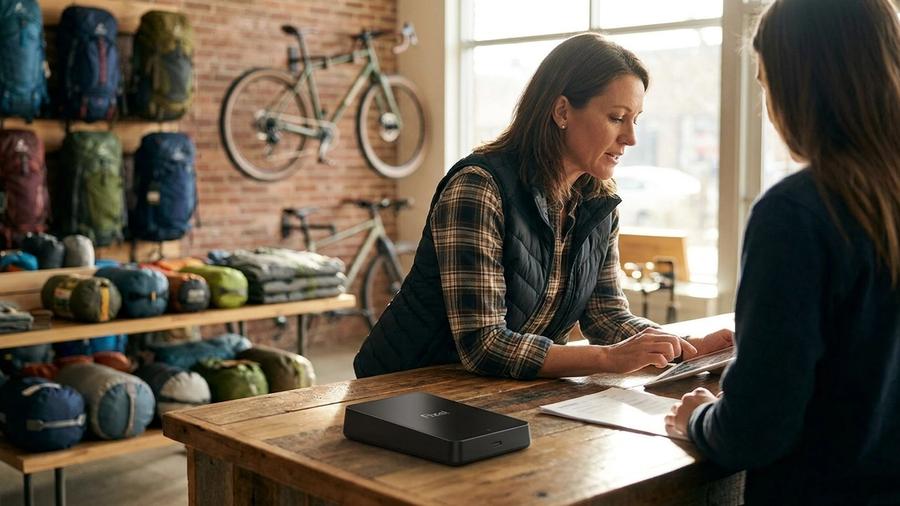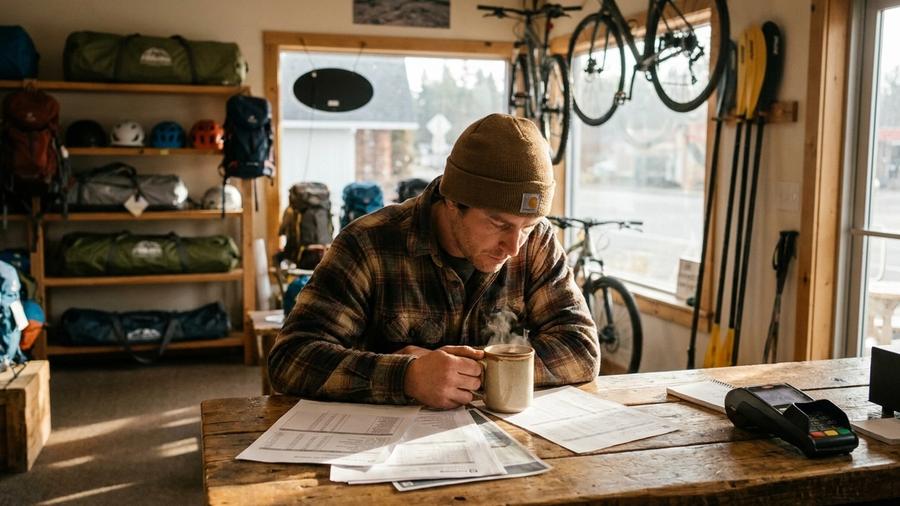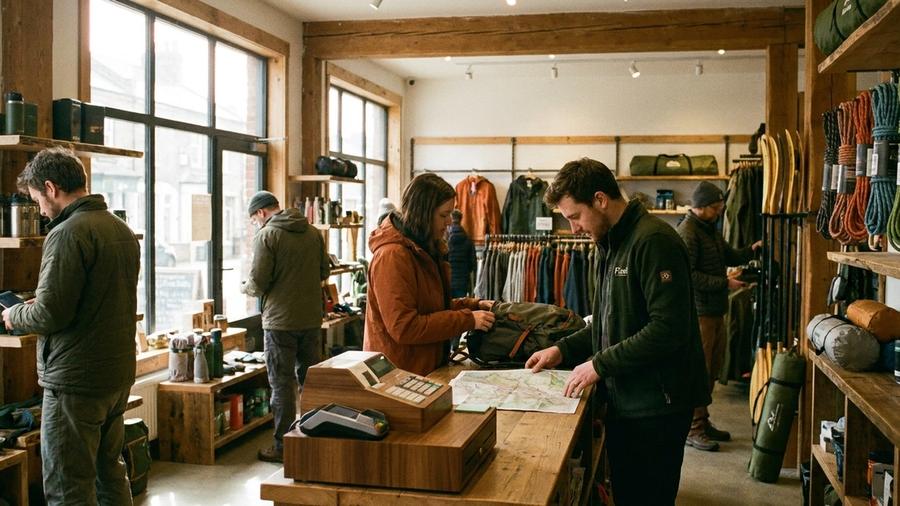

For many outdoor businesses, the point-of-sale system is the operational heart of the company.
It's where payments are accepted, inventory is managed, customer information is stored, reports are generated, and staff interact with guests throughout the day. Whether you're running a bike shop, campground, marina, outdoor retailer, or equipment rental business, your POS system influences far more than checkout.
Yet many businesses choose a POS the same way they choose a payment processor: by comparing a few prices and hoping for the best.
A better approach is to start by understanding how your business operates.
The right POS system should support your workflows, reduce manual tasks, and help create a better customer experience, not simply process transactions.
A POS Is More Than a Cash Register
Modern point-of-sale systems have evolved dramatically over the past decade.
While traditional cash registers simply recorded sales, today's cloud-based platforms connect nearly every part of a business.
Depending on your operation, a POS may manage inventory, employee permissions, customer purchase history, gift cards, reporting, online orders, loyalty programs, and integrated payment processing.
For many outdoor businesses, it becomes the central system that keeps daily operations organized.
The more connected your systems become, the less time your team spends entering information manually.
The best system isn't necessarily the one with the most features. It's the one your team will actually use every day.
Every Outdoor Business Has Different Needs
One of the biggest mistakes businesses make is assuming every POS system is designed for every business.
In reality, the ideal solution depends on what you sell, how you sell it, and where your customers interact with you.
A bike shop has very different operational needs than a campground. A marina differs from an outdoor retailer. An equipment rental business faces challenges that a coffee shop never will.
Before looking at features, spend time understanding your own workflows.
| Business Type | Typical POS Priorities |
|---|---|
| Bike Shops | Inventory, repairs, accessories |
| Outdoor Retail | Inventory, ecommerce, customer profiles |
| Campgrounds | Reservations, retail, food service |
| Marinas | Fuel, retail, rentals |
| Equipment Rentals | Reservations, inventory, deposits |
Once you understand how your business operates, choosing the right technology becomes much easier.
Cloud-Based POS Systems Have Changed Everything
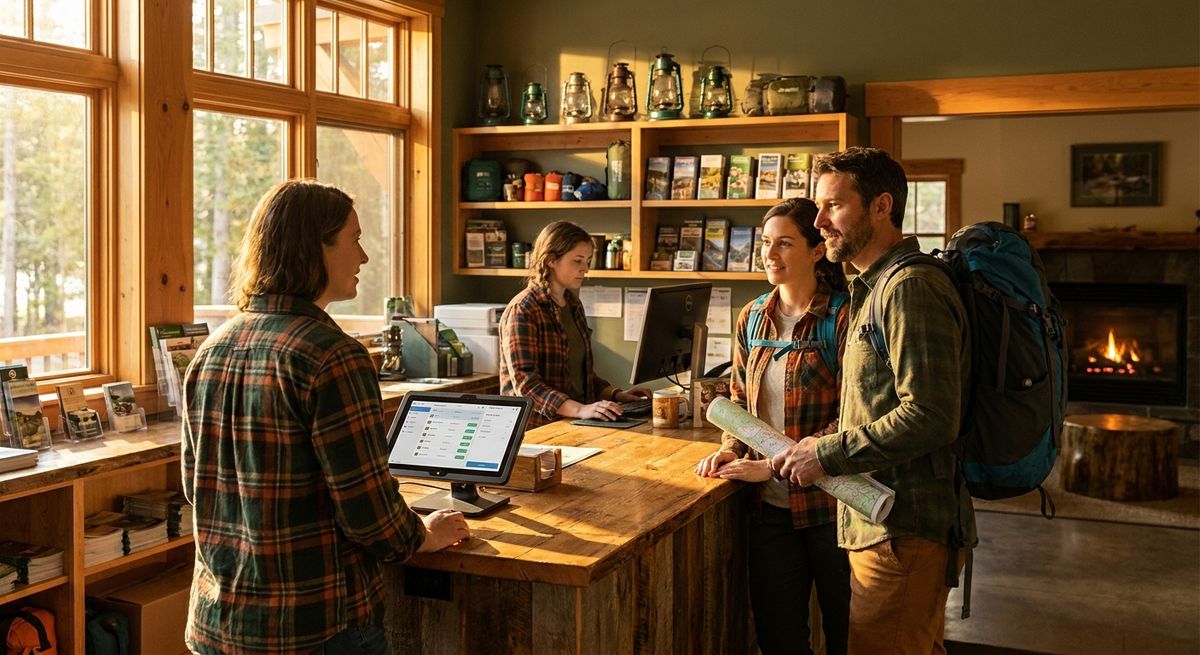
Most modern businesses now choose cloud-based POS platforms.
Instead of storing information on a single computer inside the business, cloud systems securely synchronize information across devices and locations.
This offers several advantages. Owners can review sales from home. Managers can monitor inventory remotely. Software updates happen automatically. Reports are available from virtually anywhere.
For seasonal outdoor businesses, cloud platforms also make it easier to manage multiple locations, temporary staff, and changing operating hours.
The result is greater flexibility without sacrificing security.
Integrated Payments Save Time
One of the biggest advantages of a modern POS system is integrated payments.
When payment processing and the POS platform work together, transactions flow automatically into your reporting. Receipts, sales totals, inventory updates, and customer records all stay synchronized.
Without integration, staff often find themselves entering information into multiple systems, increasing the likelihood of mistakes while consuming valuable time. It also makes it harder to reconcile deposits against your card processing fees at the end of the month.
Integrated payments aren't simply more convenient. They help businesses operate more efficiently every day.
Clover and Talech
Outdoor businesses don't all require the same type of POS system.
Some need advanced inventory management and flexible hardware for busy retail environments. Others prioritize simplicity, mobility, and straightforward daily operations.
Two platforms supported by Fizel are Clover and Talech. Both are cloud-based systems with integrated payment processing, but each serves slightly different needs.
Generally speaking:
| Clover | Talech |
|---|---|
| Excellent hardware options | Simple cloud-based platform |
| Strong retail capabilities | Easy to learn |
| Extensive app marketplace | Flexible business management |
| Scales well as businesses grow | Well suited to many service-oriented businesses |
| Integrated payment processing | Integrated payment processing |
Rather than recommending the same platform to every merchant, Fizel helps businesses evaluate which solution best matches their operations, staff, and long-term goals.
Inventory Is More Important Than Most Businesses Realize
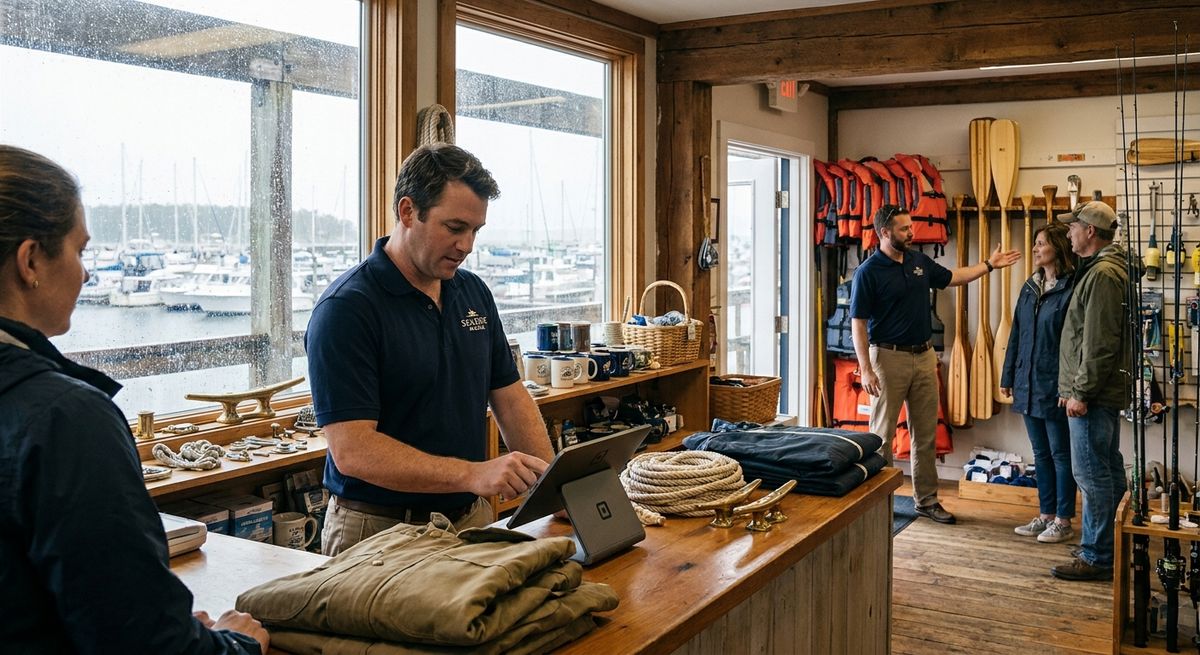
For many outdoor businesses, inventory represents one of the largest investments on the balance sheet. Whether it's bicycles, skis, camping equipment, apparel, or accessories, knowing what's available, and where it's located, is essential for both customer service and profitability.
A modern POS system should do much more than record sales. Every transaction should automatically update inventory levels, helping staff avoid selling products that are out of stock or missing opportunities because inventory records are inaccurate.
Accurate inventory also improves purchasing decisions. Instead of relying on intuition, owners can identify best-selling products, seasonal trends, slow-moving inventory, and reorder points using real sales data.
Questions your POS should answer include:
- Which products sell the fastest?
- What inventory is running low?
- Which categories generate the highest revenue?
- Which products are often purchased together?
- What seasonal trends should influence future purchasing?
The more visibility you have, the easier it becomes to make smarter inventory decisions.
Ecommerce Should Feel Like Part of the Same Business
Customers no longer think in terms of "online" and "in-store." They simply expect a consistent experience regardless of how they choose to shop.
Someone may browse products on your website, reserve an item online, pick it up in person, and later return to purchase additional accessories in the store. Your POS system should recognize that as one customer journey, not separate transactions across disconnected systems.
For businesses with an online store, integration between ecommerce and the POS is increasingly important.
Benefits include:
- Shared inventory between online and retail
- Click & Collect
- Unified customer purchase history
- Digital gift cards
- Consistent reporting
- Fewer manual inventory updates
When ecommerce and your POS work together, customers experience one brand rather than two separate systems.
Mobility Matters in the Outdoor Economy
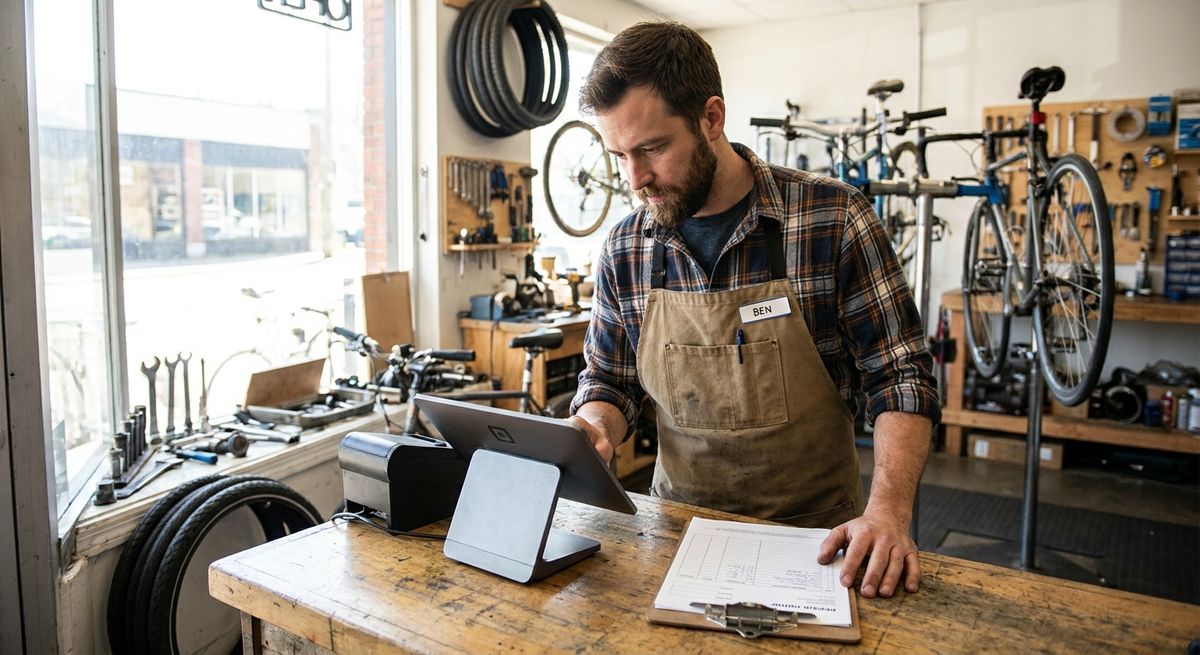
Many outdoor businesses don't operate exclusively behind a checkout counter.
Payments happen throughout the property, whether it's checking in campers, renting paddleboards, selling merchandise during an event, or completing a transaction beside a marina.
Modern cloud-based POS platforms support mobile devices and wireless payment terminals, allowing staff to complete transactions wherever customers happen to be.
Examples include:
- Campground check-in
- Outdoor events
- Equipment rental pickup
- Marina docks
- Ski rental areas
- Garden centres
- Farmers' markets
- Pop-up retail
This flexibility reduces waiting, improves customer service, and helps businesses operate more efficiently during busy periods.
Reporting Helps You Make Better Decisions
One of the most valuable features of a modern POS system isn't something customers ever see. It's reporting.
Good reporting turns daily transactions into meaningful business insights.
Instead of simply knowing how much you sold yesterday, you can understand:
- Sales by department
- Average transaction value
- Top-performing products
- Sales by employee
- Hourly transaction trends
- Gross sales versus refunds
- Seasonal comparisons
These insights help owners make better decisions about staffing, purchasing, promotions, and inventory planning.
A POS system shouldn't just record the past. It should help you plan for the future.
Questions to Ask Before Choosing a POS System
Before investing in any platform, spend time evaluating how it fits your business rather than simply comparing features.
The same discipline applies to pricing: understanding interchange pricing will tell you far more about long-term cost than a headline rate on a brochure.
Ask questions such as:
| Question | Why It Matters |
|---|---|
| Does it integrate with payment processing? | Eliminates duplicate work and simplifies reporting. |
| Can it grow as my business grows? | Avoid replacing systems in a few years. |
| Does it support ecommerce? | Creates a seamless customer experience. |
| How easy is it for staff to learn? | Reduces training time. |
| Can it manage inventory effectively? | Essential for retail and rental businesses. |
| What reporting is available? | Better information leads to better decisions. |
| Is customer support responsive? | Problems usually happen during your busiest periods. |
The best system isn't necessarily the one with the most features. It's the one your team will actually use every day.
Why Fizel
At Fizel, we believe choosing a POS system should start with understanding your business, not selling hardware. That's why we take the time to learn how you operate before recommending a solution.
For many outdoor businesses, Clover provides an excellent balance of modern hardware, integrated payments, inventory management, and scalability. For businesses looking for a straightforward, cloud-based platform with flexible management tools, Talech is another strong option.
Rather than pushing a single solution, we help businesses choose the platform that best fits their operations, staff, and long-term goals.
Because we focus exclusively on the outdoor economy, our recommendations are grounded in the realities of running campgrounds, bike shops, marinas, outdoor retailers, rental businesses, and other adventure-focused operations.
Frequently Asked Questions
What is a POS system?
A point-of-sale (POS) system combines payment processing with software that manages sales, inventory, reporting, and customer information.
Do I need a POS if I already have a payment terminal?
Many businesses can accept payments with a standalone terminal, but a POS system provides additional functionality such as inventory management, reporting, customer history, and integrated sales tracking.
What's the difference between Clover and Talech?
Both are cloud-based POS platforms supported by Fizel. Generally, Clover offers a broader hardware ecosystem and extensive app marketplace, making it well suited to many retail-focused businesses. Talech provides a streamlined, easy-to-use platform that's a strong fit for many service-based and smaller businesses. The best choice depends on your specific operational needs.
Can a POS integrate with ecommerce?
Yes. Many modern POS systems synchronize inventory, sales, and customer information between online and physical locations.
Can I upgrade my POS as my business grows?
Absolutely. One advantage of cloud-based platforms is their ability to scale as your business adds locations, employees, or new services.
Build Your Business Around the Right POS System
The right point-of-sale system should do more than process payments. It should simplify daily operations, provide better visibility into your business, and create a smoother experience for your customers.
Whether you're opening a new outdoor business or replacing an existing system, Fizel can help you choose the right POS solution for the way you operate. Request a quote →