
Bike Shops
Payment Processing for
Bike Shops
The bike leaves the shop. The customer keeps coming back. A deposit in March, a complete build in April, a set of tires in June, a drivetrain in August, a winter service in November, one relationship, paid for a dozen times over.
Fizel sets payments up for the whole of that: the floor, the workshop, the special order and the website.
The merchant reality
Two businesses under one roof, and one customer moving between them.
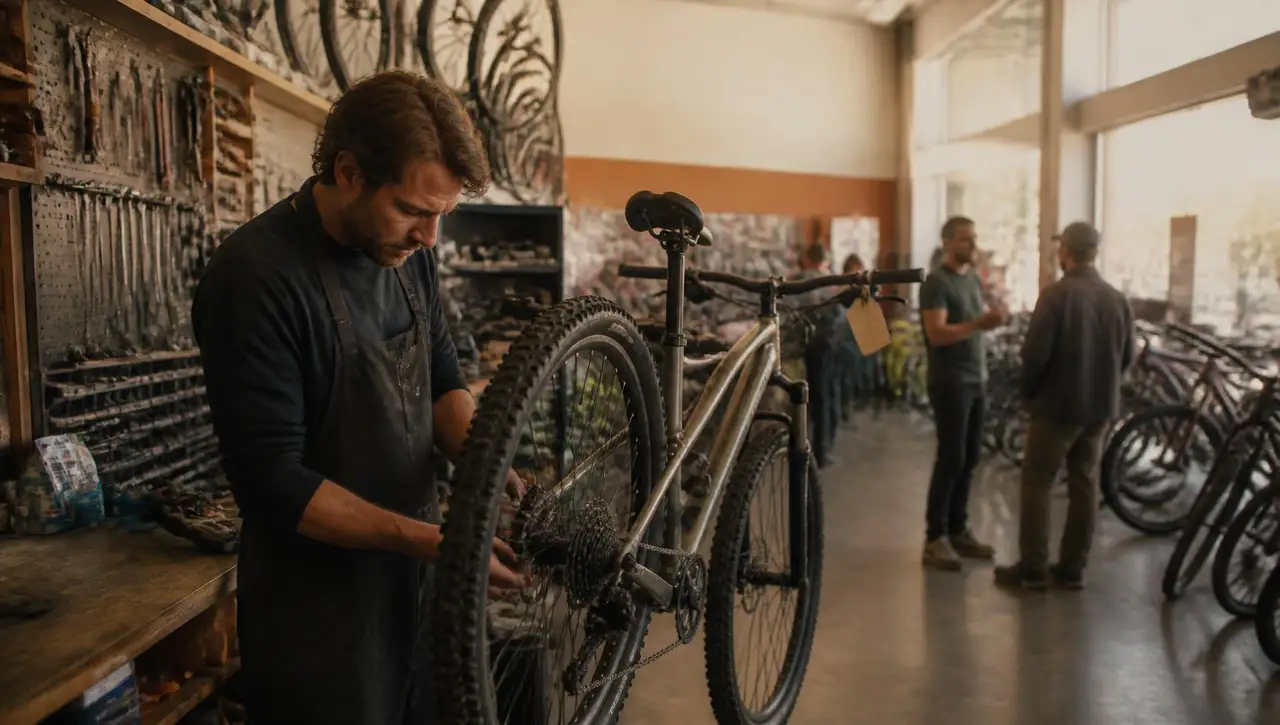
A bike shop is a retail store and a service business operating in the same room, on different clocks, for the same person. Most payment setups are built for one or the other.
The floor
Sells in the moment. Someone walks in on a Saturday, and the decision is made while they are standing there.
- Complete bikes and e-bikes
- Components, tires and accessories
- Apparel, helmets and gear
- Special orders and pre-orders
- Rentals and demos where a shop offers them
The bench
Sells on its own schedule. Work is quoted, approved, done and collected days apart, often by a customer who is not in the building.
- Tune-ups and seasonal servicing
- Repairs booked in and picked up later
- Extra work approved mid-job
- Parts ordered in for a specific bike
- Workshop invoices and warranty jobs
Bike shops sit inside the wider Retail & Service category Fizel works across.
At the bench
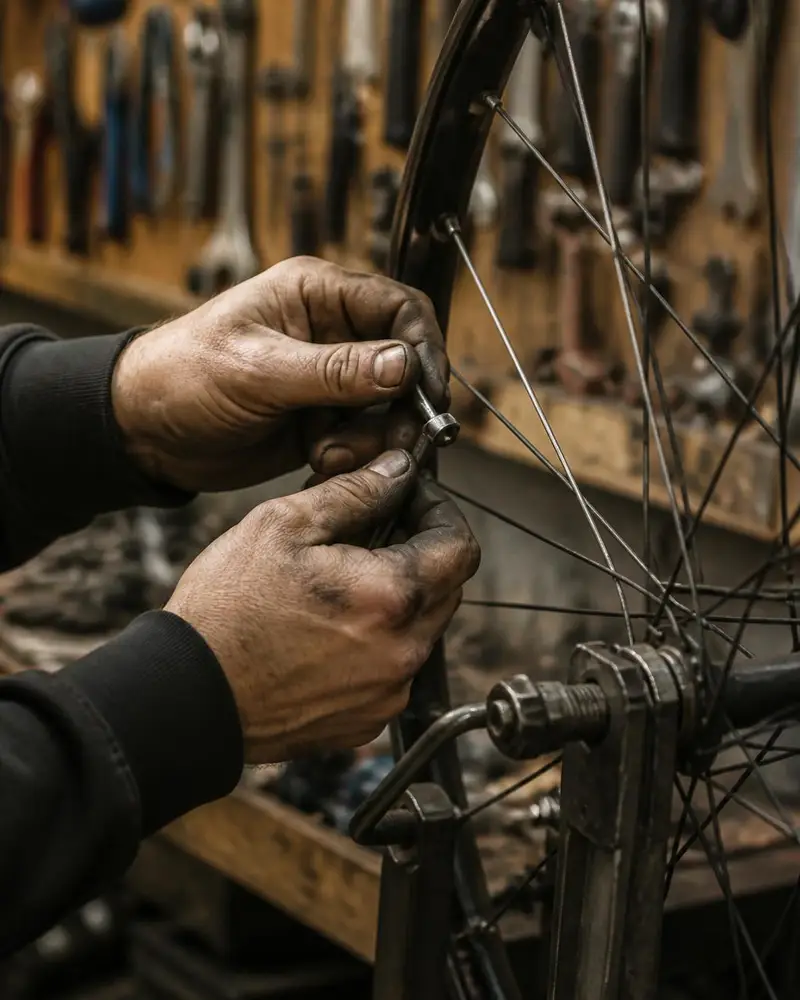
Truing a wheel doesn’t stop for a card reader.
Most of what happens at the bench never touches a payment screen at all, it is spokes, tension and a mechanic’s ear for a wheel that’s finally true. The payment should be the fast, forgettable part at either end of that work, not a step the mechanic has to think about mid-job.
Sound like your business? Tell us how you take payments today and we'll put together a quote built around it.
Where the money actually arrives
One customer. Six chances to take a payment.
The register is only one of them, and rarely the biggest. A shop that can only take money at the counter is quietly leaving the other five to chance.
- 01
The deposit
A size is out of stock, a build is going on order, an e-bike is coming in next month. Something has to be taken today to hold it.
- 02
The pickup
The balance lands weeks later, often the largest transaction the shop takes that week, and usually while the customer is excited to ride.
- 03
The add-ons
Pedals, a rack, shoes, a computer. The accessory sale attaches to the bike sale, then again on every visit after it.
- 04
The first service
Free or not, it brings the customer back into the workshop, where the next quote gets written.
- 05
The approval
The bike is in pieces and a bearing is shot. The extra work needs a yes and a payment method from someone at work across town.
- 06
The next season
A drivetrain, a suspension service, a second bike for a partner. The same customer, a different ticket, sometimes years later.
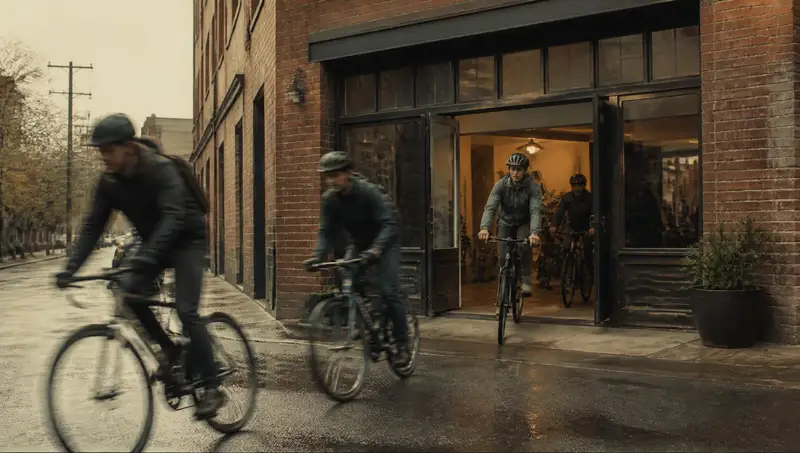
The ride starts the moment the door opens, the transaction that got them there should already be behind them.
A shop's day, in structure
Two businesses. One register. A very uneven year.
2
Distinct businesses run under one roof (retail floor and service workshop) each on its own clock.
1
Merchant account most shops want across bikes, parts, apparel and workshop invoices.
0
Locked-in contract terms, Fizel runs month-to-month, in step with a shop's own seasonal rhythm.
Higher tickets, same counter
A five-dollar tube and a complete build, ten minutes apart.
Few retail categories swing this far in a single day. A high-end e-bike or a custom build is a materially larger transaction than anything else that crosses the counter, and it usually happens on the busiest afternoon of the week.
Fizel supports high-ticket environments as a matter of course. We start by understanding a shop’s real transaction profile, then configure the payment environment around it, so a complete build or a high-end e-bike is ordinary business on your account rather than an exception.
Deposits are the other half of it. Where a bike is going on order, a hold on the size, color or build takes money now for something that arrives later, and the balance should be just as easy to take when the customer comes in to collect.
Payment capabilities
Everything the shop sells, on one account.
Most shops use a handful of these, not all of them. What matters is that bikes, parts, workshop invoices and online orders behave consistently and reconcile in one place.
On the floor
- Countertop terminals for the sales counter
- Wireless terminals for the workshop or a second till
- Tap to Pay on supported devices for demo days and events
- One merchant account across bikes, parts, apparel and service
Away from the counter
- Payment links for deposits and approved repair work
- Virtual terminal for card details taken over the phone
- Invoicing for workshop jobs, clubs, teams and fleet accounts
- Pre-authorizations where a hold on demo or rental gear makes sense
Online and beyond one store
- Ecommerce payments and hosted checkout pages
- Internationally issued cards and multiple currencies where you sell to visitors
- Multi-location setups reporting into one place
- Scheduled payments where a build is paid in stages
The full range is on our solutions page.
Start with what you already run
Fizel is not a POS company.
By the time a shop talks to us there is already a POS on the counter, a work-order system on the bench, an online store, inventory that took years to get straight, and a bookkeeper who knows exactly how the month is supposed to close.
See the platforms Fizel works with for a sense of the ecommerce, POS, accounting and business systems payments can connect to.
We do not start by asking you to replace any of that. We start by understanding it, what rings the sale, what tracks the repair, what takes the online order, and then work out where payments should sit inside it. Support comes from people who understand what it is to run a floor and a bench on a busy Saturday, not a generic call queue.
Fizel integrates broadly across POS, work-order and service systems, ecommerce platforms and accounting tools. We keep the setup you spent years getting right in place, review it with you, and confirm the integration that fits how your shop actually runs.
What makes this different
Two rhythms running through the same year.
For many shops, retail arrives in a rush, spring, the first warm weekend, the run-up to the holidays, while the workshop keeps turning over long after the sales floor quietens down. The two halves of the business do not peak together, and they do not behave the same way in a slow month.
A payment setup that only understands the busy weeks is the wrong shape for the rest of the year. We set accounts up around your actual pattern from the outset, including a service department that carries the shop through the off-season, and settlement lands on a predictable, generally next-business-day basis, so spring inventory gets paid for out of spring sales. Month-to-month, with no locked-in contracts.

Field note
Group rides start and end at the same shop door.
Walk into most independent shops on a Tuesday evening and the floor is half showroom, half staging area, a dozen riders clipping in for the weekly ride that has left from that exact door for years, sometimes decades.
It is the same shop where the mechanic on the bench recognizes a customer's bike by its rattle before they finish describing it. That kind of familiarity is not something a payment system creates, it is something it should simply stay out of the way of.
How Fizel fits
- Sales floor
- Terminals for tap, chip and contactless on everything from a tube to a complete build.
- Service desk
- Email the repair invoice with a payment link so the rider can settle before pickup.
- Special orders
- Take a deposit when the order is placed so the frame isn't floated by the shop.
- Online sales
- Hosted checkout for ecommerce, click-and-collect and gift purchases through the same account.
Pricing
Quoted on your mix, not on an average.
A shop selling a lot of complete bikes prices differently from one doing mostly parts, service and online orders. Rather than publishing a rate that will not match your business, we quote on your real volume, ticket sizes and the way your payments come in.
Further reading
Payment Processing for Bike Shops
The longer guide: how retail, workshop and online payments work together for a bike shop, and what to compare when you are choosing a payments partner.
Read the guideQuestions
Bike shop payments, answered.
Can we keep the POS and ecommerce setup we already have?
That is the starting point. Fizel integrates broadly across POS, work-order and online store systems and accounting tools, and we review what you already run to confirm the right integration for your shop.
How do complete bike and e-bike sales get handled?
They run on the same merchant account as a tube or a pair of gloves. A complete bike is simply a larger transaction, and Fizel sets accounts up around a shop's real ticket sizes from the start, so a build of that size is a normal part of your week, not an exception.
Can we take a deposit on a bike or a special order?
Yes. A deposit can be taken at the counter, sent as a payment link, or keyed over the phone, with the balance collected when the bike is built and ready. Where a build is paid in stages, scheduled payments can cover that too.
A repair needs extra work approved. How do we get paid for it?
Send the customer a payment link or an invoice for the additional work from the workshop, and carry on once it is paid. It saves the mechanic holding a half-stripped bike while waiting for someone to come in with a card.
We sell in the store and online. Does that need two providers?
No. Retail, workshop and online payments sit under one merchant relationship, with reporting in one place across all three.
Our year is not evenly spread. Is that a problem?
Seasonal patterns are normal across the outdoor economy and we set accounts up expecting them. Bike shops often run two rhythms at once (a concentrated retail season and steadier workshop revenue) and it is worth describing both at the outset.
Something specific to your shop? Contact us and we will give you a straight answer.
Built for the floor and the bench.
Tell us how your shop sells and services today, and we will put together a quote around it.