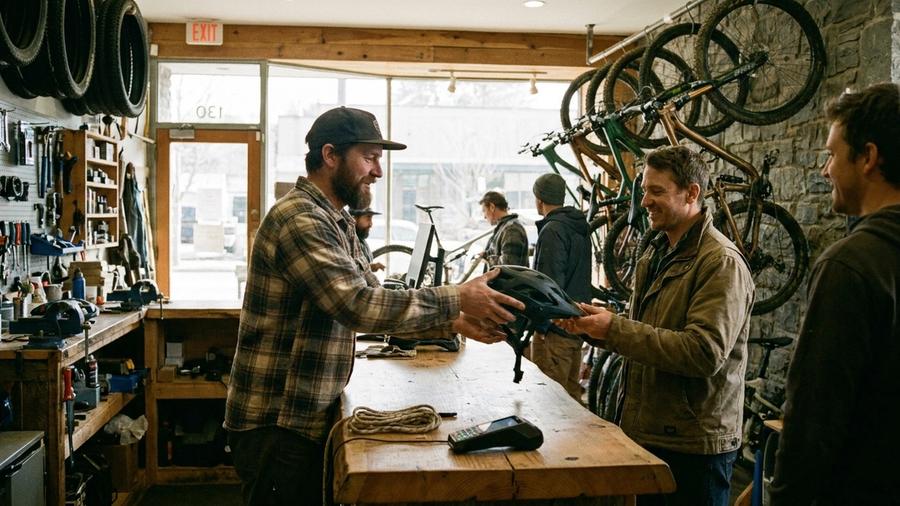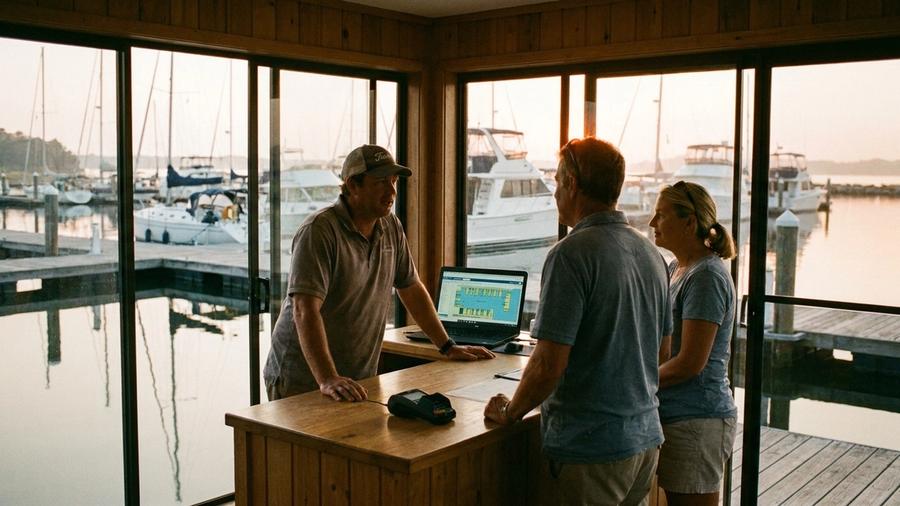
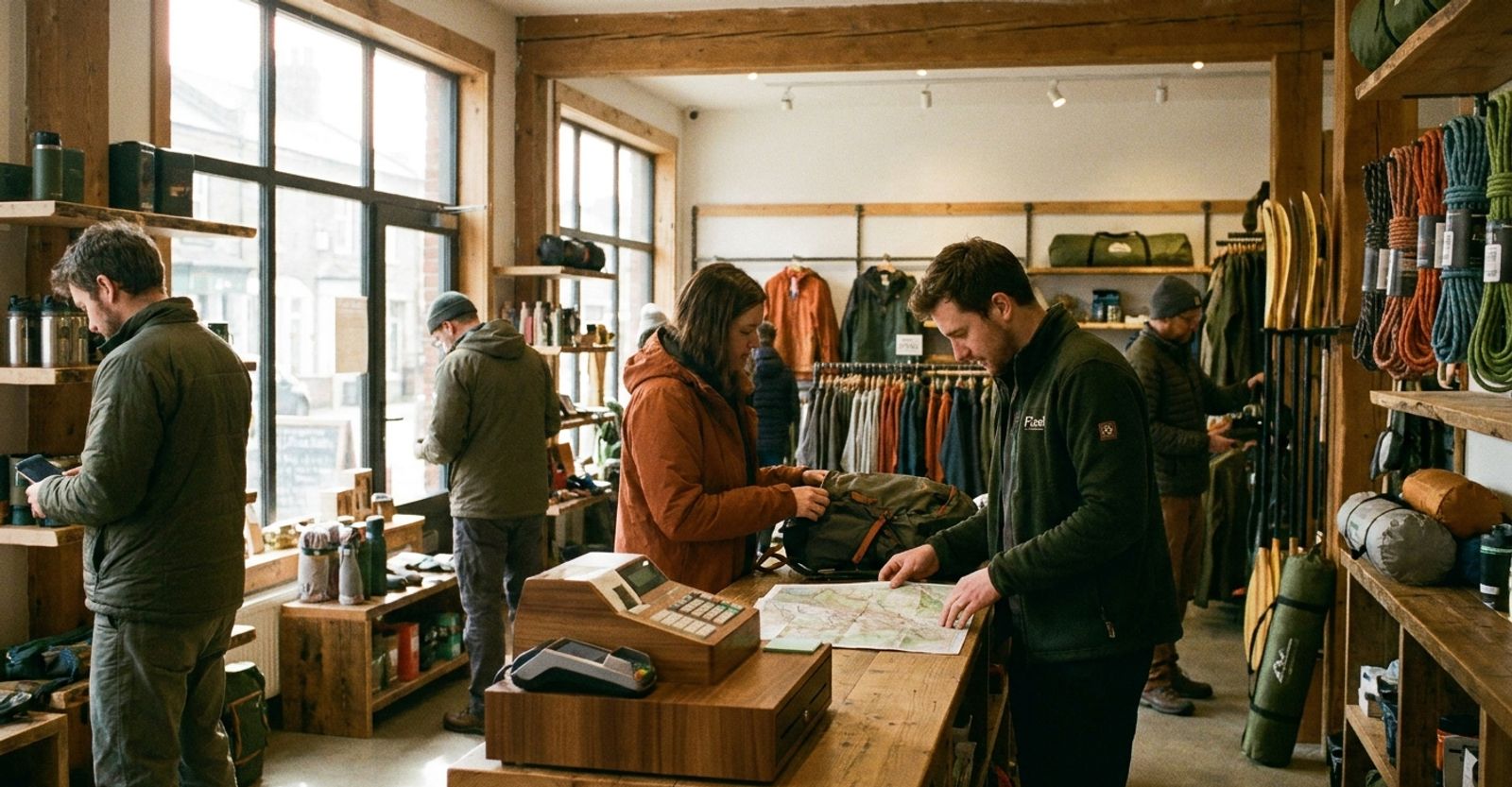
Walk into a great outdoor retailer and you'll quickly notice that it isn't simply a place to buy gear.
Customers come for advice before a backpacking trip, help choosing climbing equipment, ski boot fitting, fly fishing recommendations, or simply to talk with people who share their passion for the outdoors. The products matter, but the experience is what builds long-term customer loyalty. A shop that gets someone into the right pack or the right pair of boots earns something a marketplace never will: a customer who comes back before every trip.
Modern payment systems should support that experience rather than interrupt it. The right technology helps staff spend less time navigating checkout screens and more time helping customers prepare for their next adventure. This guide looks at how payments touch every part of an outdoor retail business, the shop floor, the website, the service bench and the community night, and what to look for in a payments partner who understands the difference.
Retail Has Become Much More Than Selling Products
Today's outdoor retailers operate across multiple channels. Many customers research products online before visiting the store. Others purchase online and collect their order in person. Some return for repairs, equipment servicing, workshops, or community events long after making their first purchase.
This evolution means that payment systems need to support far more than a traditional cash register. A single Saturday can include a walk-in apparel sale, three online orders picked up at the counter, a ski tune dropped off for Tuesday, a gift card bought for a birthday, and a deposit on a rental package for the long weekend. Each of those is a different workflow with different timing, and each one lands in the same day's numbers.
A modern platform should bring retail, ecommerce, inventory, customer history, gift cards, and reporting together into one connected ecosystem. When everything works together, staff gain better visibility into the business while customers enjoy a smoother buying experience, and nobody has to reconcile four systems on a Sunday night.
For a closer look at how Fizel sets this up in practice, store, ecommerce, special orders and multiple locations on one payment environment, see payment solutions for outdoor retailers.
Specialty retailers with an installation bay carry an extra layer of this: a counter sale in the morning and a five-figure invoice on a finished vehicle in the afternoon. Our page on payments for 4x4, off-road and overland shops covers deposits on special orders, installation invoicing, higher-value builds and ecommerce in one merchant environment.
Typical services may include:
- In-store retail
- Ecommerce
- Click & Collect
- Gift cards
- Equipment servicing
- Community events
- Product demonstrations
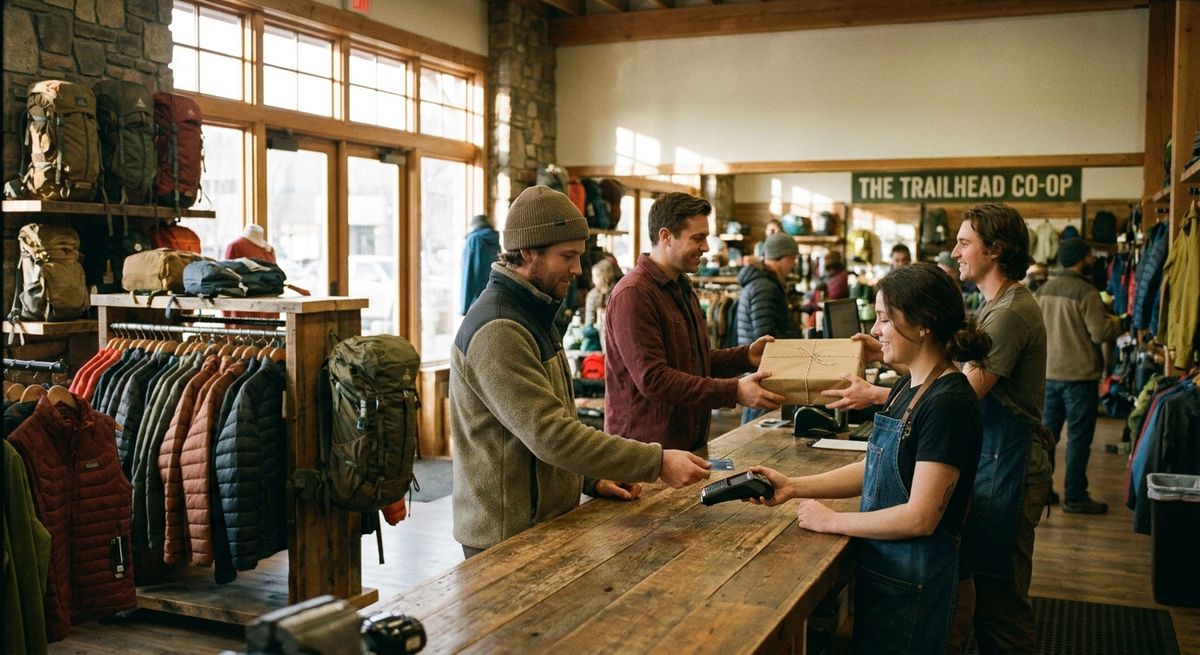
An outdoor shop isn't one business anymore. It's a store, a website, a workshop and a clubhouse sharing the same front door.
Customer Experience Begins at Checkout
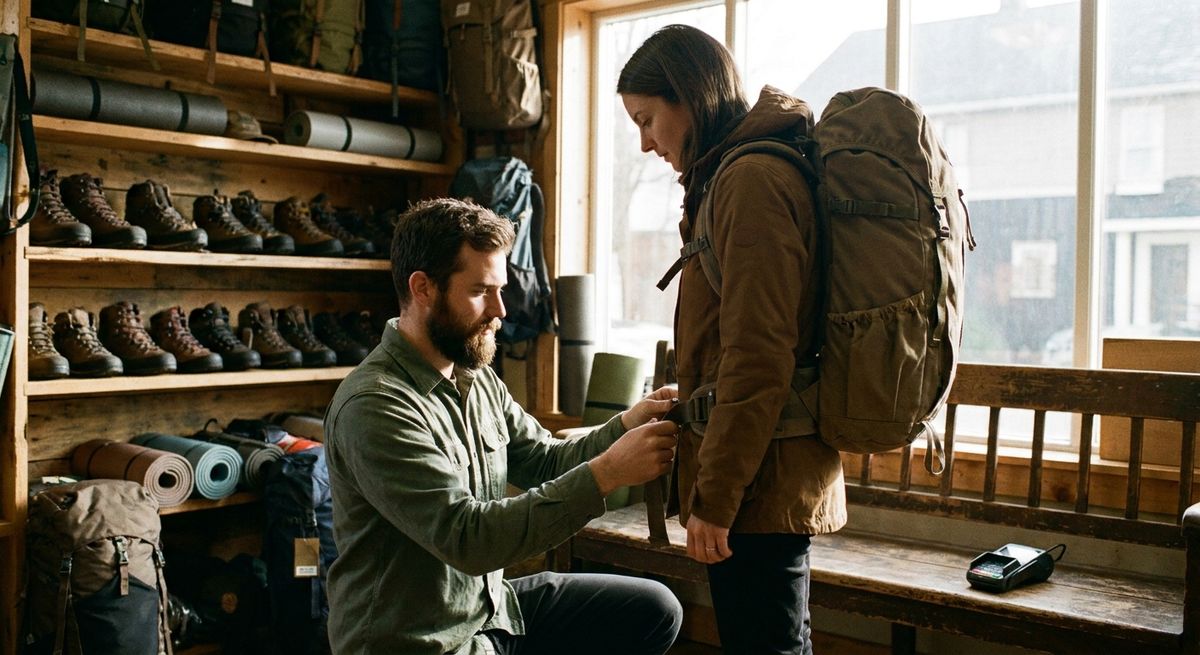
Few things undermine excellent service more quickly than a slow or frustrating checkout experience. After spending thirty minutes helping someone choose the perfect backpack or ski setup, the payment process should feel effortless. The conversation you just had is the product; the transaction should be a footnote to it.
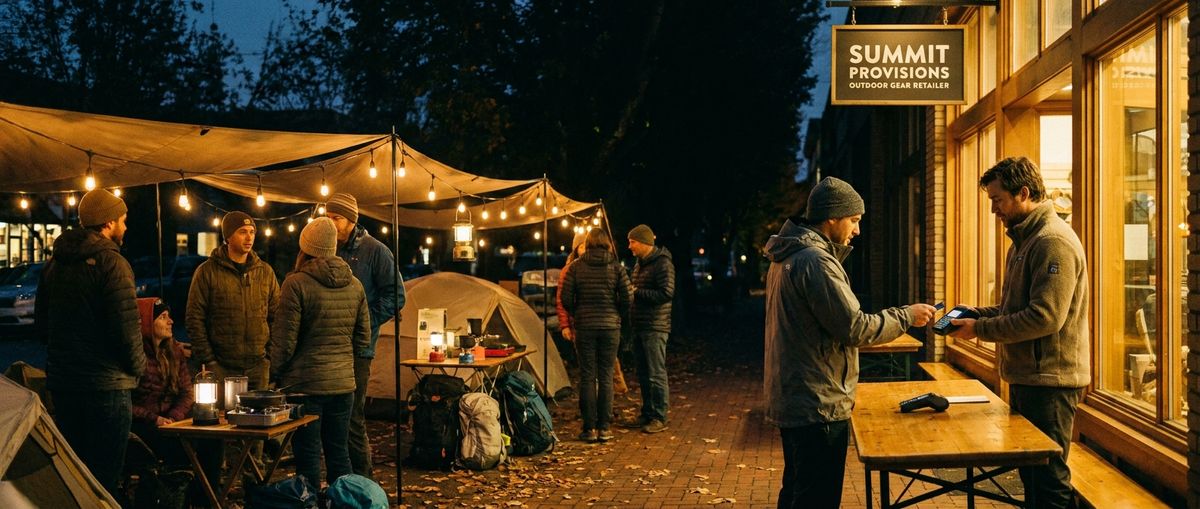
Modern payment terminals support contactless cards, Apple Pay, Google Pay, digital wallets, and integrated loyalty programs, allowing customers to complete purchases quickly while staff remain focused on the conversation rather than the technology. Mobile terminals extend that further: a staff member can close a sale beside the boot wall or at the demo tent instead of walking a customer back to a queue.
Fast, reliable payments become particularly important during seasonal rushes when stores are at their busiest. The first cold snap, the week before a long weekend, the opening day of ski season: these are the hours that decide the year. A terminal that stalls on a Saturday in November costs far more than a few tenths of a percent on the rate.
Ecommerce Should Feel Like Part of the Same Business
Customers no longer think in terms of online or in-store shopping. They simply expect to interact with your business however it's most convenient, browsing on a phone at lunch, asking a question in the shop on the way home, and picking up the order two days later.
A consistent payment platform makes that possible by supporting online checkout, in-store pickup, digital gift cards, and unified reporting. When the website and the sales floor share the same customer records and the same inventory counts, a click & collect order isn't a special case, it's just another sale that happens to start somewhere else.
Instead of operating separate businesses, retailers can create one seamless customer experience across every sales channel. That matters most in the moments where channels overlap: a return of an online purchase at the counter, a gift card bought in store and spent online, a size exchange that has to find stock somewhere. Handled well, those moments build trust. Handled badly, they become the reason someone shops elsewhere.
Inventory, Reporting, and Payments Should Work Together
Retail businesses generate valuable information with every transaction. Which brands move at full price, which sizes sell out first, how early the season really starts: it's all recorded, whether or not anyone can see it.
Connecting payments with inventory and reporting gives owners a clearer understanding of purchasing trends, seasonal demand, and product performance. Instead of spending hours reconciling multiple systems, managers can focus on making better business decisions, and buyers can walk into a preseason order meeting with evidence rather than instinct.
Integrated reporting also makes forecasting and inventory planning significantly easier, particularly in a business where capital sits on the shelf for months at a time.
| What an outdoor retailer needs | Generic processor | Retail-ready platform |
|---|---|---|
| Online and in-store sales in one view | Separate reports to reconcile | Unified reporting across every channel |
| Click & collect | Manual order tracking | Web orders and store pickup in one system |
| Gift cards | Physical cards only, if any | Physical and digital cards redeemable anywhere |
| Service and repair work | Card at pickup only | Estimates, deposits and digital invoicing |
| Events and demo days | Countertop hardware only | Mobile terminals that work away from the counter |
| Peak-season support | Ticket queue | Named support that knows the season you're in |
Choosing the Right Payments Partner
Price matters, but it shouldn't be the only consideration. Processing rates are the easiest thing to compare and the least likely to explain the difference between two providers a year into the relationship.
Outdoor retailers should look for a payments partner that understands seasonal demand, community events, ecommerce, gift cards, and the consultative nature of specialty retail. Ask how the platform handles a demo day in a parking lot, a workshop deposit taken in February, or a December afternoon with a line to the door.
Reliable support, transparent pricing, modern technology, and seamless integrations often deliver far greater long-term value than simply choosing the lowest advertised processing rate.
Why Fizel
Fizel was created specifically for businesses that serve the outdoor community. We understand that outdoor retailers build relationships, not just transactions, and that the shop is often the first place someone learns how to do the thing they'll love for the rest of their life.
Our payment solutions support retail, ecommerce, events, repairs, and customer engagement while providing transparent pricing and modern technology designed around the outdoor economy. That means terminals that work at a trailhead demo as reliably as they do at the counter, recurring billing for workshops and memberships, and reporting that treats online and in-store sales as one business.
Frequently Asked Questions
Can outdoor retailers integrate ecommerce with in-store payments?
Yes. Many modern payment platforms unify online and in-store sales into one reporting system.
Do payment systems support gift cards?
Most integrated POS platforms support both physical and digital gift cards.
Can outdoor retailers accept mobile payments?
Yes. Modern terminals support Apple Pay, Google Pay, contactless cards, and mobile payment devices.
Why are integrated payment systems important?
Integrated systems reduce manual work, improve reporting, and create a better customer experience across every sales channel.
Specialty retailers face a sharper version of the same problem. See how this plays out for fly shops, where a few dollars of tippet, a premium rod setup, an online order and a guided-trip deposit can all cross the counter in one day.