
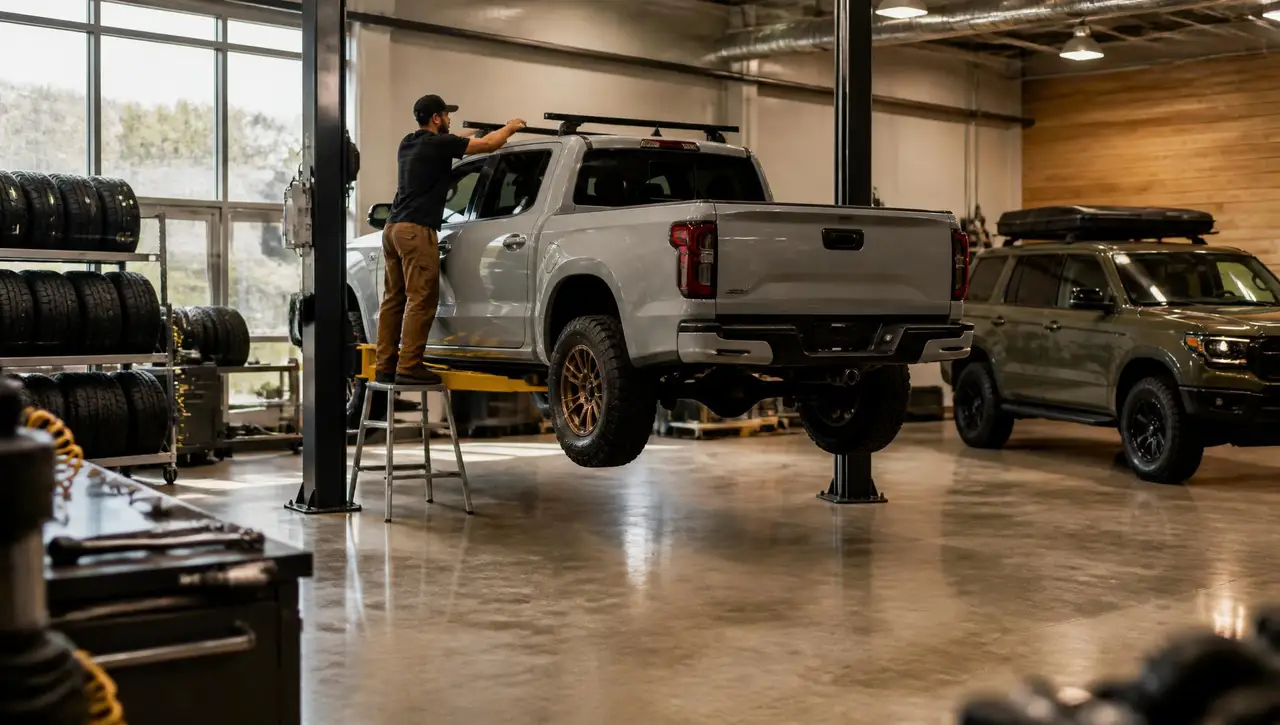
4x4 & Off-Road Shops
Payment Solutions for 4x4 & Off-Road Shops
From the parts counter and the online store to deposits, special orders, installation and complete vehicle builds, Fizel supports the different ways 4x4, off-road and overland businesses get paid.
Terminals on the counter, invoicing and payment links for projects, ecommerce for the national customer, higher-ticket environments for the finished build, funding that generally lands the next business day, and month-to-month terms with no lock-in.
The commercial reality
The build is bigger than the parts cart.
A customer rarely walks into a 4x4 shop and buys a thing. They start a conversation about what they want the vehicle to do: a week of forest roads with a family, a hunting season, a year of work sites, a trip they have been planning since last winter. The parts follow from that conversation, and most of them are not sitting on your shelf.
So the money arrives in stages. A deposit when the specification is agreed. Equipment ordered for one specific vehicle. A bay booked. Work added once the truck is up and something else becomes obvious. A substantial final invoice when the build is finished.
Meanwhile the rest of the business keeps running: someone buys recovery boards at the counter, an online order goes out across the country, a technician finishes a suspension install, parts arrive for next week's project, and another customer leaves a deposit on something larger. Fizel builds the payment environment around all of it: the counter, the online store, the bay and the build.
Plan, deposit, order, install, final payment
One customer. Several payments. Months apart.
Retail closes a transaction. A build opens a project, and the payments follow the work rather than the calendar. This is the common shape; every shop runs its own version of it.
01
Plan
A conversation about what the vehicle needs to do. Nothing is on a shelf yet and nothing has been paid for.
02
Deposit
The project becomes real. A deposit taken at the counter, by payment link or over the phone commits both sides.
03
Order
Equipment is bought in for one customer. Capital leaves the business well before the vehicle arrives.
04
Install
The vehicle is in the bay. Work is added, a part is upgraded, a scheduled payment lands mid-project.
05
Final payment
One substantial invoice covering equipment, parts, fabrication and labour, settled at pickup or remotely.
06
Next time
Tires in the spring, storage before a trip, a second vehicle in two years. The relationship keeps going.
Deposits, payment links, invoicing, a virtual terminal, scheduled payments, countertop and wireless terminals and ecommerce cover every one of those moments. The work order, the build sheet and the parts ordering stay in your systems: Fizel is the payment layer underneath them.
Sound like your business? Tell us how you take payments today and we'll put together a quote built around it.
Who this is for
One category, several kinds of business.
Some of these shops are primarily retail with a bay in the back. Others are primarily installers with a wall of equipment. Plenty run a serious online store alongside both. Few do everything on this list.
4x4 and off-road shops
Suspension, protection, wheels and tires, recovery equipment, sold, ordered and installed on the customer's own truck or SUV.
Overland shops and outfitters
Racks, tents, drawers, dual-battery and camp systems, put together as a travel platform rather than a parts list.
Vehicle upfitters
Work and expedition builds specified up front, ordered on the customer's behalf and delivered as a completed vehicle.
Truck and SUV accessory shops
Canopies, tonneaus, bars, steps, lighting and towing, high volume, quick turnaround, plenty of same-week installs.
Off-road fabrication shops
Bumpers, cages, sliders, mounts and custom metalwork, quoted in stages and paid the same way.
Adventure vehicle builders
Long-form projects that live in the shop for weeks, with the invoice growing as the specification does.
Suspension and lift specialists, roof rack and storage shops and overland equipment retailers belong here too. If the business is primarily omnichannel specialty retail, our outdoor retailers page fits better; if it sells the machine itself, see powersports dealers. This page is about work done to a vehicle the customer already owns.
Special orders and deposits
You buy it before they pay for it.
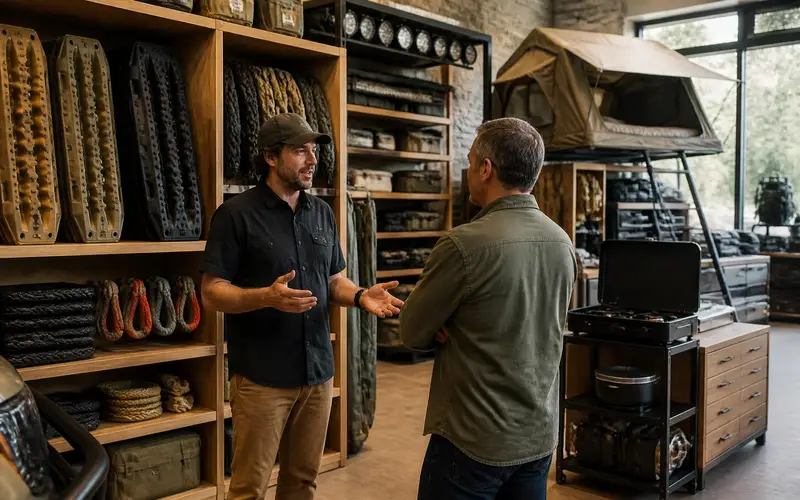
Suspension packages, bumpers, winches, roof racks, drawer and storage systems, lighting, wheels and tires, recovery equipment, tents and awnings, dual-battery and electrical kits, skid plates and protection, and the specialty item that took six weeks to source. Very little of it is generic. Most of it is bought in for one customer and one vehicle.
That means real capital committed ahead of the work, and it is why deposits exist in this trade. Depending on your policies, deposits and scheduled payments let the payment structure follow the project: something at the point of order, something during a long install, the balance at completion. Payment links and a virtual terminal cover the customer who agreed the whole thing by phone and will not be in the shop for a month.
How much you take, when you take it and what happens if the customer changes their mind are your decisions and your paperwork. Fizel supports the payment workflow around them, and funding generally lands the next business day, which is the part that matters when you have already paid your supplier.
A complete build is ordinary business when complete builds are your business.
Higher-value builds
Higher-value builds
The final invoice is not a parts receipt.
A finished build can combine equipment, parts, suspension, wheels and tires, protection, racks, storage, electrical, recovery and camping systems, fabrication and a substantial amount of labour. Put on one invoice, that transaction looks nothing like the recovery strap somebody bought this morning, and both are normal for the same shop on the same day.
Fizel supports higher-ticket payment environments and configures the merchant account around your actual transaction profile: average ticket, high ticket, the counter-to-build split, deposit patterns, ecommerce share and international cards. We would rather set the account up knowing that a five-figure invoice is a Tuesday than have it treated as an exception every time. Underwriting outcomes remain specific to each business.
The service bay
The vehicle is in the shop. The invoice is still moving.
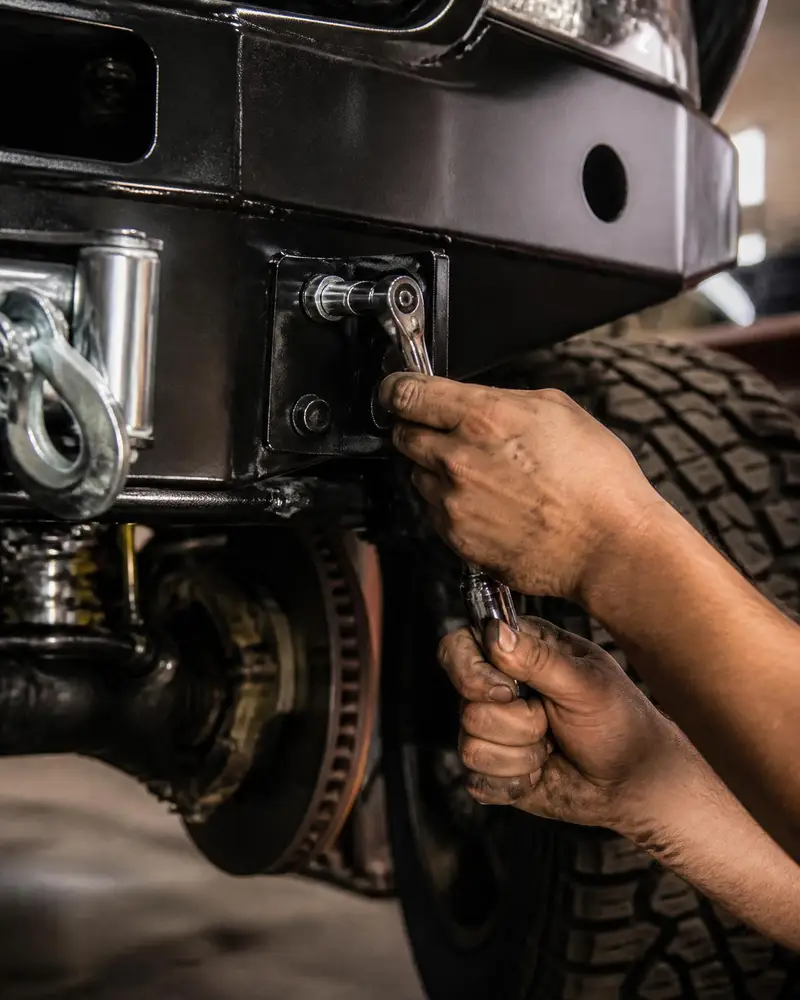
Suspension and lift installation, bumpers and winches, rack and storage fitting, lighting and wiring, skid plates, fabrication, trip preparation and the ordinary maintenance that comes with customers who use their vehicles hard. Some of it is booked weeks out, some of it appears once the truck is already up in the air.
Payment can land when the work is booked, when the equipment is ordered, at a milestone during a longer project or at pickup. Deposits, scheduled payments, payment links, invoicing, a virtual terminal and in-person terminals cover all four. The work order itself stays in whatever system your shop already runs on.
The parts counter
A counter sale at ten. A completed build at four.
Not every customer is a project. People come in for a recovery strap before a weekend, a set of traction boards, a light bar, a storage box, a replacement latch, an awning, a camp table, a second spare. That daily commerce keeps the lights on between builds and it is the first experience most future build customers have of the shop.
Countertop terminals, wireless terminals for the customer standing at their truck in the lot, Tap to Pay on supported devices and POS integrations handle that end properly. A payment environment for this industry has to be equally unremarkable at both ends of the range.
Same day, same account
- A $60 recovery shackle at the counter
- A $400 online order shipped two provinces away
- A $1,200 deposit on an ordered bumper
- A $3,000 wheel and tire package fitted the same afternoon
- A five-figure final invoice on a completed build
Ecommerce
The shop has a catchment. The store does not.
Some of the strongest businesses in this category go well beyond local installers. They are specialty retailers with a national audience: the shop that knows a particular platform better than anyone, the outfitter with the storage system people search for by name, the fabricator whose bumpers ship to customers who will never see the building.
Ecommerce payments, gateways, hosted payment pages and payment links support that side of the business, with internationally issued cards and multiple currencies with FX/DCC for customers across the border and further. It runs in the same merchant environment as the counter, so the online store and the shop floor reconcile into one place rather than two.
An observation
Nobody's truck is ever finished.
A vehicle leaves the shop complete and comes back eighteen months later needing tires. Then a drawer system before a long trip. Then better lighting after one bad night on a forest road. Then a rear bumper because the first trip proved the point. Then, eventually, a different vehicle and the whole conversation again, usually with the same person, who now brings a friend.
That is the quiet economics of this trade. The first build is rarely the last transaction, and the value of a customer is measured in years, not in the invoice at the end of the project. Shops that understand it tend to be the ones that never had to advertise.
Multiple revenue streams
A retail business and a project business under one roof.
- Counter retail: recovery gear, lighting, camp and storage equipment
- Ecommerce shipping locally, nationally and across the border
- Special orders placed for one specific vehicle
- Installation and fitting labour
- Service, maintenance and trip preparation
- Fabrication and custom metalwork
- Complete builds quoted as a package
- Wheel and tire packages
One location or several
Retail here, installation there, ecommerce everywhere.
This category scales in an unusual shape. A second site is often not a second store but an installation facility, a warehouse shipping online orders, or a location in the next city where the customers already are. The payment environment has to hold all three together.
Multi-location environments, consistent acceptance at every site, centralized visibility and consolidated reporting are available where they help. Fizel is built to be credible for one respected independent shop and for a regional specialty retailer running several locations plus a substantial online business: the same capability underneath, the same commercial terms at each site.
Payment capabilities
Counter, bay, project and online store.
At the counter: countertop and wireless terminals, Tap to Pay on supported devices and POS integrations. For builds and installation: deposits, scheduled payments, payment links, invoicing, a virtual terminal and higher-ticket transactions. Online: ecommerce payments, gateways, hosted payment pages and payment links.
Across the business: merchant accounts configured for your real transaction profile, pre-authorizations where they apply, internationally issued cards, multiple currencies and FX/DCC, multi-location environments, consolidated reporting and broad integrations. The full range is on our solutions page. Invoicing, service work and POS integrations are covered under running your business.
Existing systems
Your shop-management and work-order system stay put.
By the time a shop talks to us there is usually a POS at the counter, an ecommerce platform doing real volume, a work-order or shop-management system running the bays, inventory software tracking what is on order and accounting software that all of it reconciles into. Nobody asking about payment processing wants to rebuild that stack.
Fizel integrates broadly across commerce and business systems. We start with how the shop operates today and build the payment environment around it; the specific integration for your setup is confirmed during review. Those systems belong to their vendors; Fizel is the payment layer beneath them, not shop-management, work-order, inventory or vehicle configuration software, and we do not provide vehicle financing.
Settlement, terms and support
You shouldn't have to explain your invoices every quarter.
A shop with a customer's vehicle on a lift, several thousand dollars of equipment already paid for and a substantial final invoice due at pickup does not need a generic payments script. It needs someone who already understands why the ticket size moves between sixty dollars and five figures in the same afternoon, and why a deposit was taken six weeks before the work started.
Fizel provides knowledgeable human payments support from people who understand the business behind the transactions. Funding generally lands the next business day, which is the part that matters when parts for next week's build have to be ordered this week.
Month-to-month. No locked-in contracts.
Most 4x4 and overland shops work year-round, with demand that leans rather than stops.
- Spring vehicle preparation and pre-trip work
- Summer travel, camping and long-weekend departures
- Hunting and fishing seasons in many markets
- Winter driving preparation, tires and protection
- Holiday ecommerce peaks on the online store
Next-business-day funding and month-to-month terms suit that pattern, working capital that keeps moving with the parts order, and no contract that outlives the relationship.
Handover
Weeks of work, one invoice, ten minutes at the counter.
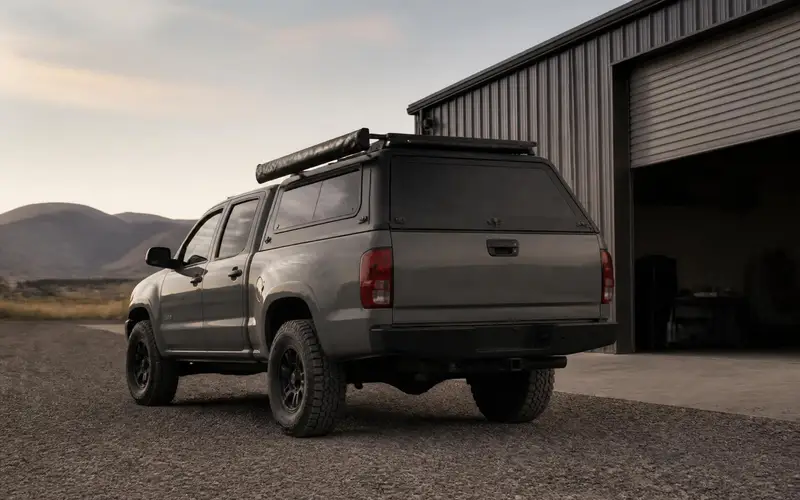
The build that leaves the apron is the shop's real advertising. The payment that closes it should be the least memorable part of the day for everyone involved.

Nobody builds a truck for the driveway.
The point of the work is somewhere three hours past the last paved road.
How Fizel fits
- Parts counter
- Terminals for tap, chip and contactless on parts and accessory sales.
- Build deposits
- Take a deposit when a build is ordered so the shop isn't floating the parts.
- High-ticket invoices
- A full build is a large transaction, invoiced by email with a payment link and settled generally next business day.
- Online & mail order
- Hosted checkout and phone payments for customers ordering from out of town.
Pricing
Quoted on your transaction profile, not a retail average.
A counter-heavy accessory shop prices differently from a builder whose average invoice runs into five figures, and differently again from a specialty retailer with a national online store. We quote on real volume, average and high ticket, the counter-to-build split, deposit patterns, ecommerce share, international cards, the number of locations and the systems already in place. Month-to-month, with no locked-in contracts.
Further reading
Payment Processing for Outdoor Retailers
How specialty retail, service work and ecommerce fit into one payment environment, plus our guide to choosing a POS system if the counter and the bay are still running on different tools.
Questions
4x4, off-road and overland shop payments, answered.
Can Fizel support deposits for custom 4x4 and off-road builds?
Yes. Deposits, scheduled payments, payment links, invoicing and a virtual terminal all sit inside one merchant environment, so a deposit taken at the counter, sent by link or processed over the phone is part of the same account as the final invoice. That matters when you are committing capital to suspension, bumpers, racks or a wheel and tire package for one specific vehicle weeks before it comes in. Deposit amounts, cancellation terms and refund policy are your decisions: Fizel supports the payment workflow, not the policy.
Can Fizel handle higher-value installation and final invoices?
Yes. Fizel supports higher-ticket payment environments and configures the merchant account around your actual transaction profile: average ticket, high ticket, the split between counter sales and completed builds, deposit patterns, ecommerce share and international card share. A five-figure invoice covering equipment, fabrication and labour is ordinary business for a shop whose business is complete builds, and the account is set up on that basis. Underwriting outcomes are always specific to the business, and no payment company can promise that funds are never held or reviewed.
Can we take payments both in the shop and through ecommerce?
Yes, in one merchant environment. Countertop and wireless terminals, Tap to Pay on supported devices and POS integrations cover the parts counter and the service desk. Ecommerce payments, gateways, hosted payment pages and payment links cover the online store, including internationally issued cards and multiple currencies with FX/DCC. Both sides report into the same place, so the counter sale at ten in the morning and the online order that shipped overnight reconcile together.
Can Fizel support special orders and remote customer payments?
Yes. Special orders are frequently agreed by phone or email with a customer who is not standing in the shop. Payment links, invoicing, a virtual terminal and scheduled payments cover customer-not-present acceptance, so a deposit on an ordered bumper or a balance on a completed build can be collected without the vehicle or the cardholder being present. The same tools handle out-of-town customers who are having work done while travelling.
Can Fizel work with our existing POS, ecommerce or shop-management systems?
That is the intended starting point. Fizel integrates broadly across commerce and business systems, and the approach is to keep the systems that already work and improve the payment environment around them. Your POS, ecommerce platform, work-order or shop-management system, inventory and accounting software stay where they are; the specific integration for your stack is confirmed during setup. Fizel is the payment layer, not shop-management, work-order, inventory or vehicle configuration software.
Can Fizel support multiple shop locations?
Yes. Multi-location environments, consistent acceptance at every site, centralized visibility and consolidated reporting are available, including where a business runs retail locations, an installation facility and an ecommerce operation together. The same capability and the same month-to-month commercial terms apply whether you run one respected specialty shop or a regional group with a substantial online business.
Something specific to your shop? Contact us or browse the Retail & Service category.
Get started
Tell us how your shop actually gets paid.
Counter sales, special orders, deposits, installation invoices, completed builds and an online store, bring the whole picture and we will quote the payment environment around it.