

Powersports Dealers
Payment Solutions for
Powersports Dealers
The machine leaving the lot is the first transaction, not the last one. Parts, accessories, apparel, scheduled maintenance and major repairs follow it for years, through the sales desk, the parts counter, the service drive and the website.
Fizel builds one payment environment across all of it, with settlement that generally lands the next business day and month-to-month terms.
The dealership reality
One roof. Several businesses. One set of books.
A powersports dealership is not simply a place that sells expensive machines. On the same Saturday it will take a deposit on an incoming side-by-side, sell a helmet and a set of tires at the parts counter, close out a repair order by phone, ship an accessory order from the website, and hand over a unit that was ordered in the spring.
Those transactions differ by an order of magnitude in size, arrive through different channels, and are handled by different people, but they all have to reconcile to the same place at close, and they should settle into the same account.
Fizel specializes in the outdoor economy and brings enterprise payment capability to it. That combination is the point: payments people who already understand how a dealership operates, with the capability to support what it processes. Dealerships built specifically around trail and utility machines can also see our ATV & UTV dealers page, and dealerships whose year turns on winter conditions can see snowmobile dealers.
Sales. Parts. Service. Online.
Four departments, one payment environment.
Each department has its own ticket size, its own peak hour and often its own software. None of that should require four unrelated payment relationships.
Sales
Units, trades and deposits. The largest tickets on the property, often assembled from more than one payment method and finalized days after the handshake.
Parts & accessories
Helmets, riding gear, tires, oil, racks, plows and performance parts. Small tickets, high frequency, and a counter that moves all day.
Service
Scheduled maintenance, warranty work and larger repair invoices, approved by phone, collected when the customer picks the machine up.
Ecommerce
Parts and apparel shipped, units reserved online, and customers who never walk in until the day they collect.
Run together, the picture gets useful: what each department contributed, how the ecommerce channel compares with the floor, and where the month actually came from, across one store or every location in the group.
Four
departments selling under one roof: sales, parts, service and online
Weeks
between a deposit on an incoming unit and the day it is handed over
Seasonal
demand set by riding season, snowfall, water temperature and model cycles
Sound like your business? Tell us how you take payments today and we'll put together a quote built around it.

Everything the dealership sells ends up here.
The trailhead on a Saturday morning: the reason the parts counter was busy on Thursday.
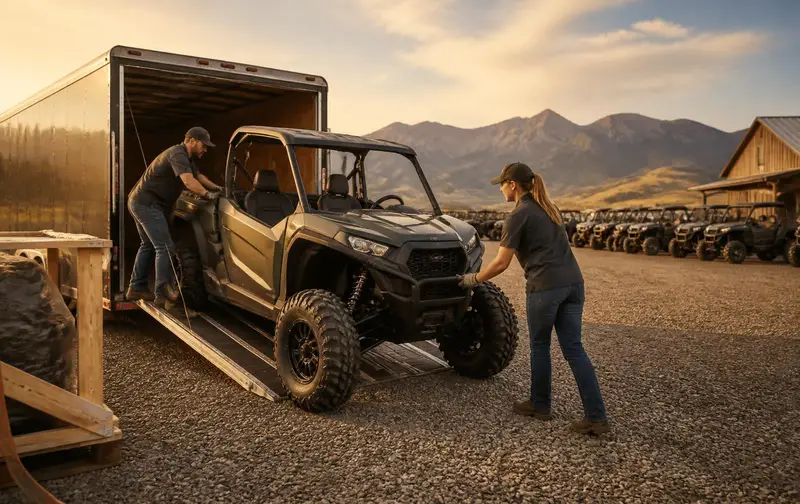
High-ticket and deposits
Large transactions are ordinary business here.
Fizel supports high-ticket payment environments, and we set the account up around your real numbers: average ticket, peak ticket, volume, payment mix and channels, instead of a generic retail profile. A unit transaction can involve more than one payment method, and the card portion of it should simply work.
Deposits are their own workflow. A customer holds an incoming unit, orders a machine with a specific build, commits to a set of accessories or authorizes a major repair. That deposit can be taken at the desk, sent as a payment link, collected through a hosted page online or keyed through the virtual terminal, with the balance handled the same way when the unit is ready.
Parts, accessories and apparel
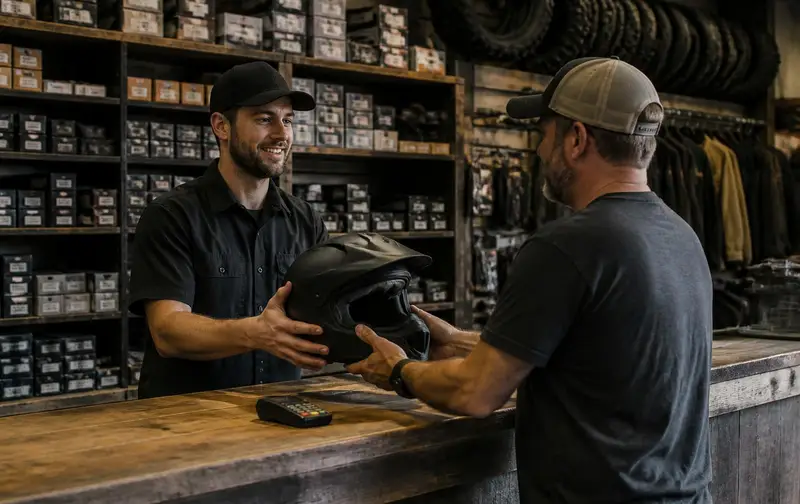
The counter that never stops.
Helmets, jackets, gloves, tires, oil, racks, winches, plows and performance parts move constantly, sometimes attached to a unit sale, sometimes during a service visit, sometimes through the website to a customer three provinces away.
These are small, fast transactions living inside a business that also processes very large ones. Fizel handles both in the same environment, so the parts counter is quick at the point of sale and still reports alongside everything else.
Service and repair
Quoted Tuesday, approved Thursday, paid at pickup.
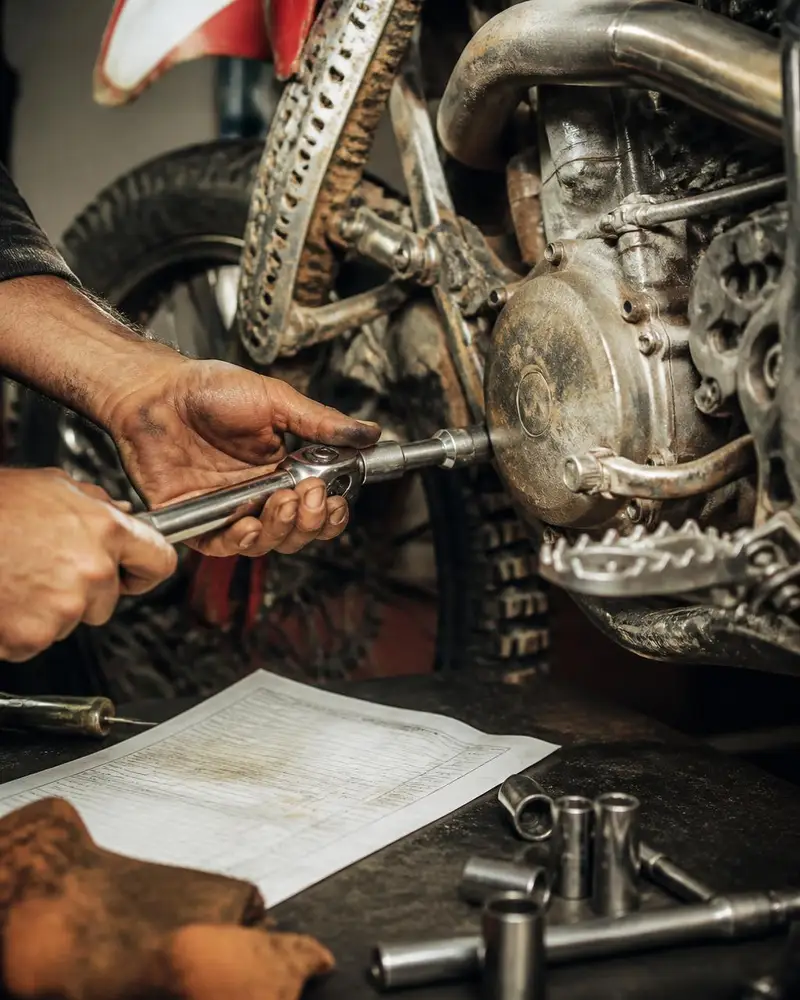
Service is a long-running revenue stream, and it rarely gets paid at the moment the work is agreed. A machine comes in, the estimate changes once the covers are off, the customer approves the extra parts and labour by phone, and the invoice closes days later.
Payment links, the virtual terminal and invoicing cover that gap, including the larger repair orders and commercial or fleet accounts that get billed on invoice instead of tapped. Your work-order system keeps tracking the job; Fizel supplies the payment layer around it.
Rentals and demo fleets sit alongside it comfortably too, see our outdoor equipment rentals page for how deposits and holds work there.

From the floor
Riding season sets the calendar.
The parts counter has regulars who show up before a long weekend and again after it, and the staff behind it usually ride the same machines they are selling parts for. Spring is a scramble of tune-ups and tires; the first hard frost turns the shop over to sleds overnight. Nobody who works there has to check a calendar to know which season is coming: the phone tells them first.
Payment capabilities
Built around dealership workflows.
Most dealerships use a subset of these. What matters is that a deposit, a helmet, a repair order and an online parts order behave consistently and report in one place.
On the property
- Countertop terminals for sales, parts and the service drive
- Wireless terminals for the yard, delivery bay and demo days
- Tap to Pay on supported devices for events and off-site sales
- High-ticket payment environments configured to your real transaction profile
Away from the counter
- Payment links for deposits, special orders and completed repair orders
- Virtual terminal for card details taken over the phone
- Invoicing for service work, fleet and commercial customers
- Pre-authorizations and deposits where the workflow calls for them
Online and across locations
- Ecommerce payments, gateways and hosted payment pages
- Internationally issued cards, multiple currencies and FX/DCC
- Multi-location payment environments with consolidated reporting
- Scheduled and recurring payments where work is billed in stages
The full range is on our solutions page. Invoicing for repair orders, POS integrations and reporting are covered under running your business.
Start with how you already operate
We start with how the dealership already runs.
By the time a dealership talks to us there is a management system running the units, a POS on the parts counter, an online store, a service or work-order system in the back, a CRM following up customers, and an accountant who knows exactly how the month closes. Fizel integrates broadly across dealership, commerce and business systems, and we confirm the right integration for your stack instead of asking you to change how the store runs.
See the platforms Fizel works with for a sense of the ecommerce, POS, accounting and business systems payments can connect to.
Scale is straightforward. An independent store, a substantial single-rooftop dealership and a multi-location group can all run multiple payment environments with consolidated reporting across sales, parts, service and ecommerce. Customers from out of country are handled as well: internationally issued cards, multiple currencies and FX/DCC are supported where they matter.
Powersports demand does not sit still. Riding season, snowfall, water temperature, geography and new-model cycles all move it, and a multi-line dealer often has one category peaking while another is quiet. Funding generally lands the next business day, which matters when deposits, parts, service and online revenue are all feeding working capital at once, and terms are month-to-month, with no locked-in contracts.
When something needs sorting mid-Saturday, you reach people who already understand deposits, high-value transactions, service invoices, multiple departments, ecommerce, integrations and multiple locations, not a queue that needs the dealership explained to it first.
How Fizel fits
- Showroom
- Terminals handle deposits and down payments on units without a workaround.
- Parts & accessories
- Fast in-person acceptance at the parts counter through the busy season.
- Service department
- Work orders invoiced by email with a payment link when the machine is ready.
- High-value tickets
- Larger transactions are expected here, with funds generally settling next business day.
Pricing
Quoted on your actual payment environment.
A dealership built on unit sales prices differently from one where parts, accessories and service carry the year, and a three-rooftop group differently again. We quote on real volume, ticket size and mix, departments, in-person and online split, locations and the systems already in place. Month-to-month, with no locked-in contracts.
Further reading
Payment Processing for Motorcycle, ATV & Powersports Dealers: A Complete Guide
How deposits, down payments, the parts counter, service invoices, ecommerce and multi-location dealer groups shape a dealership's payment setup, and what to look at before changing providers.
Read the guideHow to Choose the Right Payment ProcessorQuestions
Powersports dealer payments, answered.
Can we keep our dealership management system, POS and ecommerce platform?
Yes, that is the starting point. Fizel integrates broadly across dealership management systems, retail POS, ecommerce platforms, accounting, inventory and service or work-order software. We look at how the dealership already runs, keep what works, and build the payment environment around it. The specific integration for your stack is confirmed during setup. Fizel is the payment layer, not your DMS vendor.
How are high-ticket transactions handled?
As ordinary business. Large transactions are normal in powersports, and Fizel supports high-ticket payment environments. We configure your account around your actual transaction profile: average ticket, peak ticket, volume, channels and payment mix, from the start, so a large unit sale or a five-figure repair order behaves like any other payment.
Can we take deposits on incoming or special-order units?
Yes. Deposits can be taken in person at the sales desk, by payment link sent to the customer's phone, through a hosted payment page, or over the phone through the virtual terminal, with the balance collected the same way when the unit arrives. Pre-authorizations are available where that suits the workflow.
How does the service department get paid when the customer isn't there?
Payment links, the virtual terminal and invoicing cover it. Extra work gets approved by phone, the repair order is paid before pickup, and fleet or commercial accounts can be invoiced. Your existing work-order system keeps tracking the job; Fizel handles the money.
Can Fizel support a multi-location dealer group?
Yes. Fizel supports multi-location payment environments with consolidated reporting, so a group can see sales, parts, service and ecommerce across every rooftop while each location keeps the terminals and workflows it needs. Fizel is built to support meaningful processing volume and operational complexity.
When do funds settle, and are we locked into a contract?
Funding is generally next business day, which matters when deposits, parts, service and ecommerce revenue are all moving through the dealership at once. Fizel is month-to-month with no locked-in contracts.
Something specific to your dealership? Contact us and we will give you a straight answer. More on where powersports sits in our work is on the powersports industry page.
Sales, parts and service on one payment environment.
Tell us how the dealership sells, orders, services and ships today, and we will build a quote around it.
If the dealership already processes elsewhere, our free statement analysis reads a recent statement and separates unit deposits, parts counter and service charges from the monthly fees you pay.