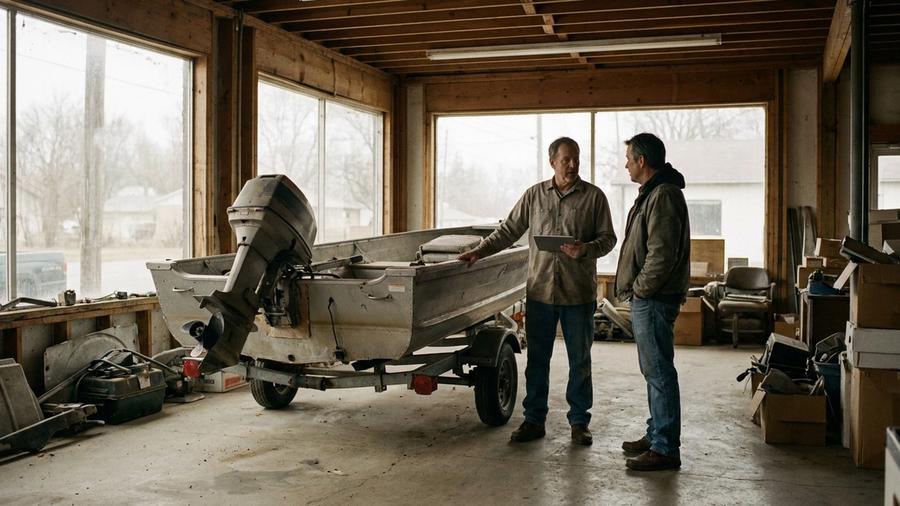

A powersports dealership is several businesses operating under one roof.
A customer might leave a deposit on a motorcycle or side-by-side, finance most of the purchase, pay a remaining balance at delivery, add accessories, return for service and buy parts throughout the year. At the same time, another customer walks into the parts department and spends $50 on oil and a set of grips.
That range of transactions makes payment processing for motorcycle, ATV and powersports dealers different from ordinary retail. Dealers need fast everyday checkout, but they also need payment workflows capable of supporting deposits, higher-value transactions, service invoices, remote payments and multiple departments.
The industry is substantial. The Motorcycle Industry Council estimates the U.S. powersports retail marketplace at $50.9 billion, supported by approximately 10,690 retailers and 116,000 dealership employees.
For dealers, choosing a payment provider is not simply about finding a terminal. The payment setup has to work across the whole dealership.
What is a powersports dealership?
Powersports is a broad industry that can include dealers selling and servicing:
- Motorcycles and dirt bikes
- ATVs
- UTVs and side-by-sides
- Snowmobiles
- Personal watercraft
- Other recreational and off-road vehicles
Many powersports dealerships represent several manufacturers and combine new and pre-owned unit sales with parts, accessories, apparel and service.
The off-road segment alone is significant. In its 2025 annual reporting, Polaris Inc. estimated that approximately 780,000 ATVs and side-by-sides were sold at retail in North America during 2025, including roughly 255,000 ATVs and 525,000 side-by-sides. Polaris identifies these as estimated, unaudited industry figures based in part on management estimates and third-party surveys rather than reported government statistics.
The payment requirements of these businesses extend well beyond the original vehicle sale.
One dealership, several payment environments
A typical powersports dealer may generate revenue from:
New unit sales. Deposits, down payments and balances associated with motorcycles, ATVs, UTVs and other units.
Pre-owned units. Trade-ins and used inventory create another meaningful sales channel with its own transaction pattern.
Parts and accessories. Helmets, tires, riding gear, electronics, replacement parts and aftermarket accessories create conventional retail transactions.
Service and repairs. Maintenance, repairs, installation and seasonal service create work orders and invoices that are approved in stages.
Storage and seasonal services. Particularly relevant for motorcycles, snowmobiles and personal watercraft in seasonal markets.
Online sales. Some dealers sell parts, apparel and accessories well outside their local market.
Events and shows. Dealers may take deposits or payments away from the primary location.
The payment environment has to accommodate everything from a small counter purchase to a substantial vehicle-related transaction, without staff switching between unrelated systems.
Unit sales create unusual payment requirements
A motorcycle, ATV or side-by-side sale is not normally handled like a conventional retail purchase. Financing frequently covers much of the vehicle price, while the dealer separately collects a deposit or down payment. Customers may also add accessories, protection products or other eligible items to the deal.
In other words, a dealership's card volume is rarely the sum of its window stickers. What matters is that the merchant account reflects the transactions the business actually expects to process, including the occasional larger one.
Established dealers should raise these characteristics when setting up or reviewing a merchant account, rather than assuming a generic retail configuration is appropriate.
The parts counter is a different business
Walk across the dealership and the requirements change completely. The parts department needs quick, straightforward checkout: helmets, apparel, tires, oils, accessories and replacement components, often with a line of customers on a Saturday morning.
Modern payment terminals support chip, contactless cards and compatible mobile wallets, while the right POS environment connects those payments to inventory and reporting. The important point is that a single payment setup has to serve very different transaction patterns inside the same building.
Service creates another payment workflow
Service departments introduce a third pattern. A customer drops off a motorcycle or ATV, authorizes work, and may approve additional repairs after a technician inspects the vehicle. Once the work is finished, the dealer needs to collect payment efficiently.
Electronic invoicing and payment links help here, because the customer does not need to be standing at the service counter to pay. A service advisor can send an invoice or secure payment link and have an eligible balance settled before pickup, useful for larger repairs, accessory installations and customers who live an hour or more away.
Deposits and down payments
Deposits are routine in unit retail. A customer may want to hold a specific machine before visiting, reserve incoming inventory, or commit to a purchase while financing and other details are finalized. Dealers need a dependable way to collect those payments. Depending on the setup, that can include:
- In-person terminal payments
- Hosted payment pages
- Payment links sent by email or text
- Virtual terminal transactions
- Pre-authorizations, where appropriate to the transaction
Dealers should also set clear deposit and refund terms and make them visible to the customer at the point the deposit is taken. Most deposit disputes are documentation problems before they are payment problems.
Remote payments matter more than they look
Powersports dealerships are physical businesses, but not every transaction happens at the counter. Customers find inventory online, talk to a salesperson by phone or text, and travel a long way to collect a particular motorcycle or off-road unit. That creates situations where the dealership needs to collect a deposit before the customer ever arrives.
The same applies to service invoices, special-order parts and accessory sales to out-of-town riders. A modern dealership payment environment usually needs more than countertop terminals.
Ecommerce for parts, accessories and apparel
For some dealers, ecommerce is a genuine second business. Parts and accessories sell well beyond the local market, particularly when the dealership has depth in a specific brand, vehicle type or aftermarket category. Selling online brings its own considerations:
- Ecommerce platform compatibility
- Payment gateway technology and online checkout
- Transaction security and fraud management
- Refunds and returns on shipped parts
- Reporting and reconciliation alongside in-store sales
Where a compatible ecommerce system already works well, changing payment providers should not automatically require replacing it. Fizel's approach is to start with the systems the dealer already uses and work out how payments fit around them where that is practical.
Seasonality is part of the business
Powersports can be highly seasonal. A motorcycle dealer in British Columbia has a very different annual curve from a dealer in Southern California, and a snowmobile-focused business can compress most of its selling into a few months.
That matters for payments. A dealership's strongest month can look dramatically different from its slowest month with nothing at all wrong with the business. A payment provider should understand the merchant's normal operating pattern, including seasonal peaks, rather than reading volume without business context.
Transaction size changes how processing costs should be evaluated
Processing economics deserve particular attention in a dealership. The difference between payment arrangements becomes meaningful when a business processes substantial annual volume or larger individual transactions. Dealers should look past an advertised rate and understand the actual components of their payment costs, starting with interchange:
- Interchange and card-brand costs
- Processor markup and how it is structured
- Card mix, including commercial and rewards cards
- Card-present versus card-not-present transactions
- Gateway, software, terminal and monthly fees
For an established dealership, several months of existing merchant statements give a far clearer picture than any headline rate comparison. That is the basis Fizel works from when reviewing a dealership's pricing.
The dealership's existing systems matter
Payments do not operate in isolation. A powersports dealership may already run systems for dealership management, inventory, parts, service, accounting, ecommerce, customer management and manufacturer programs. Replacing a payment provider should not automatically mean replacing software that already works.
Before making a change, identify which systems touch payments and confirm compatibility with the proposed setup. Fizel starts with the systems a merchant already uses, keeps compatible systems in place where that is practical, and improves what does not work. For an established dealership, changing core software creates far more disruption than changing the payment layer underneath it.
Multi-location dealer groups
Dealer groups add another layer. A multi-location operator usually wants individual stores and departments to keep their own operational visibility, while ownership and finance need consolidated reporting. Requirements can include:
- Multiple merchant locations and terminals
- Department-level payment acceptance
- Ecommerce alongside in-store activity
- Centralized or consolidated reporting
- User permissions, and different transaction profiles by location
The right configuration depends on how the group is structured: which entity holds the accounts, how stores are managed, and how reporting rolls up.
What should a dealer look for in a payment provider?
The best payment solution is not the one with the longest feature list, it is the one that fits the dealership. When comparing processors, the capabilities that tend to matter for motorcycle, ATV and powersports dealers are:
- Merchant accounts structured around the dealership's real transaction environment.
- Terminals for unit sales, the parts counter and the service desk, with chip and contactless.
- Payment links and hosted pages for deposits and remote transactions.
- Virtual terminals and invoicing for appropriate card-not-present transactions and service balances.
- Ecommerce and gateway options for online parts, apparel and accessory sales.
- Mobile acceptance, including Tap to Pay on supported devices, for events, shows and off-site sales.
- Multi-location support for dealer groups, with reporting that matches the org chart.
- Integrations that let compatible dealership and business systems stay in place.
A large and specialized retail industry
Powersports is not a niche version of ordinary retail. The Motorcycle Industry Council estimates approximately 1.26 million new powersports units are sold in the United States each year, through more than 10,000 powersports retailers.
Within the off-road category, Polaris estimated North American side-by-side sales rose from roughly 510,000 units in 2024 to 525,000 in 2025, while ATV sales eased from about 265,000 to 255,000, again, company estimates of industry activity rather than audited figures.
Those businesses operate across unit sales, financing, service, parts, accessories and increasingly digital customer journeys. Their payment systems have to reflect that complexity, which is why Fizel treats powersports and motorsports as its own category rather than general retail.
Payments built around the dealership
A powersports dealer does not need another generic retail payment setup. The starting point is understanding how the dealership actually operates: what customers buy, how they pay, which systems the business already relies on, where payments create friction, and what needs to improve.