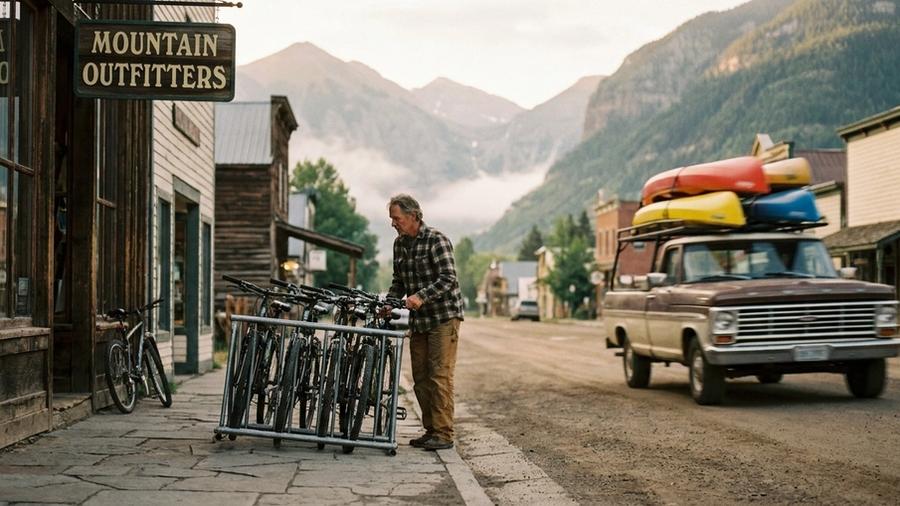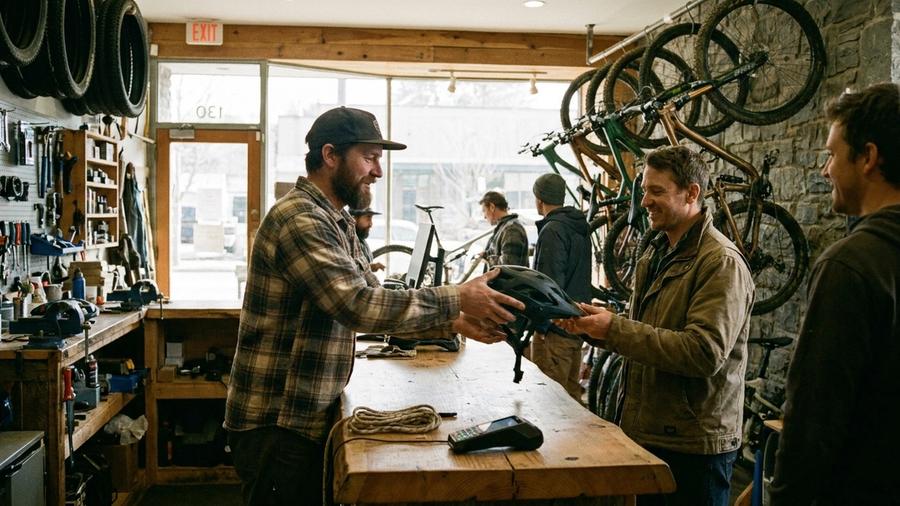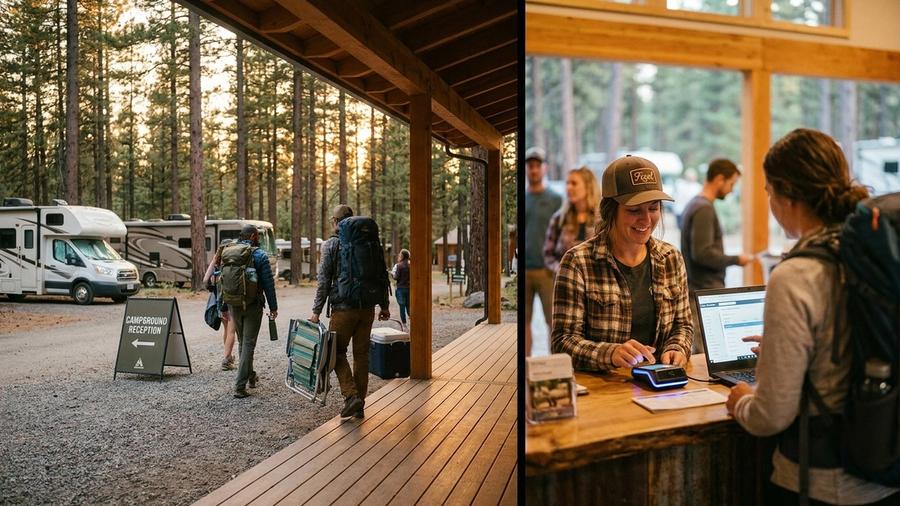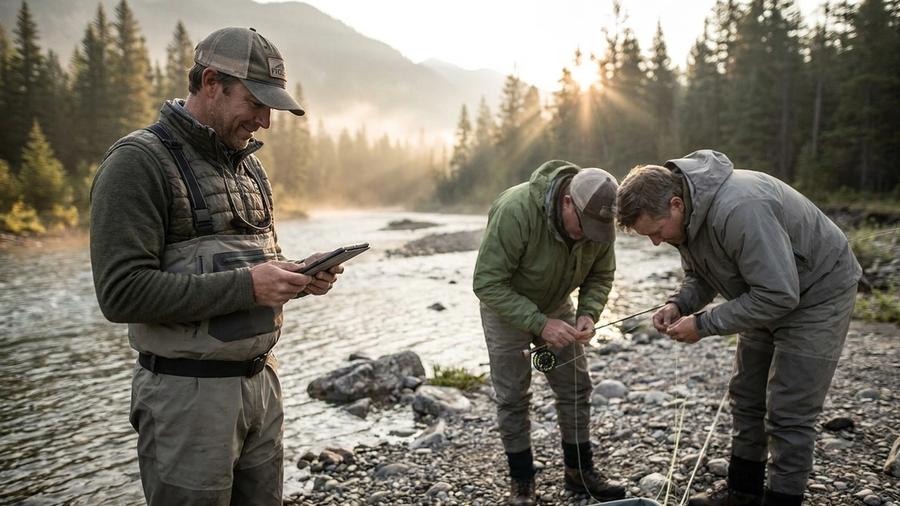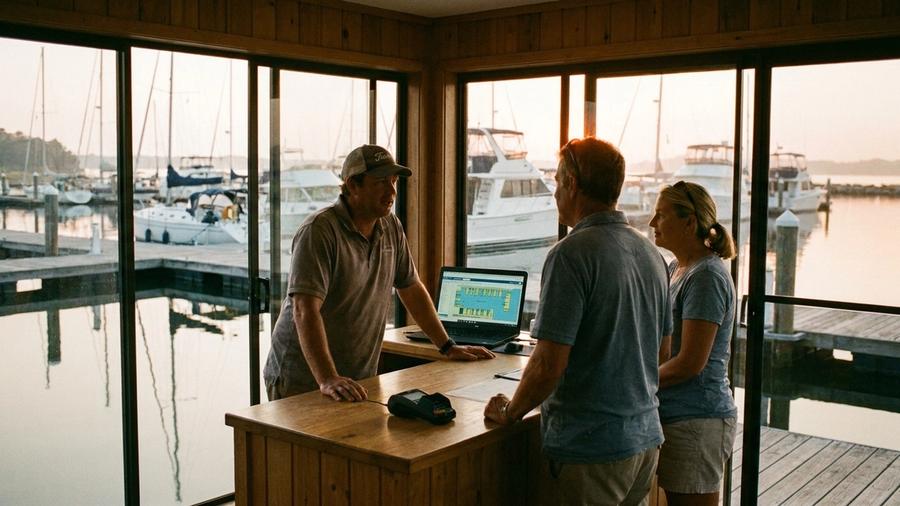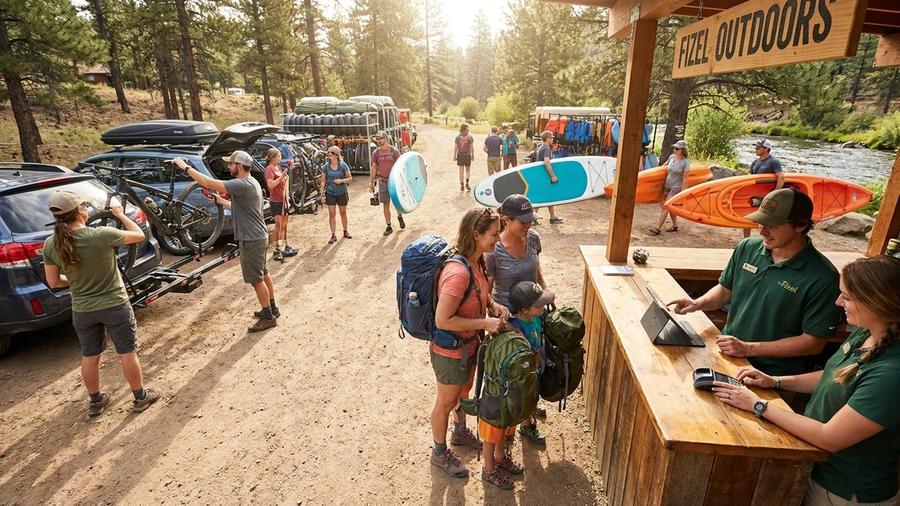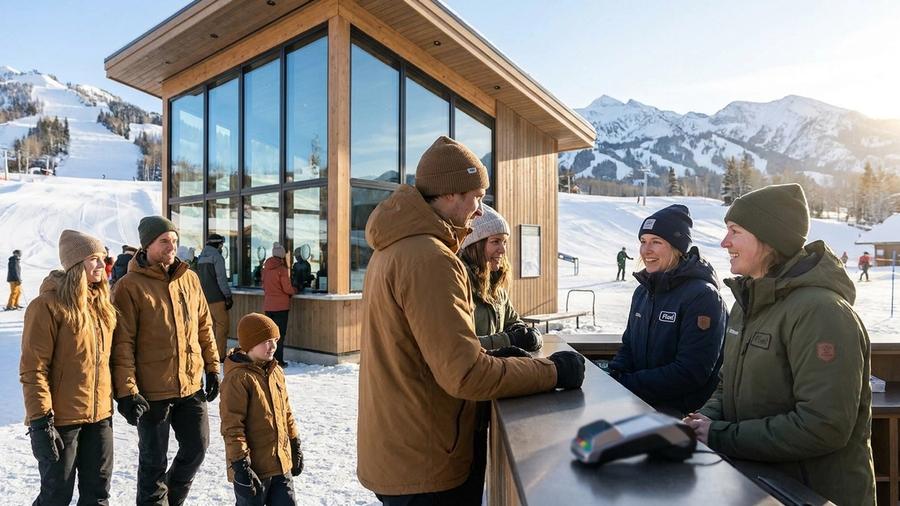
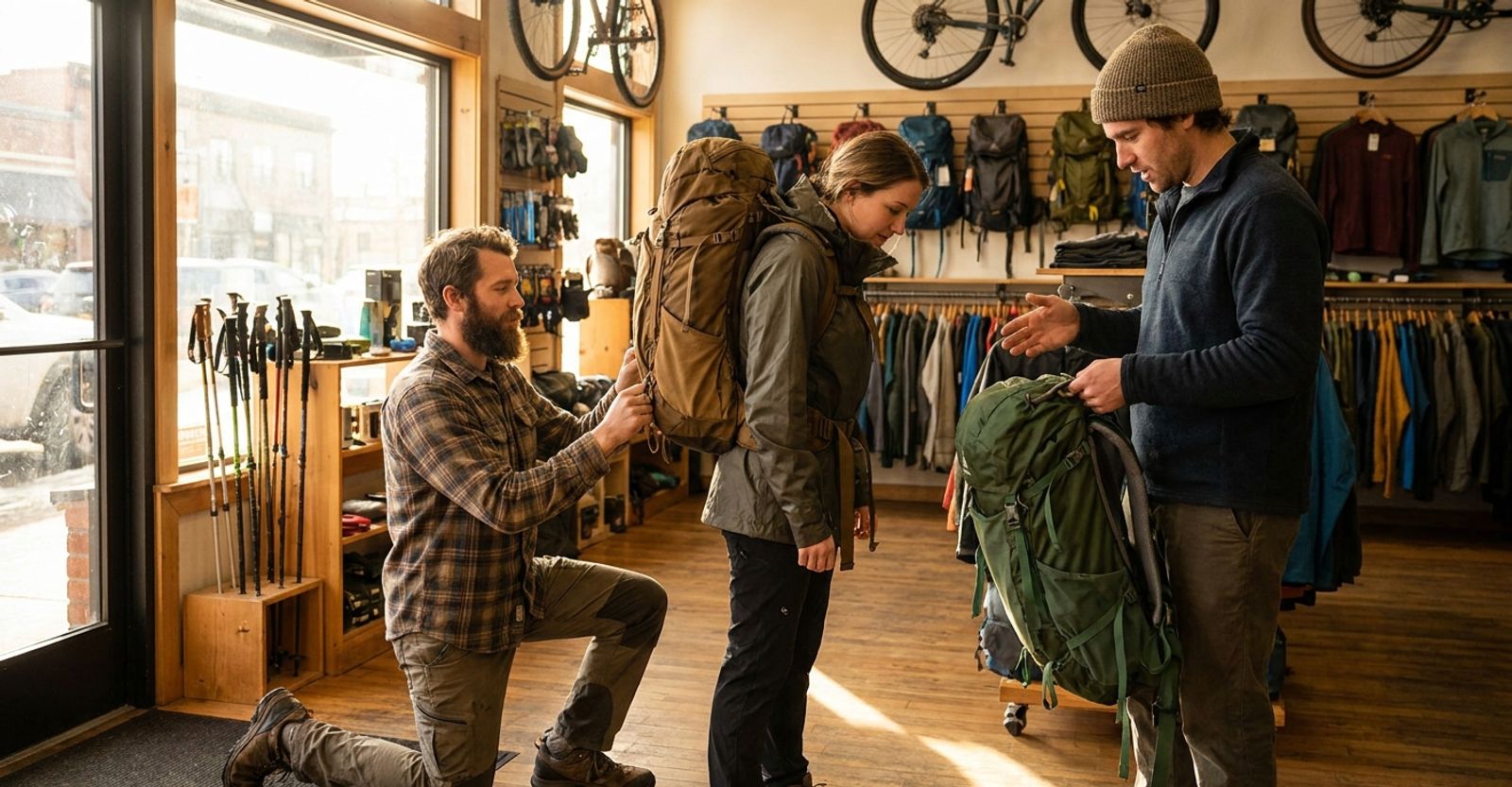
Outdoor businesses have always sold more than products. A bike shop sells expertise and service alongside bikes. A campground sells access to a place. A guide sells an experience and the judgement behind it. A marina combines access, storage, service and recreation into a single ongoing relationship. A ski resort can combine lift access, rental, lessons, lodging, food, retail and transportation into what the customer simply experiences as a day on the mountain.
What is changing in 2026 is not the product. It is the infrastructure behind it. Customers discover businesses online, research on their phones, check availability before leaving home, reserve in advance, pay digitally, expect purchases and reservations to follow them across channels, and return months later for service or another trip. Outdoor commerce is becoming more connected.
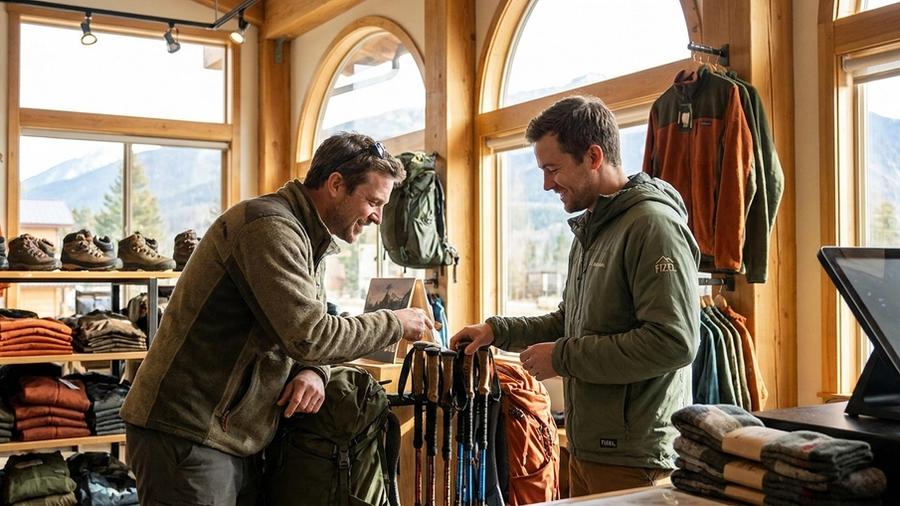
Yet outdoor commerce is not simply becoming ecommerce. Physical stores remain important. Human expertise still decides whether a customer comes back. Guides still guide, mechanics still fix bikes, campground hosts still welcome guests and boot fitters still solve problems no website can. The interesting story of 2026 is not that digital commerce is replacing physical commerce. It is that the two are merging, and that the businesses handling the merge deliberately are pulling ahead of those handling it by accident.
A large economy with an expanding customer base
Outdoor recreation is no longer a niche described in enthusiast terms. It is a measured component of national accounts. According to the U.S. Bureau of Economic Analysis, outdoor recreation generated approximately $696.7 billion in U.S. value added in 2024, representing roughly 2.4% of U.S. GDP. Within that total, retail trade accounted for approximately $169.1 billion, while arts, entertainment, recreation, accommodation and food services contributed approximately $174.4 billion, a useful reminder that the outdoor economy is roughly as much an experience economy as a products economy.
Participation is also historically high. Outdoor Industry Association research indicates approximately 183.2 million Americans participated in outdoor recreation in 2025, about 59% of the U.S. population age six and older, and nearly 30 million more participants than in 2019. Camping shows the same pattern at a category level: more than 52 million North American households camped in 2025, with camping generating an estimated $66 billion economic footprint.
Headline measures of the North American outdoor economy, drawn from federal economic accounts and industry participation research.
- $696.7BU.S. outdoor recreation value addedBureau of Economic Analysis, 2024
- 2.4%Share of U.S. GDPOutdoor recreation satellite account, 2024
- $169.1BOutdoor retail trade value addedLargest single industry contribution
- $174.4BRecreation, accommodation and food value addedThe experience side of the economy
- 183.2MU.S. outdoor participants in 2025Outdoor Industry Association
- 59%Share of Americans age 6+ participatingA mainstream, not niche, activity base
- ~30MParticipants added since 2019Growth concentrated in newer participants
- 52M+North American households that camped in 2025Kampgrounds of America camping research
- ~$66BCamping economic footprintSites, gear, travel and on-site spending
Figures are approximate and drawn from the most recent reporting periods available for each source.
These numbers describe an industry with a large and still-expanding customer base. But participation is not the same as commercial growth. Millions of new participants entered the outdoors in a short window, and many of them arrived without gear, without habits and without a relationship to any particular business. The commercial question for 2026 is not how to find outdoor customers. It is how to turn broad participation into durable relationships.
1. The outdoor consumer is becoming broader
Outdoor brands historically built much of their identity around committed enthusiasts: the climber, the backcountry skier, the serious cyclist, the expedition paddler, the dedicated angler. Those customers remain important, they buy at higher price points, replace equipment more often and generate word of mouth. But they no longer represent the centre of gravity in outdoor spending. Outdoor Industry Association research indicates that casual and active-lifestyle participants now account for the overwhelming majority of outdoor consumer spending.
The commercial implications are concrete. A casual hiker does not want technical mountaineering equipment; they want boots that fit and someone to confirm the choice is sensible. A new camper may prefer a cabin or a glamping unit before buying a full kit. A recreational cyclist often values comfort, reliable service and local advice more than marginal component performance. Businesses built entirely around the expert customer can find themselves optimised for the smallest part of the market.
| Traditional emphasis | Growing opportunity | What it changes commercially |
|---|---|---|
| Expert enthusiast | Casual participant | Assortment breadth and entry price points |
| Equipment ownership | Access and rental | Recurring revenue from the same inventory |
| Technical performance | Comfort and convenience | Merchandising and staff conversation |
| Product transaction | Experience | Bookable capacity alongside shelf space |
| Individual activity | Family and social activity | Group bookings, multi-unit rentals, programming |
| Specialised knowledge | Easy onboarding | Beginner packages, lessons, guided first trips |
| Single channel | Connected customer journey | Shared inventory, shared customer record |
2. Physical outdoor retail is not disappearing
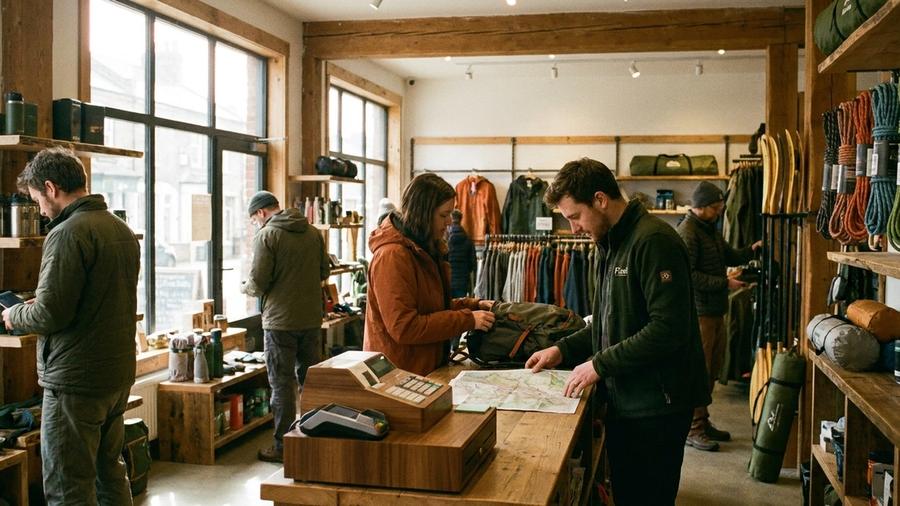
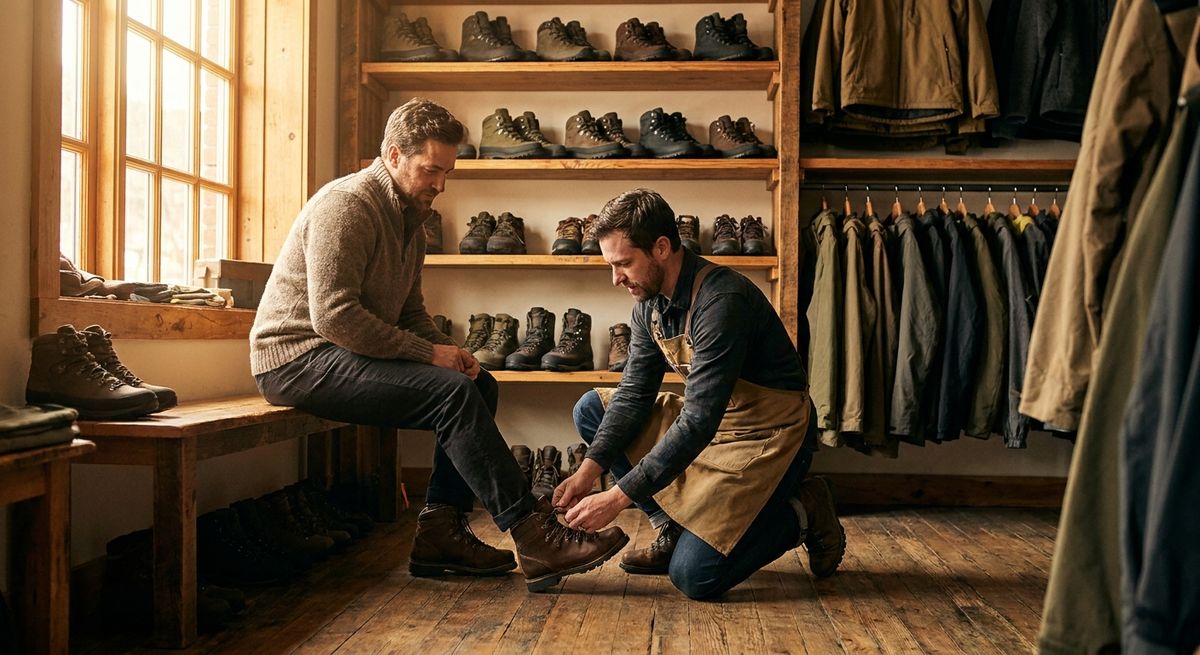
Outdoor retail is unusually well suited to combining physical and digital commerce, because so much of what customers need happens in person. They want to handle products, try on boots, sit on bikes, feel the weight of a pack, ask questions, get fitted and bring equipment back for repair. Those needs give specialty retailers an advantage that a pure ecommerce competitor cannot easily reproduce at any price.
The real challenge is not choosing between the store and the website. It is making them behave like one business. A customer might discover a product online, check local inventory, visit the store, take advice from an employee, buy in person and return months later for service. From the customer's perspective that is not five channels. It is one relationship, and the systems behind the counter should reflect that.
| Function | Why the store matters | Digital equivalent |
|---|---|---|
| Product fitting | Boots, bikes, apparel and harnesses fit differently on every body | Size guides and generous returns |
| Expertise | Technical and local advice that changes the purchase | Content, chat and reviews |
| Service | Repairs, tuning and maintenance | Mail-in service, rarely competitive |
| Demonstration | Demo days and try-before-buy | Video and specification detail |
| Community | Rides, clinics and events | Social channels and forums |
| Immediate inventory | Same-day purchase before a trip | Next-day shipping at best |
| Rentals | Access without ownership | Ship-to-destination rental services |
| Returns | Convenient local resolution | Shipping labels and delay |
With approximately $169.1 billion in U.S. outdoor recreation value added attributable to retail trade, physical commerce remains deeply embedded in the industry's economics. The future of outdoor retail therefore does not look storeless. It looks connected. For a practical view of how that plays out behind the counter, see our guide to payment processing for outdoor retailers.
3. Ecommerce and stores are becoming one channel
Businesses think in channels: store, website, marketplace, mobile. Customers do not. They see one company, and they expect information to follow them between visits. Inventory shown online should actually be on the shelf. An online purchase should be easy to collect or return locally. A customer who bought a bike should not feel like a stranger when they bring it back for a tune. A rental reservation should be ready when they arrive, not re-entered at the counter.
The industry term is omnichannel commerce. The customer expectation is simpler: it should just work. Most of the failures outdoor operators see, an oversold rental, a click-and-collect order that cannot be found, a service record trapped in a different system, are integration failures rather than strategy failures.
| Customer action | System requirement | Common failure point |
|---|---|---|
| Check a product online | Accurate, near-real-time inventory | Website stock synced nightly, not live |
| Reserve equipment | Shared availability across channels | Rental calendar separate from POS |
| Buy online | Ecommerce tied to the same catalogue | Duplicate product data |
| Collect locally | Store visibility of online orders | Orders arriving only by email |
| Return a purchase | Unified order history | Store cannot see web receipts |
| Book service | Customer and equipment record | Service tickets on paper |
| Rent equipment | Reservation system with deposits | Manual deposit handling |
| Buy again | Customer relationship data | Three systems, three customer versions |
Businesses that solve this combine the convenience of ecommerce with the expertise and community advantages of a physical location, a combination that neither a pure online retailer nor a disconnected local shop can match.
4. Returns are becoming part of the customer experience
Ecommerce growth creates an operational problem that hits outdoor categories harder than most. Sizing matters, fit matters and technical compatibility matters. A hiking boot that looks right online may be wrong by half a size. Bike components must match existing equipment. Apparel sizing varies between brands within the same store. As a result, returns are not an exception to the commerce process in outdoor retail, they are part of it, and they need to be operated deliberately.
National Retail Federation research puts the scale in context. Across U.S. retail, approximately $850 billion of merchandise was projected to be returned in 2025, roughly 15.8% of annual retail sales, with online purchases returned at an even higher estimated rate of about 19.3%. Consumer research also indicates that return convenience influences the purchase itself: roughly 82% of consumers say free returns matter, and about 71% say they are less likely to buy again after a poor return experience.
| Metric | Approximate figure | Why it matters to an outdoor business |
|---|---|---|
| Annual U.S. merchandise returns | $850B | Returns are a cost centre with real margin impact |
| Overall retail return rate | 15.8% | Roughly one in six dollars comes back |
| Online return rate | 19.3% | Ecommerce growth raises blended return costs |
| Consumers who value free returns | 82% | Return policy affects conversion, not just cost |
| Less likely to buy after a bad return | 71% | A poor return can end the relationship |
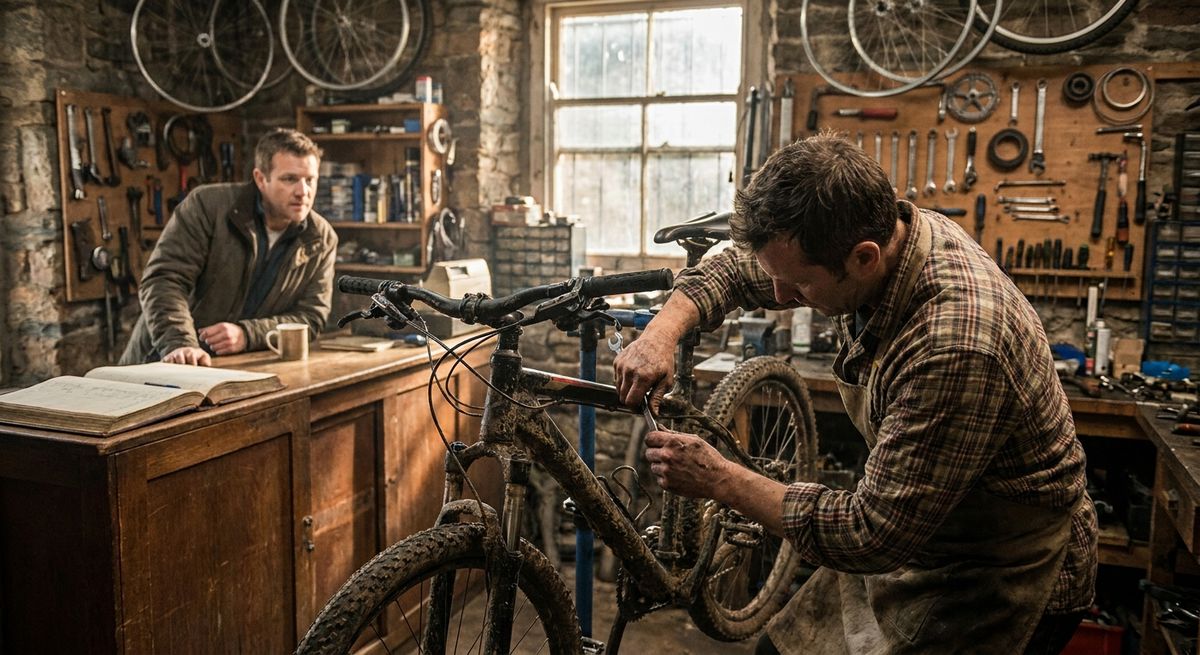
For specialty retailers with a storefront, this cost can become an advantage. A return does not have to end the transaction. A boot that does not fit becomes a professional fitting. A wrong component becomes a service conversation. A returned tent becomes a discussion about the trip the customer is actually planning. The store converts a logistics cost into a second chance to solve the problem, provided staff can see the original order at the counter.
A return is not the end of a transaction. In a specialty store, it is the beginning of a better one.
5. Outdoor experiences are becoming more bookable
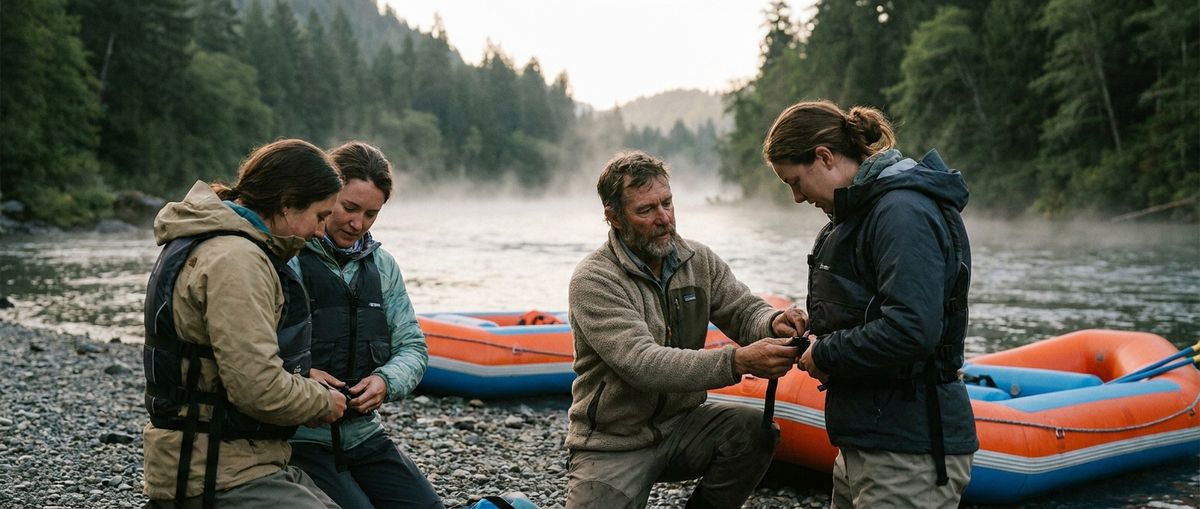
Some of the most consequential changes in outdoor commerce are happening outside stores entirely. Guides, tours, attractions, rentals, campgrounds, lessons and adventure operators historically ran on phone calls, walk-ins, paper reservation books and hand-written waivers. That model is disappearing quickly, largely because customer expectations set by travel and hospitality platforms have carried across to local operators.
Customers now expect to see live availability, choose a time, reserve specific equipment, sign a waiver and pay a deposit before they arrive. Travel experience research from Arival indicates roughly 60% of travelers booking tours and attractions book at least three days in advance, with a meaningful share booking weeks or months ahead. The global tours, activities and attractions market is now measured in the hundreds of billions of dollars annually, and the operators capturing that demand are the ones that are bookable at midnight from a phone.
| Traditional model | Increasingly common model | Operating benefit |
|---|---|---|
| Call for availability | Live availability online | Fewer phone hours, more bookings after close |
| Paper reservation book | Cloud booking system | Visible capacity across staff and locations |
| Pay on arrival | Deposit at booking | Cash earlier, fewer no-shows |
| Walk-in rental | Reserved equipment by unit | Utilisation planning and fewer shortages |
| Paper waiver | Digital waiver signed in advance | Faster departures, cleaner records |
| Printed confirmation | Email and SMS confirmations | Fewer missed meeting times |
| Anonymous customer | Customer profile | Repeat bookings and relevant follow-up |
The economics matter as much as the convenience. Reservations create visibility, deposits improve cash flow at the exact point in the season when working capital is tightest, and capacity becomes measurable rather than estimated. Operators learn what demand looks like before customers arrive instead of afterwards. Guides and outfitters weighing deposit and cancellation structures will find practical detail in our guide to payment processing for guides and outfitters.
6. Outdoor hospitality is becoming a major category
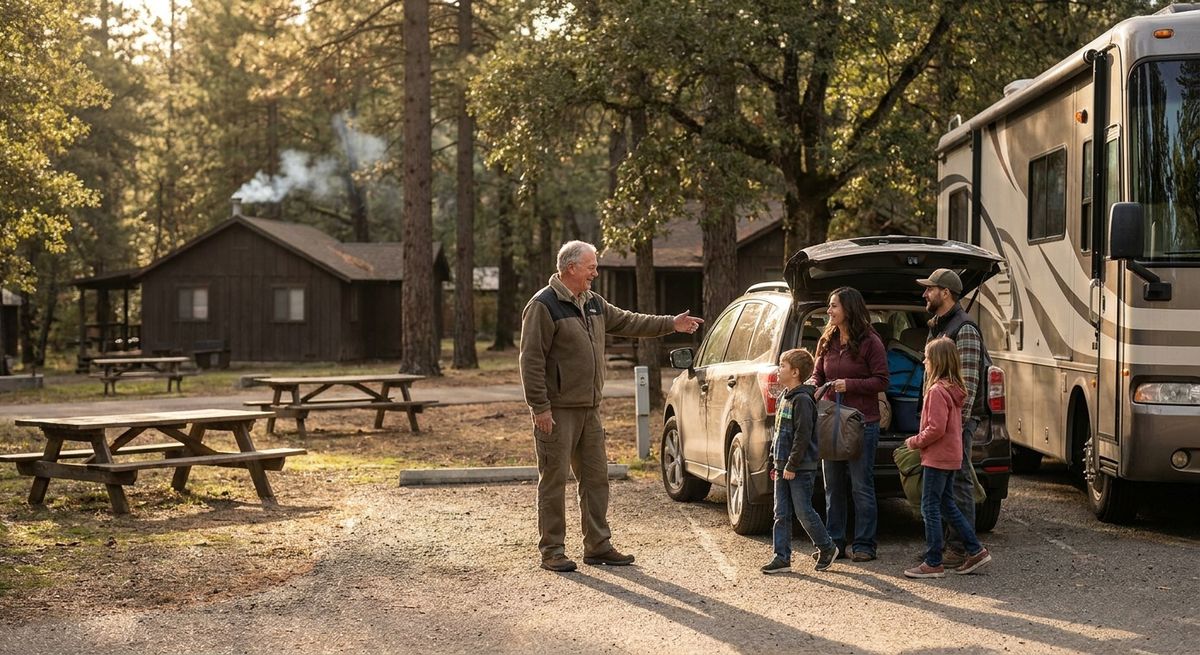
The modern campground demonstrates how outdoor commerce is expanding beyond its original categories. What used to be a site fee and a firewood bundle is now a mixed operation combining accommodation, retail, food, rentals, recreation, events and hospitality. Glamping brought in customers who would never have bought a tent. RV parks increasingly offer resort-style amenities. Cabins allow operators to serve people who want the outdoors without owning any equipment at all.
The scale supports the shift. More than 52 million North American households camped in 2025, and the broader camping economy generates an estimated $66 billion economic footprint. That makes outdoor hospitality a commercial ecosystem in its own right, and one where a single guest can generate revenue through five or six different lines during a three-night stay.
| Revenue stream | Example | Commerce requirement |
|---|---|---|
| Accommodation | Nightly campsites | Reservations with deposits |
| Premium accommodation | Cabins and glamping units | Unit-level inventory and dynamic pricing |
| Recurring revenue | Seasonal sites | Scheduled or instalment billing |
| Retail | Camp store | Point of sale and stock control |
| Food | Café or snack bar | Fast checkout at peak hours |
| Rental | Bikes, kayaks and paddleboards | Time-based availability and damage deposits |
| Recreation | Activities and programming | Capacity-limited bookings |
| Services | Propane, firewood and dump station | Mobile or self-serve payment |
| Experiences | Guided programs and events | Ticketing tied to the guest record |
The modern campground increasingly resembles a hospitality company, a recreation operator and a retailer sharing one property. That complexity creates opportunity, and it also raises the cost of disconnected systems. Our guide to payments for campgrounds and RV parks covers how these revenue lines can be reconciled without adding administrative work.
7. Access is competing with ownership
Outdoor equipment is expensive, bulky and often used only a few times a year. A capable mountain bike can cost thousands of dollars. Skis need storage and transport. Kayaks are awkward to own in a city. A full camping kit occupies half a garage. For occasional participants, the fastest-growing segment, ownership frequently does not make economic sense, and the market has responded with access.
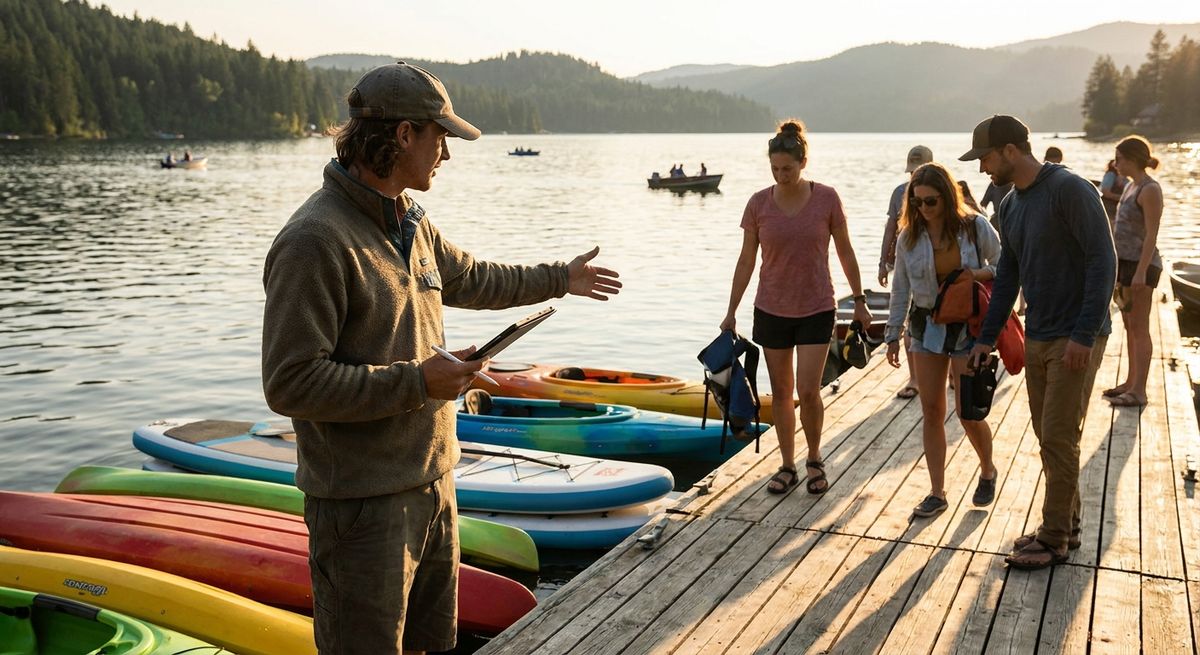
Rental expands participation. It lets customers try an activity without committing capital, lets travellers participate without transporting equipment, and provides a low-risk route into a sport for families. It also creates a pathway to eventual ownership, which is why treating rental as competition for retail sales usually misreads the customer.
| Ownership model | Access model | Who it suits |
|---|---|---|
| Buy skis | Rent skis by day or season | Occasional and growing-family skiers |
| Buy a mountain bike | Destination rental at the trailhead | Travellers and first-time riders |
| Own a kayak | Hourly or daily rental | Urban and casual paddlers |
| Buy a camping kit | Gear rental packages | First-time campers |
| Own an RV | Rent an RV | Trial buyers and holiday travellers |
| Buy immediately | Demo, then buy with credit applied | High-consideration purchases |
Rental operations bring their own commerce requirements: deposits, damage authorizations, late returns and high-value equipment on the line. Those mechanics are covered in detail in our guide to payments for equipment rental businesses.
8. Service is becoming more valuable
The strongest structural advantage available to specialty outdoor businesses is service, because service is local, skilled and time-sensitive. A website can sell a mountain bike. It cannot tune that bike before Saturday. It can sell skis. It cannot fit boots in the customer's hometown in November. It can sell a fly rod. It cannot say what the river is doing tomorrow morning.
Service also changes the arithmetic of customer acquisition. If the value of a customer is the margin on one product, marketing budgets stay small and price comparison dominates. If the value is a multi-year relationship spanning purchases, tunes, rentals and referrals, it becomes rational to invest more in acquiring and keeping that customer, and to build the systems that remember them.
| Business | Service opportunity | Natural repeat cycle |
|---|---|---|
| Bike shop | Repairs, fitting and tune-ups | Seasonal and post-purchase |
| Ski shop | Tuning, waxing and boot fitting | Multiple times per winter |
| Marina | Maintenance, haul-out and storage | Annual and seasonal |
| Powersports dealer | Scheduled service and repairs | Interval-based |
| Outdoor retailer | Fittings, workshops and repairs | Occasional, high trust |
| Campground | Seasonal site services | Annual renewal |
| Rental operator | Repeat rentals and tune packages | Per trip or per season |
| Guide or outfitter | Repeat trips and progression programs | Annual or multi-season |
9. Membership is spreading beyond traditional clubs
Outdoor commerce has historically been transactional: buy the product, book the trip, pay for the campsite. That is changing, and in many categories the change is already complete without being described as such. A season pass is a subscription. A marina slip is an annual contract. A seasonal campsite is recurring revenue. Climbing gyms run on memberships. Bike shops sell service plans. Rental businesses are experimenting with equipment-access programs.
The strategic shift is from maximizing individual transactions to maximizing customer relationships. Recurring revenue improves forecasting in businesses where forecasting is otherwise hostage to weather, and it changes off-season cash flow, a critical variable in an industry where most revenue arrives in a handful of months. We examine that dynamic in depth in How Seasonality Shapes Outdoor Businesses.
| Model | Typical business | Commercial effect |
|---|---|---|
| Season pass | Ski resort or Nordic centre | Revenue collected before the season starts |
| Membership | Climbing and recreation facilities | Predictable monthly base |
| Seasonal site | Campground or RV park | High retention, low acquisition cost |
| Annual moorage | Marina | Multi-year customer relationships |
| Service plan | Bike or ski shop | Repeat visits and attachment sales |
| Equipment access | Rental business | Higher utilisation per unit |
| Loyalty program | Outdoor retailer | Identified customers and better data |
| Annual club | Recreation and golf operations | Community plus recurring dues |
10. Mobile is moving commerce into the field
Outdoor businesses routinely operate where traditional retail infrastructure does not exist. A guide meets customers beside a river. A marina employee works on a dock two hundred metres from the office. A campground host moves around the property all day. An event sets up temporary registration in a field. A rental company operates from a trailer at a trailhead. In each case the transaction has to move to the customer rather than the other way round.
Mobile commerce also solves a seasonal capacity problem. A business that processes several times its normal volume on a holiday weekend does not need permanent additional checkout stations for eleven quiet months. It needs elastic capacity: handheld devices that can be added for a season, run on cellular when the site's connection is marginal, and be handed to a temporary employee with minimal training.
| Environment | Typical use | Why fixed checkout fails |
|---|---|---|
| Trailhead | Guide and tour balances | No building, no power |
| Marina dock | Fuel and service charges | Customer never enters the office |
| Campground | Mobile check-in and site sales | Guests arrive across a wide window |
| Outdoor event | Registration and merchandise | Temporary site, peak-hour surges |
| Rental operation | Equipment pickup and returns | Transaction happens at the gear, not the desk |
| Resort base area | Pop-up retail and lesson sales | Demand moves with weather and snow |
| Race or festival | Temporary checkout lanes | Volume for two days a year |
11. Payment choice is expanding, but behaviour changes slowly
Consumers have more ways to pay than ever: credit, debit, cash, digital wallets, contactless, online checkout and in-app payments. Actual behaviour, however, changes more slowly than technology headlines suggest. Federal Reserve consumer payment research shows Americans make approximately 47 payments per month, with credit and debit cards together accounting for roughly two-thirds of transactions and cash still holding a meaningful share, a detail that matters for campgrounds, guides and rural operators.
Average monthly payments per consumer by instrument, based on Federal Reserve consumer payment diary research. The practical message for outdoor operators is that no single method dominates enough to justify refusing the others.
- Credit card16
- Debit card15
- Cash6
- Other methods~10
Approximate payments per consumer per month
Total of approximately 47 payments per month. Figures are rounded.
For outdoor businesses, the lesson is not to chase every new payment method. It is to offer enough choice that payment rarely becomes an obstacle, and to make sure the mechanics hold up under pressure. A customer who spent three hours driving to a trailhead should not have to think about how the guide takes payment. A guest arriving at a campground after dark should not face friction at check-in. A bike shop should not build a queue on Saturday because checkout cannot keep pace. Operators comparing providers can use our framework for choosing a payment processor.
12. Distribution is becoming more complicated
Digital commerce creates new ways to reach customers, and new intermediaries between the business and the customer. Guides, attractions, rental operators and experience businesses increasingly sell through online travel agencies, marketplaces and destination platforms alongside their own websites. Phocuswright and Arival research on the experiences sector has consistently shown third-party channels gaining share of bookings as operators connect live availability to distribution partners.
The trade-off is familiar to anyone who has sold through a marketplace. Third-party platforms deliver customers the business would not otherwise reach, particularly travellers planning from another country. Direct customers are worth more because the business owns the relationship, the data and the second sale. The practical answer for most operators is not exclusivity in either direction but a deliberate mix, with pricing and follow-up designed to migrate repeat customers to direct booking.
| Channel | Advantage | Challenge | Best used for |
|---|---|---|---|
| Direct website | Owns the customer relationship | Must generate its own traffic | Repeat and local customers |
| Phone and in-person | Personal service, upsell | Labour intensive | Complex or custom trips |
| OTA or marketplace | Customer discovery at scale | Commission and weaker relationship | Reaching travellers |
| Hotel and local partners | Qualified local referrals | Revenue sharing | Destination demand |
| Social media | Discovery and proof | Platform dependence | Brand and community |
| Walk-in | High intent, no commission | Unpredictable volume | Peak-season capacity fill |
13. Customer data is becoming more valuable
A transaction records what was purchased. A customer relationship records something far more useful: what the person actually does outside. Which activities they participate in, what equipment they own, when they last visited, whether they rent or buy, whether they are a seasonal guest, when their bike is due for service, whether they booked a fishing trip last summer. None of that is exotic data science. Most of it already exists inside the systems outdoor businesses run today, it is simply scattered.
The objective is not collecting data for its own sake. It is using what the business already knows to make the next interaction more relevant: a tune reminder before the first warm weekend, a returning-guest rate for a seasonal camper, a note that the customer skis on rented equipment and might be ready to buy.
| Information the business already has | Practical use | Typical timing |
|---|---|---|
| Purchase history | Relevant recommendations and accessories | Weeks after purchase |
| Service history | Maintenance reminders | Ahead of the season |
| Rental history | Repeat booking prompts and buy-in credit | Same season |
| Activity preference | Targeted communication, not blanket email | Ongoing |
| Visit frequency | Loyalty recognition | Ongoing |
| Membership or pass status | Renewal campaigns | Pre-renewal window |
| Booking history | Return-trip invitations | Annual anniversary |
| Location | Local events, clinics and conditions | Event-driven |
14. AI is moving into outdoor business operations
Artificial intelligence will affect outdoor commerce, but probably not by replacing the human elements customers value most. Outdoor experiences remain stubbornly human. Customers want knowledgeable staff, real guides, local judgement and genuine hospitality, and in an industry where the product often involves risk, weather and skill, that is unlikely to change.
The near-term value is operational. Retailers across the wider industry are already using AI for fraud detection, demand forecasting, inventory analysis, review summarisation, customer service triage and marketing production. For a seasonal business running lean in the off-season and stretched thin at peak, the benefit is time: the same team handles more volume without the experience degrading.
| Application | Practical use | Who benefits |
|---|---|---|
| Customer service | Answer routine availability and policy questions | Guides, campgrounds, rentals |
| Marketing | Draft campaigns and seasonal content faster | Small teams without marketing staff |
| Review analysis | Identify recurring operational issues | Multi-site and hospitality operators |
| Inventory | Demand forecasting by season and weather | Retail and rental |
| Reporting | Summarise performance without a analyst | Owner-operators |
| Scheduling | Assist staffing decisions around peak days | Seasonal employers |
| Ecommerce | Product recommendations and search | Online retailers |
| Pricing | Analyse demand for shoulder-season offers | Resorts, campgrounds, marinas |
The most useful AI in this industry may be the technology the customer never notices. It gives employees more time to do the work customers actually value: fitting the boot, checking the rigging, explaining the trail.
15. Community is becoming a competitive advantage
A great bike shop becomes the centre of a riding community. A running store organises weekly runs. An outdoor retailer hosts avalanche clinics and repair workshops. A marina runs events. A campground creates traditions families return to for a decade. A ski shop becomes a gathering place for people who spend the winter chasing snow. None of this appears on a balance sheet, and all of it is difficult for a generic ecommerce competitor to replicate.
Community also compounds. Event attendees become customers, customers become regulars, regulars bring friends, and the business acquires the one thing paid marketing cannot buy: default preference. For independent outdoor businesses competing against larger assortments and faster shipping, it may be the single most defensible advantage available.
| Business | Community opportunity | Commercial link |
|---|---|---|
| Bike shop | Group rides | Service bookings and accessory sales |
| Running shop | Weekly runs | Shoe replacement cycles |
| Outdoor retailer | Skills clinics | Higher-consideration purchases |
| Marina | Season-opening events | Moorage renewals |
| Campground | Family programming | Repeat and seasonal bookings |
| Guide or outfitter | Education and progression | Repeat trips at higher value |
| Ski shop | Trips and demo events | Pre-season tune and equipment sales |
| Climbing business | Competitions and leagues | Membership retention |
The outdoor commerce technology stack
The typical outdoor business technology stack has become considerably more sophisticated in a short period. A retailer might run ecommerce, point of sale, inventory, payments, accounting, loyalty and service management. An outfitter may run reservations, waivers, payments, email and scheduling. A campground may combine property management, reservations, payments, retail point of sale and recurring billing. A marina may need slip management, service billing, retail, fuel systems and customer records.
The challenge is rarely finding software. There is more of it available to a small outdoor business today than at any point in history. The challenge is getting systems to share the same version of inventory, availability and the customer, and doing it without hiring someone to manage integrations.
| Function | Technology | What breaks when it is isolated |
|---|---|---|
| Discovery | Website and social | Customers cannot see real availability |
| Online sales | Ecommerce platform | Stock discrepancies and oversells |
| In-person sales | Point of sale | Web orders invisible in store |
| Experiences | Booking platform | Double bookings and manual re-entry |
| Rentals | Rental management | Equipment availability guessed |
| Payments | Payment infrastructure | Manual reconciliation across channels |
| Customers | CRM and loyalty | Multiple records for one person |
| Inventory | Inventory management | Over-ordering into a short season |
| Marketing | Email and SMS | Untargeted, low-response campaigns |
| Finance | Accounting | Slow, error-prone month end |
| Analytics | Reporting | Decisions made on instinct alone |
Few businesses need every element on that list. They need the right combination for their operating model, chosen in the right order. Our guide to choosing a POS system for an outdoor business works through that sequencing in practical terms.
How commerce models differ across outdoor businesses
One reason generic business technology does not always fit the outdoor economy is that outdoor companies operate very differently from one another. A bike shop is primarily retail and service. A guide sells time, expertise and limited daily capacity. A campground sells perishable nightly inventory that cannot be stored. A marina combines multi-year relationships with service work and transient traffic. A ski resort combines nearly every model at once, on the days with the highest volume of the year.
| Business | Retail | Booking | Rental | Service | Recurring |
|---|---|---|---|---|---|
| Bike shop | Core | Limited | Common | Core | Possible |
| Ski shop | Core | Common | Core | Core | Possible |
| Campground / RV park | Common | Core | Possible | Common | Core |
| Marina | Common | Core | Possible | Core | Core |
| Guide / outfitter | Possible | Core | Possible | Possible | Possible |
| Ski resort / Nordic centre | Core | Core | Core | Core | Core |
| Equipment rental | Possible | Core | Core | Core | Possible |
| Outdoor retailer | Core | Possible | Possible | Common | Possible |
| Powersports dealer | Core | Possible | Common | Core | Possible |
This is why the best technology stack starts with the business model rather than the software category. A campground and a bike shop can both be described as retail with a booking component, and yet almost nothing about their peak-day operations is the same. We break down those differences by sector across our industry pages.
What outdoor businesses should prioritise in 2026
Modernisation does not mean replacing everything at once, and outdoor operators rarely have the off-season bandwidth to try. A better approach is to find where customers or employees currently experience the most friction, and fix that first. Maybe inventory is not accurate. Maybe reservations still require a phone call during business hours. Maybe seasonal staff struggle with the point of sale in their first week. Maybe gift cards cannot be bought online in December. Maybe three systems hold three versions of the same customer. Maybe checkout fails on the busiest weekend of the year.
Most successful technology projects in seasonal businesses follow the same rhythm: diagnose in the quiet months, implement before the rush, hold steady through peak, and evaluate while the season is still fresh.
- 01DiagnoseOff-season: map where customers and staff hit friction, and quantify what it costs.
- 02PrioritiseChoose one constraint that limits revenue or consumes staff time, not the longest wish list.
- 03ImplementPre-season: install, integrate and migrate data with time to spare before opening.
- 04TrainTrain permanent and seasonal staff on real transactions before the first peak weekend.
- 05ReviewPost-season: measure the change while the details are still remembered accurately.
Attempting a system change during peak season is the most common cause of a failed rollout in seasonal businesses.
| Priority | Question to ask | Signal that it needs attention |
|---|---|---|
| Customer experience | Where do customers encounter friction? | Repeat questions, abandoned bookings, queues |
| Revenue | Where are transactions being lost? | Turned-away walk-ins, unsold capacity |
| Staff | What creates unnecessary work? | Manual re-entry, end-of-day reconciliation |
| Data | Can we identify and understand the customer? | No usable customer list after a full season |
| Integration | Are systems actually connected? | The same number differs between systems |
| Reliability | What happens during peak demand? | Slow checkout or outages on big weekends |
| Flexibility | Can systems scale up and down seasonally? | Paying full rates through a closed off-season |
| Security | Is customer and payment data protected? | Card details handled manually or stored locally |
The best technology investment is rarely the newest one. It is the one that removes a real constraint from the business, a constraint the owner can describe in a sentence and measure at the end of the season.
What is not changing
Technology is changing quickly, customer expectations are changing with it and commerce is becoming more digital every season. But the fundamental product of the outdoor economy has not changed at all. A great day skiing. A first camping trip. A perfectly fitted bike. A morning on the water with a guide who knows the river. A family weekend at the lake. A surf session before work. A trail found for the first time.
Outdoor commerce is becoming more digital, connected and sophisticated. The outdoor experience remains deeply physical and human. The businesses that thrive will be the ones that never confuse the two.
The Fizel outdoor commerce outlook: five shifts that will define the next few years
1. Commerce will become increasingly connected
Customers will expect online, in-store and mobile channels to behave as one business. Inventory, customer records, reservations and transactions will need to move between systems automatically, and the cost of manual reconciliation will become harder to justify as alternatives improve.
2. Experiences will become easier to purchase
More guides, rental operators, campgrounds, marinas, resorts and recreation businesses will publish real-time availability and accept deposits online. Operators still running on phone calls will lose bookings not because they are worse, but because they are invisible at the moment the customer decides.
3. Customer relationships will become more valuable than transactions
Memberships, passes, service plans, loyalty and repeat bookings will matter more than any single sale. Expect more outdoor operators to measure customer lifetime value, and to discover the rental customer they undervalued is worth more than the one-time buyer they optimized for.
4. Technology will become less visible
The best systems will run quietly in the background while staff focus on customers. Technology that requires employees or customers to think constantly about the technology has usually missed the point of the business it is serving.
5. Specialisation will matter
Outdoor businesses have operational realities that generic systems do not anticipate: extreme seasonality, rentals and deposits, high-value equipment, mobile transactions, memberships, service work, reservations and peak demand that can multiply normal volume several times over on a single holiday weekend. Technology serving the outdoor economy will increasingly need to be built with those realities in mind rather than adapted to them afterwards.
The next era of outdoor commerce
Outdoor commerce sits at an unusual intersection. The journey to the experience is increasingly digital: discovery, research, reservation, payment, confirmation and follow-up. The experience itself remains resolutely physical. People still want to handle equipment, talk to experts, stand beside rivers, ride trails, sleep under trees, launch boats and ski mountains.
Technology is not replacing those experiences. It is removing friction around them, and that distinction will define the next era of the industry. The strongest outdoor businesses of the next decade will not be the most technologically complex. They will be the ones that use technology intelligently while protecting the expertise, service, authenticity and community that made customers choose them in the first place.
About Fizel
Fizel builds modern payment and commerce solutions for the businesses that get people outside: shops, guides, rentals, campgrounds, marinas, resorts and businesses across the outdoor economy. We believe outdoor businesses deserve technology built around how they actually operate: seasonality, peak weekends, mobile transactions, reservations, rentals, retail, service and real human support.
Sources & methodology
This report synthesises published research from government statistical agencies, industry associations and travel and retail research organisations, combined with Fizel's own analysis of how outdoor businesses operate commercially. Figures are presented as approximations drawn from the most recent reporting period available for each source, and cover the United States or North America as noted in the surrounding text. Where a precise figure could not be supported by published research, the analysis is qualitative rather than numeric.
| Organisation | Data used | Scope |
|---|---|---|
| U.S. Bureau of Economic Analysis | Outdoor recreation value added, GDP share, industry breakdown | United States, 2024 satellite account |
| Outdoor Industry Association | Participation levels, participant growth, consumer segmentation | United States, 2025 participation research |
| Kampgrounds of America | Camping households and camping economic footprint | North America, 2025 camping research |
| National Retail Federation | Retail returns volume and return rates | United States, 2025 returns research |
| Federal Reserve Financial Services | Consumer payment volumes and instrument mix | United States, consumer payment diary research |
| Arival | Tours, activities and attractions booking behaviour and lead times | Global experiences sector |
| Phocuswright | Experience distribution and online booking channel trends | Global travel and experiences |
Interpretation, framing and business implications are Fizel's own and should not be attributed to the organisations listed above.