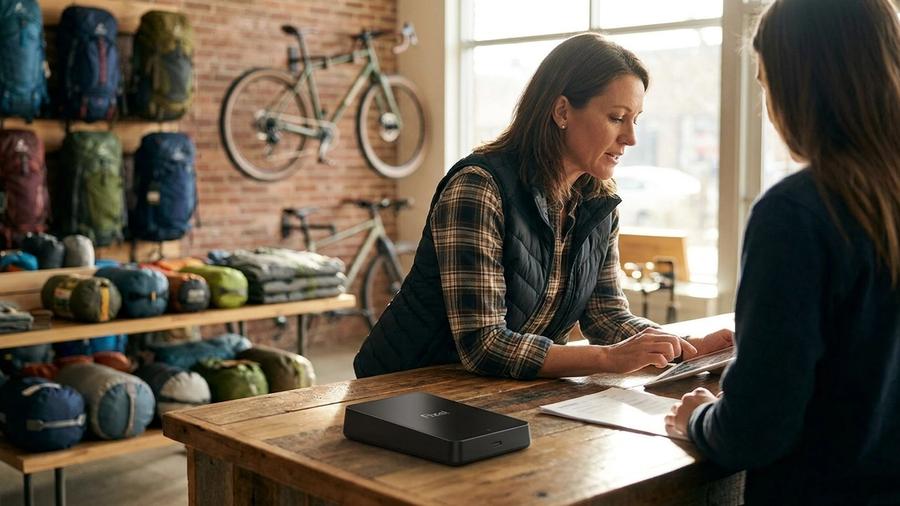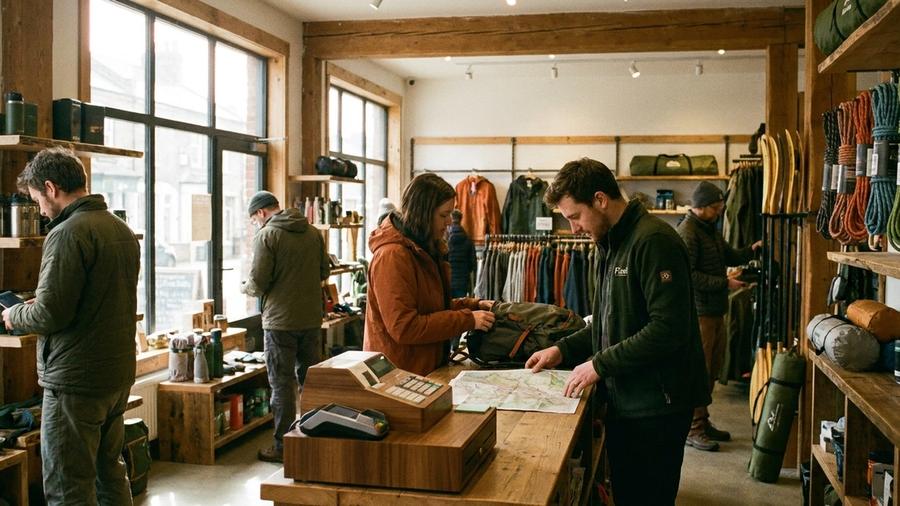
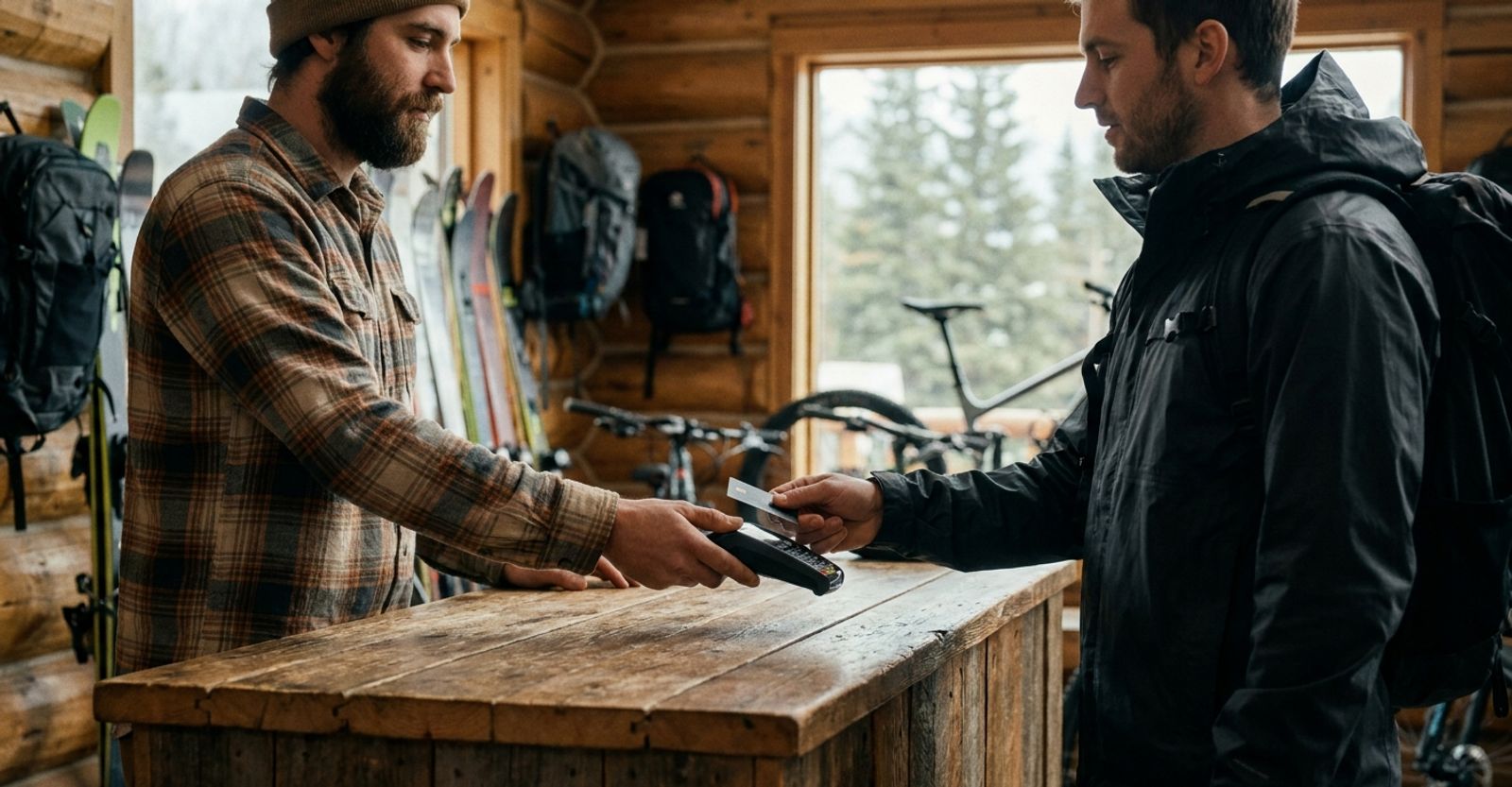
Outdoor businesses don't always fit neatly into traditional payment categories.
A bike shop may sell a $6,000 mountain bike, take a deposit on a custom build, collect payment for a repair and rent a bike to a visitor, all before lunch.
A campground may take reservations months in advance, collect balances at check-in and process hundreds of small purchases through its camp store.
A guide may collect a deposit online, take the remaining balance at a trailhead and sell merchandise after the trip.
The best payment processing setup for an outdoor or recreation business needs to accommodate these different ways of getting paid without creating a different system for each one.
Here are the key things to consider when choosing a payment processor for an outdoor business.
What makes payment processing different for outdoor businesses?
At its core, payment processing works the same way across industries. A customer presents a card or digital wallet, the transaction is authorized, and funds are eventually deposited into the merchant's account.
The business around that transaction can be very different.
Outdoor and recreation businesses often combine several characteristics that complicate payments:
- significant seasonal swings in revenue
- multiple ways of selling
- retail and service under one roof
- deposits and advance bookings
- rentals and reservations
- mobile or remote transactions
- ecommerce
- memberships and season passes
- multiple locations or departments
- large variations in transaction size
That means choosing a processor based only on the advertised transaction rate can miss much of what actually matters.
The better question is: How well does the payment system fit the way your business operates?
1. Start with transparent payment pricing
Payment processing costs generally consist of several components, including interchange, card-network fees and the processor's markup.
For many established outdoor businesses, interchange-plus pricing can provide a clearer way to understand those costs because the underlying card costs and processor markup are separated.
Whatever pricing model you choose, look for a provider that clearly explains:
- transaction fees
- processor markup
- monthly fees
- terminal costs
- gateway fees
- PCI-related fees
- chargeback fees
- ecommerce fees
- contract terms
- cancellation fees
The lowest advertised rate does not necessarily produce the lowest overall processing cost.
A processor should be able to explain your pricing in language you can understand. Fizel publishes its pricing approach so you can see how the numbers are built.
2. Make sure seasonality isn't treated like an exception
Seasonality is one of the defining characteristics of the outdoor economy.
A ski business may generate much of its revenue between December and March. A fishing lodge may operate primarily during summer. A bike shop might see a huge increase in transactions when spring arrives.
Those patterns are normal for the business.
Your payments provider should understand them.
Sudden increases in processing volume can sometimes attract additional attention from payment processors, particularly when transaction patterns differ substantially from previous months.
When setting up a merchant account, make sure the provider understands:
- expected annual volume
- peak monthly volume
- average transaction size
- maximum transaction size
- seasonal opening and closing dates
- deposits collected in advance
- refund policies
- how far in advance customers typically pay
Accurate underwriting at the beginning can help reduce surprises when peak season arrives.
3. Your counter shouldn't be the only place you can take payment
Outdoor commerce frequently happens away from a traditional checkout counter.
Think about:
- a guide collecting a balance before departure
- a marina employee taking payment near the dock
- a rental operator checking someone out outside
- a retailer running a tent at an event
- a mobile service operation
- a ski or bike business processing transactions at multiple stations
For those businesses, wireless terminals, mobile payment devices and Tap to Pay can be useful additions to traditional countertop terminals.
The goal isn't necessarily to eliminate the counter.
It's to make the counter optional when the business moves somewhere else.
4. Look for one system across in-store and online payments
Customers increasingly move between physical and digital channels.
Someone might discover a business online, make a reservation from their phone, pay a deposit, arrive in person and then make another purchase at the counter.
Outdoor retailers face the same challenge. A customer may research equipment online, buy in-store and return later through another channel.
Running completely separate payment systems can create unnecessary reconciliation work.
When possible, look for payment infrastructure that can support:
- in-store transactions
- ecommerce
- hosted payment pages
- payment links
- virtual terminal transactions
- recurring payments
The closer these channels are connected, the easier it becomes to understand the customer's activity and reconcile the business.
5. Rentals create their own payment requirements
Rentals are common throughout outdoor recreation.
Bikes. Skis. Snowboards. Surfboards. Kayaks. ATVs. Camping equipment. Boats. Climbing equipment.
Rental businesses often need more than a standard retail checkout.
Depending on the operation, payment requirements may include:
- reservation deposits
- remaining balances
- damage deposits or holds
- cancellations
- refunds
- extensions
- equipment upgrades
- additional charges
- online reservations
If rentals are an important part of your revenue, evaluate the entire rental workflow rather than just asking whether a processor can accept credit cards.
The payment system should work with the software and operational process you use to manage the rental.
6. Reservations and deposits matter
Many outdoor businesses sell something that happens later.
A fishing charter might be booked months before departure. A campground reservation may be made before summer begins. A ski lesson could be purchased before the customer arrives at the resort.
This creates a different payment relationship than ordinary retail.
Businesses may need to collect:
- full payment in advance
- a percentage deposit
- a fixed deposit
- the remaining balance on a future date
- cancellation charges where permitted
- refunds or credits when plans change
A good payment setup should support the business's booking and cancellation policies without requiring staff to manually chase every outstanding balance.
7. Think beyond today's point-of-sale system
The point-of-sale system is important, but it shouldn't necessarily determine your entire payments strategy.
Outdoor businesses change.
A single-location retailer may add ecommerce. A guide may begin selling merchandise. A campground may add online reservations. A bike shop may introduce rentals. A resort may add another location.
Before choosing payment infrastructure, ask whether it can support what the business might look like several years from now.
Useful capabilities may include:
- POS integrations
- ecommerce integrations
- APIs
- virtual terminals
- recurring billing
- multiple merchant accounts
- multiple locations
- consolidated reporting
Changing a payment terminal is relatively easy.
Changing an entire payment architecture can be much more disruptive.
8. Large and small transactions may happen in the same business
Outdoor businesses can have unusually wide ranges in transaction size.
A powersports dealer might sell a small replacement part and a five-figure vehicle from the same location.
A bike shop might process a tube, a service invoice and a premium bike.
A marina might process a small retail purchase, monthly storage and a substantial repair bill.
Those differences matter when considering merchant-account setup, fraud controls, transaction limits and payment methods.
Make sure your processor understands both your average transaction and the legitimate high-value transactions your business occasionally processes.
9. Recurring payments can simplify memberships and seasonal programs
Recurring billing isn't just for software companies.
Across the outdoor economy it can be useful for:
- memberships
- clubs
- storage
- marina slips
- recurring lessons
- monthly programs
- season payment plans
- subscriptions
Automating these payments can reduce manual invoicing and follow-up.
If recurring revenue is part of your model, look for secure card-on-file and tokenization capabilities rather than manually storing or repeatedly collecting payment information.
10. Reporting should reflect the whole operation
A complicated outdoor business can generate revenue from several places.
Consider a mountain resort:
- lift access
- rentals
- lessons
- lodging
- retail
- food and beverage
- events
Or a bike shop:
- retail
- service
- rentals
- ecommerce
- events
The payment system should make it easier to understand those revenue streams, not harder.
Look for reporting that lets you identify transactions by location, channel, terminal or other useful business dimensions.
The objective is simple: one clear view of how money is moving through the operation.
11. Support matters most when you're busiest
Payment support is easy to ignore when everything is working.
Then Saturday morning arrives, the store is full and a terminal stops connecting.
For seasonal businesses, the cost of downtime can be especially concentrated because a relatively small number of days may account for a meaningful portion of annual revenue.
When evaluating a payments provider, ask:
- Who do I contact when something goes wrong?
- What support hours are available?
- Can someone troubleshoot the terminal remotely?
- How are replacement devices handled?
- Who helps with funding questions?
- Who handles chargeback questions?
- Will anyone understand how our account is configured?
Good support is not simply a phone number.
It's the ability to get a problem resolved when the business is busy.
12. Security should happen mostly in the background
Businesses accepting card payments have responsibilities around payment security and PCI DSS.
Modern payment technology can reduce the amount of sensitive card information a merchant needs to handle directly through technologies such as encryption and tokenization.
When evaluating a provider, ask how it approaches:
- PCI DSS
- encryption
- tokenization
- card-on-file payments
- ecommerce security
- user permissions
- fraud controls
Security should be taken seriously without requiring the business owner to become a payments-security specialist.
What is the best payment processor for an outdoor business?
There isn't one processor that is objectively best for every outdoor business.
A one-person fishing guide has very different requirements from a multi-location outdoor retailer or destination resort.
The best payment processor for your business is one that fits your combination of how you sell, where you sell, when you sell and what you sell.
| Requirement | Questions to ask |
|---|---|
| Pricing | Can I clearly understand the total processing cost? |
| Seasonality | Does the provider understand our peak and off-season volumes? |
| In-store | Which terminals and POS systems are supported? |
| Mobile | Can we accept payments away from the counter? |
| Ecommerce | Can online and in-person payments work together? |
| Rentals | Can the system support deposits, holds and rental workflows? |
| Reservations | Can we collect deposits and future balances? |
| Recurring | Can we securely automate memberships and recurring charges? |
| Reporting | Can we see our different channels and locations clearly? |
| Integrations | Will the payment system work with our existing software? |
| Security | How are PCI, encryption and tokenization handled? |
| Support | Who helps us when something goes wrong? |
| Growth | Can the setup expand as the business changes? |
If a provider can't answer these questions clearly before you sign, that itself is useful information.
Payment processing by type of outdoor business
Different parts of the outdoor economy place different demands on payments.
Outdoor retailers and bike shops
Retailers may need countertop payments, ecommerce, service payments, deposits, rentals and mobile checkout.
For bike shops in particular, the combination of retail, repairs and high-value transactions makes integrated payments especially useful.
Guides and outfitters
Guides often need online deposits, payment links, mobile payments and the ability to collect balances away from a traditional storefront.
Campgrounds and accommodations
Reservations, advance payments, recurring seasonal guests and on-site retail can all exist within the same campground or RV park.
Resorts and destinations
Multiple departments, locations and revenue streams make integrations and consolidated reporting particularly important for resorts and destinations.
Marinas
Slip fees, storage, fuel, retail and service invoices can produce a mixture of recurring, immediate and higher-value transactions across marine and waterfront businesses.
Events and recreation
Races, festivals and ticketed events concentrate volume into a short window, often outdoors and away from any fixed counter.
Powersports businesses
Dealerships may combine vehicle sales, parts, service and rentals, creating unusually wide ranges in transaction values.
Outdoor brands and manufacturers
Brands selling through dealers, distributors and directly to consumers may need to support ecommerce, wholesale payments, invoices and direct retail within a broader commerce strategy.
Why Fizel focuses on the outdoor economy
Fizel was built around a simple idea: payments work better when the provider understands how the business actually operates.
Outdoor businesses aren't just another merchant category to us.
The industry has its own rhythms: seasons, rentals, reservations, service counters, memberships, mobile transactions, high-value equipment and customers who may be miles away from a traditional checkout.
Fizel combines modern payment technology with a focus on businesses across outdoor recreation.
That includes payment solutions for:
- outdoor retail and service
- guides and outfitters
- resorts and destinations
- campgrounds and accommodations
- marine and marinas
- rentals
- events and recreation
- powersports
- outdoor brands and manufacturers
The objective isn't to force every business onto the same system.
It's to build the right payment setup around the way each business gets paid.
Choosing your next payment processor
If you're evaluating payment processing for an outdoor or recreation business, don't start with the terminal.
Start with your operation. Map out:
- where customers pay you
- when they pay you
- what software is involved
- which payments happen in advance
- which payments recur
- where staff need to take payments
- how seasonal your transaction volume is
- how you want everything reported at the end of the day
Then evaluate processors against that list.
The right payment setup should disappear into the operation. Customers can pay wherever they need to, staff spend less time working around the system, and the business gets a clearer picture of its revenue.
That's ultimately what good payment processing should do.
Recreation facilities with recurring memberships face this most directly: see how the pieces fit together for climbing gyms, where memberships, day passes, rentals, programs and retail all run through the same operation.
Explore Fizel Solutions or get a quote.
If you are already processing with someone, start by checking whether your current pricing is still competitive. Our statement analysis reads a recent statement and reports your effective rate and monthly charges in plain language.