
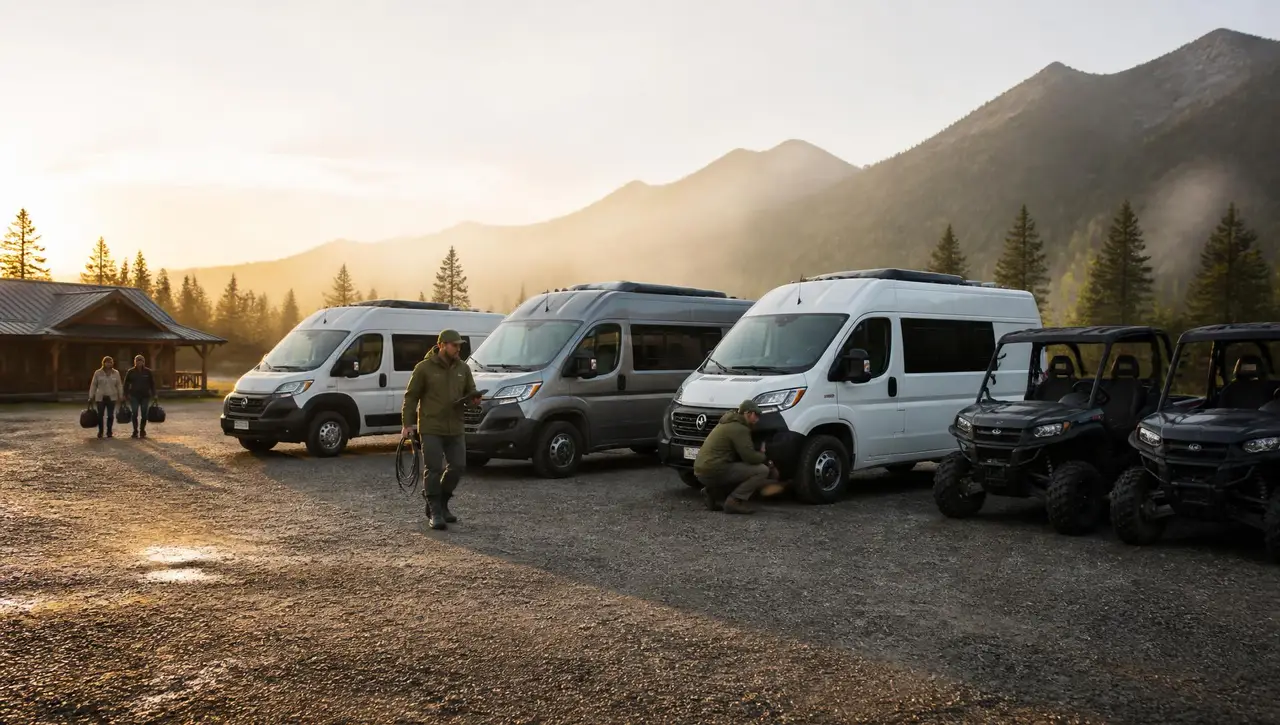
RV & Powersports Rentals
Payment Solutions for RV & Powersports Rentals
From online reservations and deposits through pickup, pre-authorizations and final payments, Fizel supports the different ways RV and powersports rental businesses get paid.
Higher-ticket merchant environments, internationally issued cards, multi-location fleets, funding that generally lands the next business day, and month-to-month terms with seasonal pausing.
The vehicle leaves. The business stays in motion.
A rental transaction begins well before the vehicle leaves the property. Someone finds the business online in February, compares vehicles, chooses dates in July, pays a reservation or a deposit and then goes back to planning the rest of the trip. Months later they arrive, take possession of a valuable asset, and drive it into the place they came to see.
Meanwhile the operation never stops moving. Reservations are managed, availability is juggled, vehicles are inspected and maintained, cleaning and turnaround happens between departures, handoffs are explained in person, seasonal demand arrives all at once, and in some businesses all of that is happening at more than one location.
RV rental payment processing, campervan rental payments, ATV and UTV rental payments, snowmobile and motorcycle rental payments all share that shape: a long commercial timeline, a physical handoff in the middle, and money arriving at several different points along the way. Fizel builds the payment environment around that, rather than around an ordinary retail counter.
Who this is for
Businesses renting higher-value vehicles and motorized recreational assets. If you sell vehicles, parts and service, the powersports dealer page fits better. For lighter, higher-throughput rental models see bike rentals & tours or outdoor equipment rentals, and for water-based fleets, boat rentals & charters.
RV and motorhome rentals
Larger vehicles, longer rental periods and customers planning a trip that has been in the calendar since winter.
Campervan and adventure van rentals
Fleets for people who want to sleep where they are going, often booked from another province, state or country.
Travel trailer rentals
Towable inventory, delivery and setup in some operations, and a handoff that involves more explaining than handing over keys.
ATV and UTV rentals
Side-by-sides and quads working established trail networks, with same-day demand that moves with the weather.
Snowmobile rentals
A commercial year written by snowfall, with a base that goes from quiet to full on the first genuinely good morning.
Motorcycle and adventure vehicle rentals
Multi-day touring rentals, riders arriving by plane, and equipment fitted before anyone leaves the property.
Resort and destination rental operations
Rentals run at or beside a resort, lodge, campground or marina, where the customer is already on site.
Multi-location rental fleets
Several bases, mixed vehicle types, seasonal locations and one office trying to see the whole business at once.
The rental journey
Book, deposit, pick up, travel, return, finalize.
Six moments, spread across months rather than minutes. Payments can happen at several of them, and which ones is your decision rather than ours.
01
Book
A customer finds the business online, picks a vehicle and holds dates, often months before the trip, sometimes for a week in peak season that was always going to sell.
02
Deposit
A reservation payment, a deposit, or a scheduled balance closer to pickup. The commercial relationship starts here, long before anyone is standing in the yard.
03
Pick up
Inspection, paperwork, the walkthrough, a pre-authorization where the operator's policy calls for one, and any equipment or services added at the counter.
04
Travel or ride
Days, sometimes weeks. The asset is off the property and earning, and the operation is already preparing the next vehicle for the next customer.
05
Return
The vehicle comes back, gets checked over and documented, and the rental is closed out with the customer while they are still in front of you.
06
Finalize
Any legitimate remaining payment (extra days, added services, agreed charges) collected through a payment link, a virtual terminal or an invoice.
Fizel supports the payment layer around that journey. Reservations, fleet availability, vehicle tracking and rental administration stay in the systems you already run.
Sound like your business? Tell us how you take payments today and we'll put together a quote built around it.
Before the keys change hands
A walkthrough, not a checkout.
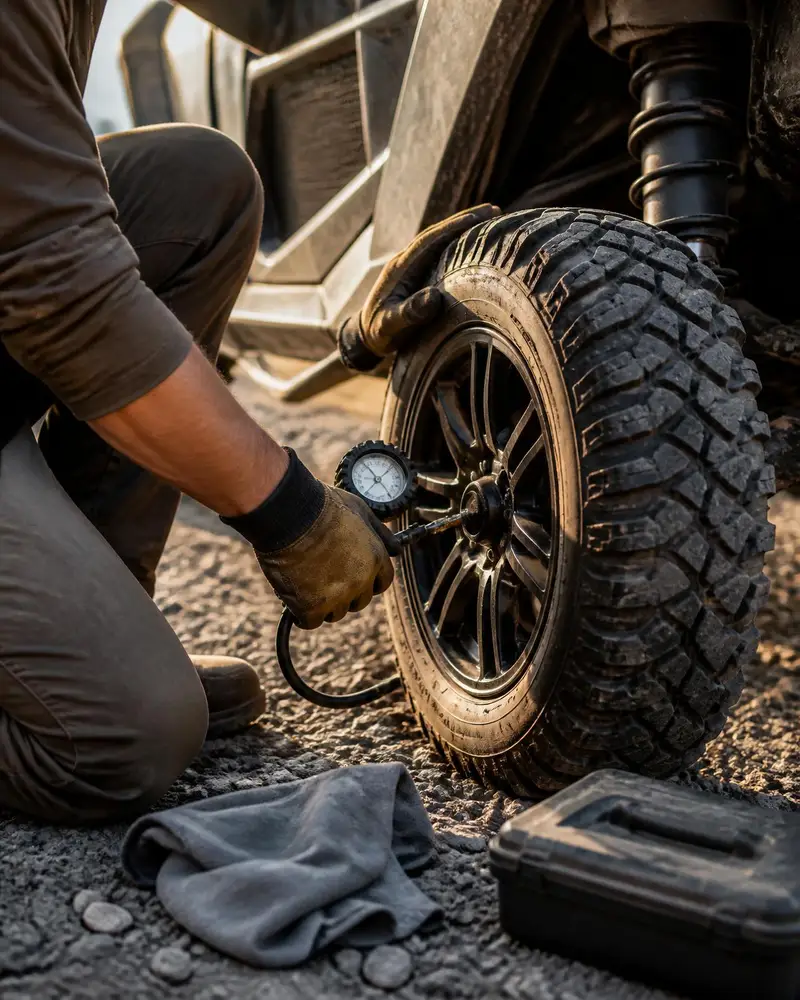
Before a customer leaves with a motorhome, a campervan, a side-by-side, a snowmobile or a motorcycle, someone on staff has walked around it. Tires checked. Fluids and charge confirmed. Equipment counted and stowed. The interior cleaned properly rather than quickly. The reservation reviewed, the customer's details confirmed, the operation of the vehicle explained to someone who may be driving it for the first time.
That conversation is the real transaction. A business is handing a substantial asset to a stranger for several days, on the understanding that it comes back in the same condition. Very little in conventional retail works like that, and it is the reason the payment environment around a rental has to do more than take a card at a till.
It is also why the handoff should not be slowed down by payments. If the walkthrough takes fifteen minutes, the payment side of it should take one.
Deposits and pre-authorizations
Holding value against a vehicle that is about to leave.
Depending on your policies and your payment setup, Fizel can support deposits, pre-authorizations, advance payments and final payments as part of the rental. A deposit taken at booking confirms intent and funds the preparation. A pre-authorization at pickup places a hold against available funds on the customer's card for the duration you specify. A final payment settles whatever legitimately remains once the vehicle is back.
It is worth being clear about what these tools do. A pre-authorization is a hold, not a guarantee: it does not guarantee that a merchant can ultimately recover any particular amount for damage, loss, theft, additional use or another claim. Fizel does not provide insurance against damage, theft, loss or non-return. Deposit and pre-authorization amounts, hold periods and rental terms are set by you, not by us.
What Fizel does is make those mechanics available and reliable inside one merchant account, configured for a business whose typical transaction is not a shirt and a coffee.
When the asset is valuable, the payment environment has to match the business.
A motorhome, a premium campervan, a new side-by-side or a touring motorcycle represents real capital sitting in the yard. The transactions follow: a week-long RV rental in July, a group taking three UTVs for a weekend, a destination snowmobile trip booked for four people, a peak-season booking made a year ahead. These are regularly larger than an ordinary retail purchase, and sometimes considerably larger.
Fizel supports higher-ticket payment environments and configures merchant accounts around the merchant's actual transaction profile: average ticket, high ticket, the advance-payment share, the card-not-present share, deposits and pre-authorizations, seasonality and the mix of vehicle types. A larger transaction should be an ordinary event in a business like this, because it is.
Higher-value rental assets
Larger tickets are normal here.
Underwriting outcomes are always specific to the business, and the point of understanding the category is to review it against what the operation genuinely looks like rather than against a general retail assumption.
The turnaround
Between one customer leaving and the next one arriving.
A vehicle comes back at four in the afternoon and goes out again at nine the next morning. In between: inspection, damage documentation, cleaning, fuelling or charging, maintenance and any parts that need attention, equipment checked back in and restocked, and the whole thing staged and ready in the right spot.
On a busy summer Saturday or the first powder morning of the season, that window compresses to almost nothing, and the yard becomes the busiest part of the business. Everybody who runs a fleet knows the arithmetic, the fleet only earns while the operation keeps moving, and a vehicle sitting unprepared is inventory that is not working.
Fizel does not manage fleet utilization or turnaround. But the payment side of the return should never be the thing holding a vehicle in the bay.
Multi-day and advance bookings
The trip is planned long before it happens.
A summer road trip, a family camping holiday, a destination snowmobile vacation, an ATV weekend with friends, a motorcycle tour through the mountains, these are booked in advance, often well in advance, and frequently by someone who will not see your yard until the day they arrive.
Ecommerce and a gateway behind your booking flow, hosted payment pages where you would rather not build one, payment links for the reservations that do not fit the standard path, deposits at booking, and scheduled payments where the structure of the rental calls for them. For destination and seasonal operators, most of the commercial relationship happens through those tools before anyone shakes a hand.
Add-ons
The reservation is rarely the only transaction.
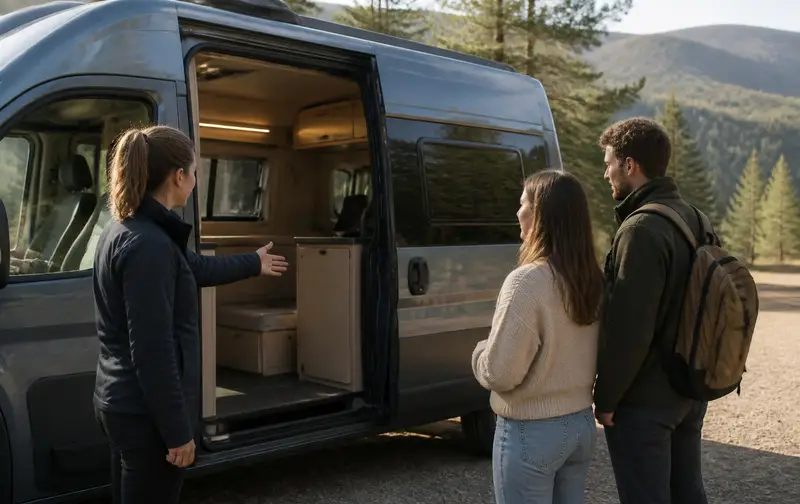
Depending on the operation, customers may also pay for equipment, accessories, additional rental days, delivery or pickup services, or other services the business provides. Some of it is added at the counter during the walkthrough. Some of it is added three days into a trip by someone who wants to stay out longer.
In-person terminals and Tap to Pay cover the first case. Payment links, a virtual terminal and invoicing cover the second, without asking anyone to drive back to the base to extend a booking.
Walk-ins and same-day rentals
Conditions are good and they want to go today.
Not every rental is planned six months out. Someone arrives at the destination, sees fresh snow or a clear forecast, walks into the office and asks what is available this afternoon. In plenty of powersports rental operations that is a meaningful share of the season.
Countertop terminals at the desk, wireless terminals for the yard, Tap to Pay on supported devices and mobile payments mean the walk-in is served as quickly as the booking. The environment has to work for the customer who reserved in January and the customer standing at the counter right now.
Mobile and destination operations
The handoff does not always happen at the base.
Depending on the operator, a customer may take possession at the rental base, at a resort, at a trailhead staging area, at a marina or campground, at a second location, or wherever a delivery is being made.
Wireless terminals, mobile payments, Tap to Pay and payment links cover those handoffs. Connectivity in remote locations varies and no payment company can promise coverage at a staging area an hour up a forest road, so it is worth planning acceptance around the network you actually have, a conversation worth having before the season, not during it.
International and destination customers
A booking from another country is an ordinary booking.
RV and campervan rentals in particular draw customers who fly in for the trip. A family in Germany books a motorhome in British Columbia. A couple from Ontario reserves a campervan in Colorado. A rider from the UK books a motorcycle for a two-week tour. The reservation, the deposit and often the balance are all paid from somewhere else, months ahead, with nobody present.
Internationally issued cards, multiple currencies, FX and DCC where relevant, advance online payment and customer-not-present transactions are part of the standard setup rather than an exception that needs arranging. For a destination rental business, that is simply how the customer base pays.
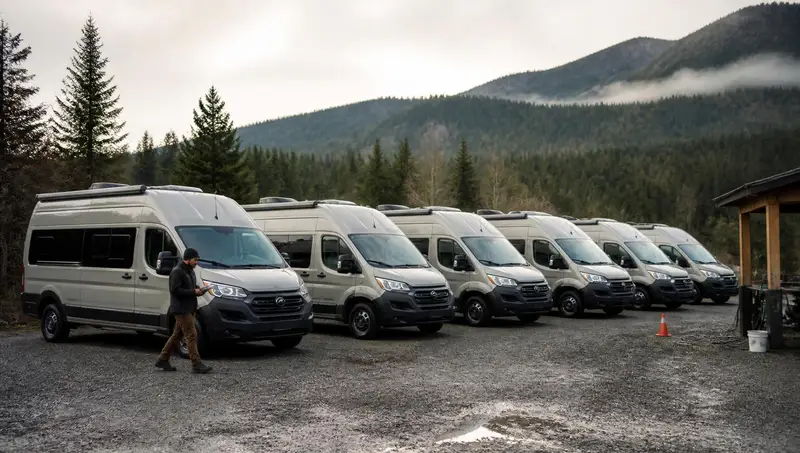
Every vehicle in the row is either earning, being prepared, or waiting for a date that is already sold.
Seasonality
When the season hits, it hits.
There is no single rental calendar. RV and campervan fleets tend to build through spring, run hard through summer and peak around holidays. Snowmobile operations run the opposite year entirely, with a season that starts when the snow decides it does. ATV and UTV rentals vary by destination and climate, and a shoulder season somewhere warm looks nothing like a shoulder season in the mountains.
The common characteristic is concentration: a meaningful portion of annual revenue can arrive inside a relatively short operating period, while maintenance, insurance, staffing and vehicle costs are carried across the whole year. Funding generally lands the next business day, which matters most in the weeks when the yard is full and the money is going straight back into preparation and payroll.
Fizel is month-to-month with no locked-in contracts. Seasonal businesses can pause their merchant account during the off-season rather than paying to keep an account open while the fleet is in storage. For a snowmobile operation in July or a campervan fleet in February, that is not a footnote, it is one of the practical reasons operators move.
Where the money arrives
One rental, four payment environments.
Before pickup
Online
Reservations, deposits and balances: ecommerce, gateways, hosted payment pages, payment links and scheduled payments where the booking structure calls for them.
At pickup
The counter and the yard
Countertop and wireless terminals, Tap to Pay on supported devices, deposits and pre-authorizations, plus anything added during the walkthrough.
During the rental
Wherever the customer is
Extended days and agreed additions handled remotely through payment links, a virtual terminal or invoicing, without asking anyone to drive back.
After the return
The office
Legitimate remaining or final payments settled while the rental is still fresh, through the same merchant account as everything before it.
Multi-location fleets
One base, or several.
A larger operator might run multiple rental bases, different vehicle types at each, seasonal locations that open and close with the calendar, concessions at a resort or destination, and a central office that has to see all of it clearly.
Multi-location payment environments, consistent acceptance at every base, centralized visibility and consolidated reporting are standard capability. Fizel is the payment layer across those locations, not centralized fleet management, and not a reservation system.
Existing systems
Keep the systems that already work.
Rental operators already run reservation or rental software, sometimes a fleet or vehicle-management system, ecommerce, a point of sale and accounting software. Some of it took years to get right.
Fizel has broad integration capability and starts from how the business operates today, then determines the appropriate payment environment around it. Compatibility with a specific platform is confirmed during review based on your setup. Fizel does not own or develop reservation, rental, fleet-management, telematics or vehicle-tracking software.
Capabilities
What the payment environment covers.
Grouped the way a rental actually runs rather than as a feature list.
Funding generally lands the next business day. Terms are month-to-month with no locked-in contracts, with seasonal pausing available where an operator has a real off-season.
Support is knowledgeable human payments support from people who understand this business environment. When the lot is full, tomorrow's rentals are already booked and customers are arriving to take possession of valuable vehicles, the person you reach should already understand what is happening behind the transaction.
Before pickup
- Ecommerce and gateways
- Hosted payment pages
- Payment links
- Deposits and advance payments
- Scheduled payments where appropriate
At pickup
- Countertop terminals
- Wireless terminals
- Tap to Pay on supported devices
- Deposits
- Pre-authorizations
During and after
- Payment links
- Virtual terminal
- Invoicing
- Legitimate additional and final payments
Across the operation
- Merchant accounts sized for higher-ticket environments
- Internationally issued cards
- Multiple currencies and FX/DCC
- Multi-location environments and consolidated reporting
- Broad integration capability

Somewhere out there, one of your vehicles is doing exactly what the customer booked it for.
How Fizel fits
- Booking deposits
- A deposit at booking commits the unit and the dates through peak season.
- Security holds
- Pre-authorize a damage or mileage hold, released after the walk-around on return.
- Handover day
- Mobile acceptance at the lot for insurance, add-ons and extras at pickup.
- After the trip
- Emailed invoices with payment links settle fuel, cleaning or damage charges.
Pricing
Quoted on how your fleet actually earns.
A single-base UTV rental operation prices differently from a destination campervan fleet with international bookings, and differently again from an operator running several locations across a season. We quote on real volume, the advance and in-person split, average and high ticket, deposits and pre-authorizations, international card share, the number of locations and the systems already in place. Month-to-month, with no locked-in contracts.
Further reading
Payment Processing for Equipment Rental Businesses
How reservations, deposits and returns shape a rental payment environment, plus our guide to why concentrated, weather-driven revenue changes the way a seasonal business should think about merchant terms.
Questions
RV and powersports rental payments, answered.
- Can Fizel support online reservations and advance payments for RV and powersports rentals?
- Yes. Ecommerce, gateways, hosted payment pages, payment links, deposits and scheduled payments where appropriate all sit inside one merchant environment, so a booking taken six months before pickup is processed through the same account as the payment taken at the counter. Fizel provides the payment layer only. Reservation, rental, fleet-management and vehicle-tracking software are not Fizel products, and the payment environment is configured around whatever you already use to hold dates and manage the fleet.
- Can we use deposits and pre-authorizations for higher-value rental vehicles?
- Yes. Depending on your policies and payment setup, Fizel can support deposits, pre-authorizations, advance payments and final payments as part of the rental. It is worth being precise about what a pre-authorization does: it places a hold against available funds on a card, and it does not guarantee that a merchant can ultimately recover any particular amount for damage, loss, theft, additional use or another claim. Fizel does not provide insurance against damage, theft, loss or non-return. Deposit and pre-authorization amounts and policies are yours to set.
- Can Fizel support payments at pickup and after a rental?
- Yes. At pickup, countertop terminals, wireless terminals and Tap to Pay on supported devices cover the counter and the yard, alongside deposits and pre-authorizations. During and after the rental, payment links, a virtual terminal and invoicing handle extended days, agreed additions and legitimate remaining payments without the customer having to return in person. All of it reports into one merchant environment rather than several disconnected ones.
- Can Fizel work with our existing rental or reservation software?
- Fizel has broad integration capability and the approach is to keep the systems that already work. Most rental operators already run reservation or rental software, sometimes a fleet or vehicle-management system, ecommerce, a point of sale and accounting software. The payment environment is built around that rather than replacing it, and compatibility with a specific platform is confirmed based on your existing setup during review. Fizel does not own or develop reservation, rental, fleet-management, telematics or vehicle-tracking software.
- Can Fizel support multiple rental locations?
- Yes. Multi-location payment environments, consistent acceptance across bases, centralized visibility and consolidated reporting mean an operator running several rental locations, mixed vehicle types or seasonal destination bases can see the whole operation without stitching separate accounts together. That works for a single independent rental business as well as for a larger operator with a substantial fleet. Fizel provides the payment layer across those locations, not centralized fleet management.
- Can we pause our merchant account during the off-season?
- Yes. Fizel is month-to-month with no locked-in contracts, and seasonal businesses can pause their merchant account during the off-season rather than carrying it through months when nothing is renting. This matters in rentals, where a meaningful portion of annual revenue can arrive in a concentrated operating period and the calendar differs completely between a campervan fleet and a snowmobile operation. Funding generally lands the next business day, which is when the season is paying for maintenance, preparation and staff. Underwriting outcomes are always specific to the business.