

Boat Rentals & Charters
Payment Solutions for
Boat Rentals & Charters
A reservation taken in February. A deposit that holds the boat. A balance settled the week before arrival. A pre-authorization at check-in, fuel and an extra hour added at the dock. Fizel supports the different ways a boat rental or charter business gets paid.
Online reservations, dockside acceptance, higher-value charters and internationally issued cards on one merchant account, with funding that generally lands the next business day and month-to-month terms.
The operating reality
The transaction starts before the boat leaves the dock.
Boat rental and charter businesses do not really sell products. They sell time on the water, a Tuesday afternoon on a pontoon, a Saturday offshore, a week aboard something with a galley and a chart table. What gets sold is a date, and the payment behaviour follows from that.
By the time a customer walks down the dock, an operator may already have taken a reservation, a deposit, a balance, a damage-related hold and payment for add-ons. Then the operating day begins: boats have to be ready, arrivals stack up in waves, the forecast changes plans by nine, and staff are spread between an office, a fuel dock and whichever slip needs someone.
Fizel specializes in the outdoor economy and brings enterprise payment capability to it. That combination matters for this merchant type: people who understand the difference between a deposit and a hold, and the capability to support the whole journey, from one dockside rental company to a multi-location fleet.
Who this is for
Different boats. The same commercial shape.
Rentals put the customer at the helm. Charters put a captain there. The workflows differ in the details and share the same skeleton: a booking made in advance, money collected in stages, and a final settlement at the dock.
Powerboat and pontoon rentals
Hourly, half-day and full-day turns, families arriving in waves, a fleet that has to be back, fuelled and cleaned before the next booking.
Fishing boat rentals
Early departures, tackle and bait sold alongside the boat, repeat local customers next to visitors who booked from four states away.
Sailboat rentals and bareboat charters
Qualification checks, multi-day bookings, larger deposits and security holds, and customers who plan a year ahead.
Captained and fishing charters
A crewed trip sold as an experience (half-day, full-day or offshore) where the transaction is larger and the calendar is the inventory.
Yacht and vacation charters
Higher-value bookings, staged payments, international customers and a booking window measured in months rather than days.
Multi-location and fleet operators
Several docks, several marinas, seasonal staff at each, and an office that needs to see all of it in one place.
A marina may run rentals or charters itself, but operating the property is a different business from selling access to boats. If slips, storage, service, fuel and marina retail are the core of what you run, our marinas page covers that side, and most operators who do both end up wanting the two environments on one merchant relationship.
Sound like your business? Tell us how you take payments today and we'll put together a quote built around it.
Reservation to return
One booking. Five payment moments.
Not every operator uses all of these, and not in this order. But almost none of them collect once.
Weeks or months out
The reservation
A date is chosen, a boat is held and the first money moves, online, through a hosted payment page or by payment link. For a peak-summer week or a multi-day charter this can happen the previous autumn.
Before arrival
The balance
Scheduled balance payments, invoicing or a virtual terminal payment over the phone. The boat is committed, the crew is booked and the operator would rather not be collecting on the dock.
Check-in morning
The hold and the walk-through
Identification, the safety briefing, the boat walk-through and, where the operator's workflow calls for it, a pre-authorization for a security or damage hold placed on the customer's card.
On the dock
Add-ons and departure
Fuel arrangements, an extra tube, a cooler, a captain, a second hour. Taken on a wireless terminal or a phone in someone's back pocket, standing on wet planks.
On return
The final settlement
Overtime, fuel reconciliation, the hold released or adjusted, sometimes a tip for the captain and mate. The transaction that began in February finishes at five in the afternoon in July.
Months, then minutes
the gap between when a peak-week booking is paid for and when the boat actually leaves
Two card moments
a deposit that collects money and a hold that reserves it are different instruments with different outcomes
One weather call
can rearrange a day of departures, refunds, reschedules and add-ons before ten in the morning


Nobody is standing at a checkout counter.
That is the single most useful thing to understand about payments in this business. The moment of sale happens on a dock, in a parking lot, on a boat or at another location entirely, usually while someone is holding something with both hands.
Acceptance where the work happens
The dock is a point of sale.
On a holiday Saturday morning, six groups arrive inside half an hour. One needs to add an hour. One wants the tube. One booked online and still owes a balance. One never received the email at all. A member of staff is already at the far end of the dock with the fuel hose in one hand.
Wireless terminals, mobile payments and Tap to Pay on supported devices mean payment can happen where the customer is standing rather than back at the office. Payment links cover the customer who would rather pay on their own phone, and a virtual terminal covers the call that comes in while the dock is full. Countertop terminals still make sense at the rental desk, they are simply not the whole answer.
The point is not the hardware. The point is that a payment shouldn't be the reason a departure slips fifteen minutes on the busiest morning of the year.
Deposits and pre-authorizations
Money collected, and money held. Not the same thing.
A deposit is a real payment. It moves money toward the rental or charter, secures the date and protects the operator against the booking that quietly evaporates in June. Deposits can be taken online at the time of booking, by payment link, over the phone through a virtual terminal, or on the terminal at the desk.
A pre-authorization is different. It places a temporary hold on available funds on the customer's card without collecting them, which is how many operators handle a security or damage hold at check-in. It is released or adjusted when the boat comes back. Fizel supports both, and we set them up around the workflow you actually run.
Where rentals dominate the business, our outdoor equipment rentals page goes further into the full rental payment lifecycle.
Worth saying plainly
A pre-authorization is a payment tool, not a guarantee that a bent prop or a lost anchor gets paid for. It reserves funds; it does not settle a dispute.
Which is exactly why it is worth deciding at setup how you want deposits, holds and damage handled across your rental and charter agreements, rather than working it out at four in the afternoon with a queue behind you. How those charges are agreed with your customers is your business; supporting the payment workflow is ours. Our guide to charter deposits and cancellation policies walks through how operators structure those terms.
The calendar is the inventory. A Saturday in July can only be sold once, and it is usually sold long before it arrives.
The commercial shape of a charter business
Add-ons and the final bill
The base reservation is rarely the whole ticket.
Depending on the operator, the day can include fuel, an extra hour, watersports equipment, tackle, coolers, a captain or mate, merchandise, and whatever else got added at the dock. Some of it is priced in advance. Some of it is decided in the last ninety seconds before departure, and some of it is only known when the boat comes back.
Fizel supports the payment side of all of it: terminal, mobile, link, invoice or hold adjustment, without dictating how you structure or agree those charges with your customers.
Charters push the other direction. A full-day offshore trip, a multi-day bareboat booking or a vacation-week rental can be worth many times an ordinary retail sale, sometimes split across a deposit and a balance months apart. Fizel supports higher-ticket payment environments and configures the merchant account around your real transaction profile: average ticket, high ticket, deposit structure and seasonal peaks, so the largest booking of the year goes through like any other.
Destination customers
Marine destinations run on people who travelled to get there.
A family that booked a pontoon from another country in March. A charter group flying in for three days. Customers who pay a deposit online in one currency and settle the balance at the dock in another.
Internationally issued cards, multiple currencies and FX/DCC are established Fizel capability, in advance and in person. A travelling customer is your best customer, not a risk condition.
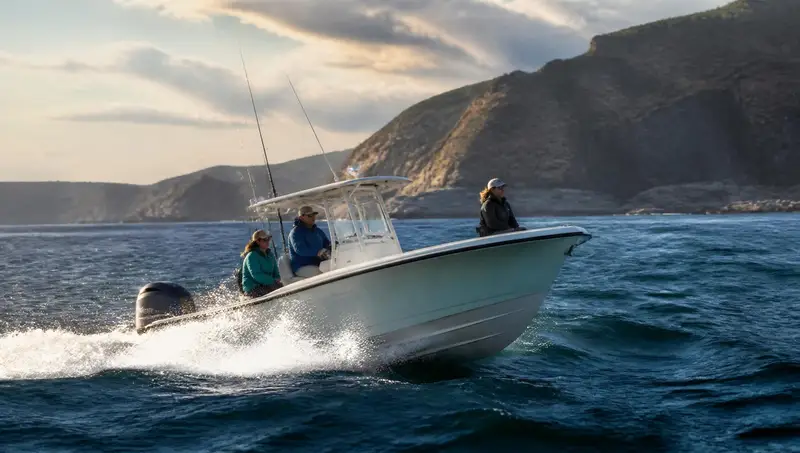
Everything on the dock exists so this happens on schedule.
Ninety minutes after check-in. The part of the business the customer remembers, and the only part they were ever really buying.
Weather and seasonality
A compressed season, and a forecast that gets a vote.
A charter company in Florida, a boat-rental operator on Vancouver Island and a lake business in Ontario do not share a calendar. One runs most of the year with a winter high season. One has a real summer and a long grey shoulder. One is frozen for months and earns a decisive share of the year between the May long weekend and Labour Day.
What they share is compression and weather. Preseason bookings arrive before a single boat has been in the water. Launch week is chaos. Holiday weekends carry a disproportionate share of the year. Then a front moves through and a full Saturday becomes cancellations, reschedules and refunds by nine in the morning.
Meanwhile the fleet was paid for in the spring, insurance and dockage do not care about the forecast, and seasonal staff are paid every two weeks regardless. Funding that generally lands the next business day is worth materially more in that business than in a flat one, and Fizel is month-to-month, with no locked-in contracts. A payments relationship should not be the most rigid thing about a business that reshapes itself four times a year.

How sharply the season compresses, month by month, is charted in our Recreational Boating Industry Statistics 2026 report.
Payment capabilities
Matched to how the operation actually runs.
Not a feature list for its own sake, these are the tools the booking page, the rental desk, the dock and the office each need.
Reservations and advance payments
- Ecommerce payments, gateways and hosted payment pages
- Payment links for deposits, balances and charter bookings
- Scheduled payments across a long booking window
- Invoicing for corporate trips, groups and repeat accounts
At the dock
- Countertop terminals in the office or rental desk
- Wireless terminals that work down the dock, not just at the counter
- Mobile payments and Tap to Pay on supported devices
- POS and integrations so check-in keeps the workflow staff already know
Across the operation
- Deposits, pre-authorizations and balance payments for rental workflows
- Merchant accounts configured for higher-ticket charter transactions
- Internationally issued cards, multiple currencies and FX/DCC
- Multi-location environments with consolidated reporting
The full range is on our solutions page. Online reservations, deposits and damage holds are covered under selling online.
Start with how you already operate
The booking calendar stays yours. Payments fit around it.
By the time an operator talks to us there is a reservation platform holding the calendar, possibly rental-management or marina-management software, a POS at the desk, a website taking bookings, and accounting software that everything eventually has to agree with. Fizel integrates broadly across booking, rental, retail, commerce and business systems. We look at how you run the business today, keep what works and fit payments into it, the specific integration for your stack is confirmed during setup.
See the platforms Fizel works with for a sense of the booking, POS, ecommerce and accounting systems payments can connect to.
Scale works the same way. A single dockside operation, a charter company with a handful of captains, and a fleet operator running rentals out of several marinas can all run consistent payment acceptance with consolidated reporting across locations, centralized visibility for the office, local workflow at each dock, one relationship rather than one per site.
And when something needs sorting, you reach people who understand the business behind the transaction. A payment question at a desk on a quiet Tuesday is a different problem from the same question at the dock while six groups are checking in on a holiday Saturday. Knowing which one you are having is most of the job.
From the dock
Six in the morning, first Saturday of July.
Someone is refuelling the boat that came back late. Someone else is pulling life jackets in three sizes off a rack and counting them twice. There is a whiteboard by the office door with names, times and slip numbers half rubbed out, a radio muttering the marine forecast, and a cooler that a family will forget on the dock at eleven. The first group arrives twenty minutes early, which is what the first group always does. Nothing about the day will go exactly as written on the board, and everyone standing there already knows it.
How Fizel fits
- Dock check-in
- Mobile acceptance at the slip so the renter pays where the boat is, not back at the office.
- Reserved online
- Deposits taken at booking hold the boat and the time slot through the season.
- Security holds
- Pre-authorize fuel and damage holds, then release them once the boat is back and checked.
- Charters & captains
- Payment links and phone payments settle longer charters booked weeks in advance.
Pricing
Quoted on your actual payment environment.
An hourly pontoon operation prices differently from a charter business with large deposits and international customers, and differently again across several locations and a substantial fleet. We quote on real volume, ticket profile, deposit and hold structure, channel mix, seasonality, international card share and the systems already in place. Month-to-month, with no locked-in contracts.
Further reading
Payment Processing for Marinas
How marine businesses handle seasonal volume, deposits, dockside acceptance and the mix of scheduled and in-person payments, useful background if you run rentals or charters alongside a marina operation.
Questions
Boat rental and charter payments, answered.
Can Fizel support online boat reservations and advance payments?
Yes. Ecommerce payments, gateways, hosted payment pages and payment links let customers pay a deposit when they book and a balance closer to the date, with scheduled payments across a booking window that can run months. Phone bookings can be taken through a virtual terminal, and groups or corporate trips can be invoiced. Fizel provides the payment layer, your reservation or rental-management system stays yours, and we fit payments into it.
Can we take deposits and pre-authorizations for rentals and charters?
Yes. Fizel supports both, and the difference matters. A deposit actually collects money toward the rental or charter. A pre-authorization places a temporary hold on available funds on the customer's card, which is how many operators handle a security or damage hold at check-in. A pre-authorization is a payment tool rather than a guarantee that every amount can ultimately be collected, so it is worth deciding at setup how you want deposits, holds and damage handled.
Can Fizel support higher-value charter transactions?
Yes. A full-day offshore charter, a multi-day bareboat booking or a week-long vacation rental produces a much larger ticket than ordinary retail, and that is normal business for this merchant type. Fizel configures the merchant account around your actual transaction profile (average ticket, high ticket, deposit structure, seasonal peaks and channel mix) so legitimate large transactions are expected rather than treated as anomalies.
Can we accept internationally issued cards and multiple currencies?
Yes. Internationally issued cards, multiple currencies and FX/DCC are established Fizel capability. Marine destinations run on travelling customers, and a card issued in another country booking a charter three months ahead (then adding fuel and an extra hour at the dock) should be an ordinary transaction in both moments, online and in person.
Can Fizel work with our existing reservation or rental-management system?
That is where we start. Boat rental and charter operators usually run a reservation or rental-management platform, sometimes a marina-management system, a POS, an ecommerce site and accounting software. Fizel integrates broadly across booking, retail, commerce and business systems. We look at how you operate today, keep what works and build the payment environment around it. The specific integration for your stack is confirmed during setup.
How quickly do funds generally settle?
Funding is generally next business day. That matters more here than in a year-round business, because a large share of annual revenue can be earned in a compressed season while fuel, insurance, dockage, maintenance and seasonal payroll all come due during the same weeks. Fizel is also month-to-month with no locked-in contracts, which suits a business whose volume changes shape between July and November.
Something specific to your operation? Contact us and we will give you a straight answer. More on how we work with marine businesses is on the marine and marinas industry page.
From the reservation to the last hour on the water.
Tell us how the business gets paid today, bookings, deposits, holds, dockside add-ons, charters and seasons, and we will build a quote around it.