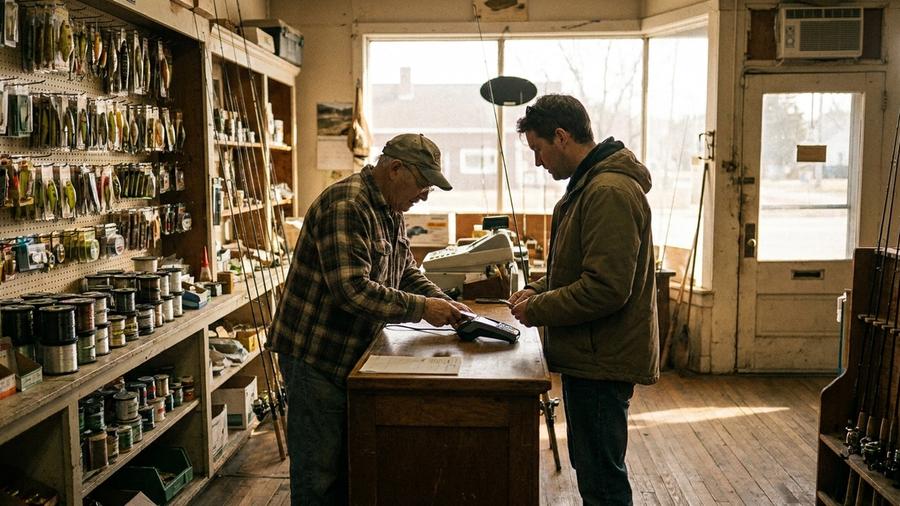
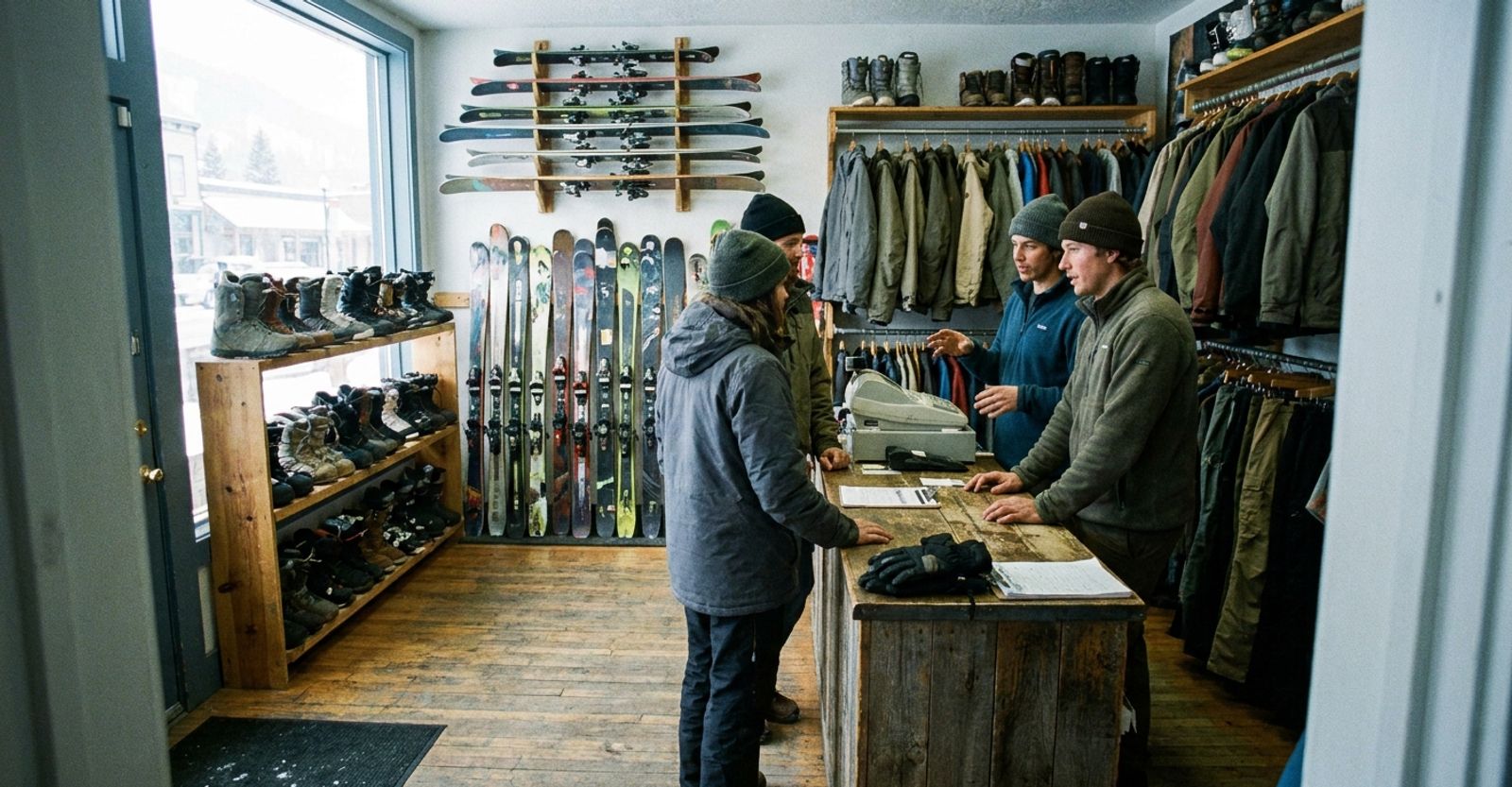
A ski shop can look like a retail business from the outside. Behind the counter, it is often several businesses operating at once.
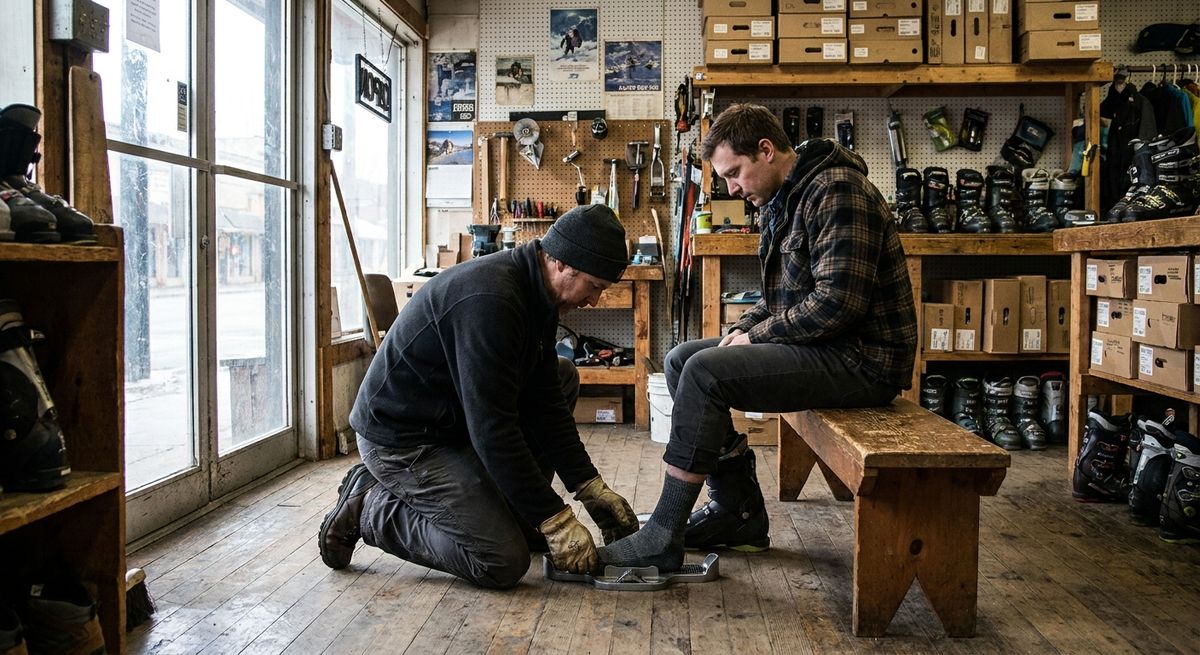
A customer might buy a $20 accessory while the person beside them is purchasing a complete ski setup. In the back, technicians are mounting bindings and tuning skis. Another customer is picking up a rental package reserved online three weeks earlier. Meanwhile, ecommerce orders are coming through the website.
Then spring arrives and the entire revenue pattern changes.
That combination of retail, rentals, service, ecommerce and extreme seasonality makes payments in a ski shop more complicated than simply putting a credit card terminal beside the cash register. The right payment setup should fit all of those parts of the business without creating more systems for employees to manage. Fizel's payment solutions for ski shops are built around that mix of retail, service and rental workflows.
The ski business is bigger than the checkout counter
Skiing sits inside a large outdoor recreation economy. The Outdoor Industry Association reported that U.S. outdoor recreation participation reached a record 175.8 million people in 2023, or 57.3% of Americans age six and older.
Snow sports have their own ecosystem of participants, resorts, retailers, manufacturers, rental operations and service businesses. Snowsports Industries America maintains an annual Winter Participation Study covering skiing, snowboarding, Nordic skiing, backcountry and other winter activities, based on a nationwide U.S. sample of more than 20,000 surveys of individuals and households.
The National Ski Areas Association separately tracks U.S. ski areas, skier and snowboarder visits, active participants and other industry measures.
Participation context for the businesses that outfit winter sports.
- 175.8MU.S. outdoor recreation participantsOutdoor Industry Association, 2024 Outdoor Participation Trends Report (2023 data)
- 57.3%Share of Americans age six and older participating outdoorsOutdoor Industry Association, 2024 report
- 20,000+Surveys behind SIA winter participation researchSnowsports Industries America, Winter Participation Study
- AnnualU.S. ski area, skier visit and participant trackingNational Ski Areas Association industry statistics
Sources: Outdoor Industry Association; Snowsports Industries America; National Ski Areas Association.
These figures describe the broader participation environment rather than ski-shop revenue specifically. That distinction matters. Public data isolating independent ski-shop payment volume or revenue is limited, so broad market statistics shouldn't be presented as ski-retail market size.
For an individual ski shop, the more useful question is how all that participation translates into different types of transactions.
One ski shop can have five different revenue streams
A modern ski shop often combines activities that would be separate businesses in another industry. That creates different payment requirements under the same roof.
| Revenue stream | Typical transaction | Payment considerations |
|---|---|---|
| Retail | Skis, boots, bindings, apparel and accessories | Fast checkout, high-ticket purchases, refunds and exchanges |
| Rentals | Daily rentals, demos and seasonal leases | Reservations, deposits, pre-authorizations and final charges |
| Service & tuning | Mounting, waxing, repairs and boot work | Work orders, deposits and payment at pickup |
| Ecommerce | Equipment, apparel and accessories | Gateway, fraud controls and online/in-store reconciliation |
| Lessons & experiences | Lessons, clinics and events | Advance booking, cancellations and group payments |
The challenge isn't necessarily finding technology capable of accepting each transaction. It's making the pieces work together without forcing employees to spend hours reconciling different systems.
Retail payments: from gloves to complete setups
The traditional ski-shop checkout remains important, but the range in transaction values can be unusually wide. One customer may buy wax or a pair of socks. The next might purchase skis, bindings, boots, poles and outerwear in a single transaction.
That makes reliability particularly important. A payment problem during a high-value transaction is inconvenient at any retailer. During a busy Saturday morning in January, when the shop is full and customers want to get to the mountain, it can quickly become an operational problem.
Ski retailers should consider terminals that support the payment methods their customers expect, including contactless transactions and mobile wallets, while also making sure the payment setup works with the shop's existing point-of-sale environment. Much of this overlaps with what applies to any specialty store, covered in payment processing for outdoor retailers.
Rentals change the payment workflow
Rental businesses don't always get paid in one simple transaction. A customer may reserve equipment online days or months ahead of arrival. The shop may collect some or all of the rental cost at booking, then handle changes when the customer arrives.
Higher-value equipment can also create a need for deposits or card pre-authorizations, depending on the rental model and the capabilities of the payment system. The payment process therefore needs to accommodate the life of the rental, not simply the moment equipment leaves the shop.
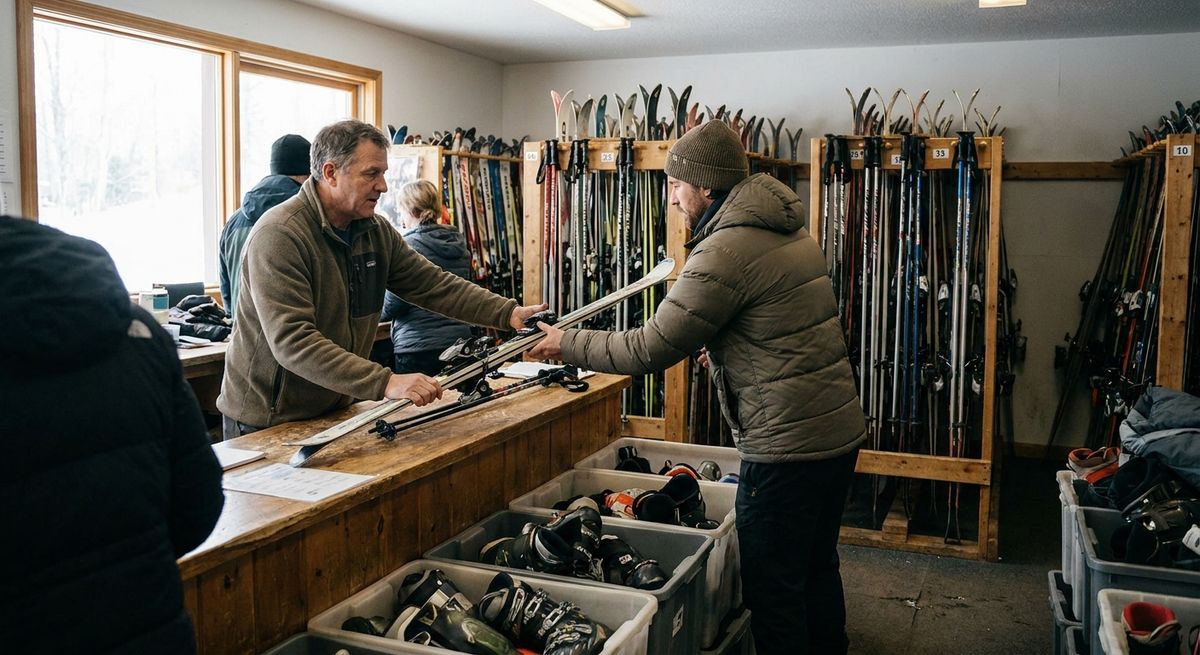
For shops running demo programs, seasonal leases or rent-to-buy programs, that lifecycle becomes even more important.
Service and tuning creates another checkout
The service bench has its own payment rhythm. A customer drops off skis on Tuesday and picks them up Friday. A binding mount may be quoted when the equipment arrives. Additional work might be discovered during service.
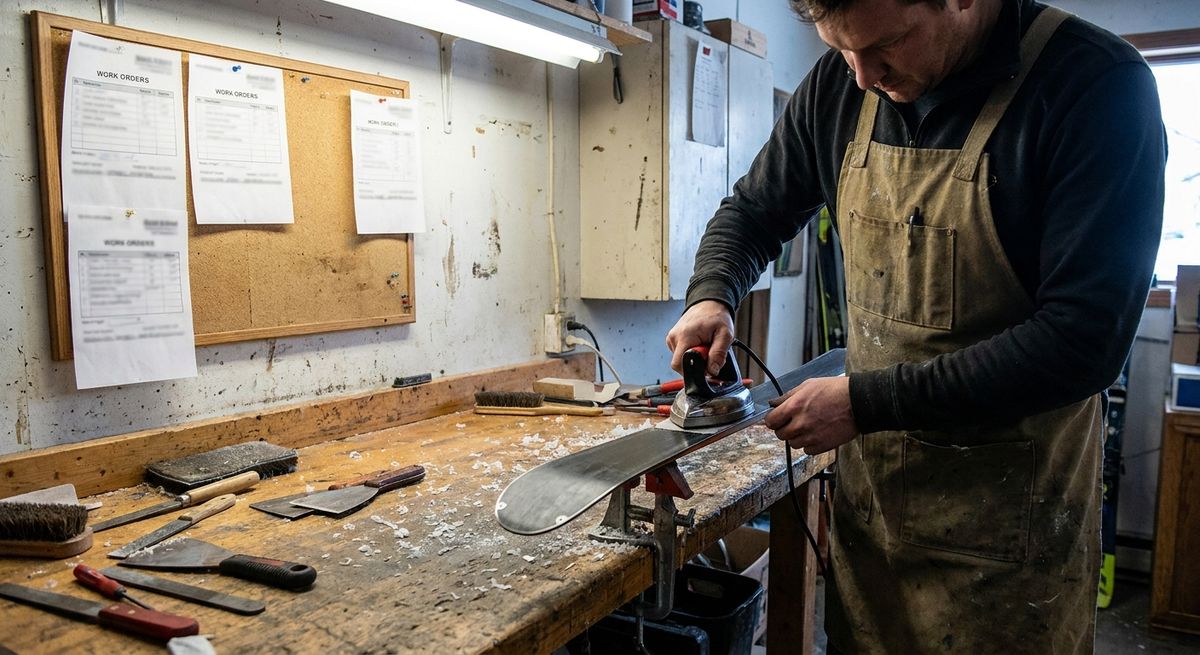
That means the transaction doesn't necessarily happen when the work order is opened. Payment tools can help shops handle deposits, outstanding balances and final payment without requiring staff to manually move transaction information between unrelated systems. For high-volume service departments, reducing that administrative work can matter almost as much as the processing rate.
Ecommerce has made the local ski shop less local
Independent ski retailers increasingly operate beyond their physical storefront. A customer may discover a shop online, order equipment from another state or province, arrange pickup before a ski trip, or research products online before buying in person.
The physical store and ecommerce store may be different sales channels, but the customer sees one business. Payments should reflect that. A good setup should make it easier to understand online and in-store transactions together, while supporting secure online checkout and appropriate fraud controls. The underlying gateway and ecommerce integrations matter here as much as the terminal sitting on the counter.
What payment channels does a ski shop actually need?
Not every shop needs every payment method. A small specialty ski retailer may primarily need countertop payments and ecommerce. A larger operation offering rentals, service and seasonal programs may need considerably more.
| Payment channel | Best used for | Why it matters |
|---|---|---|
| Countertop terminal | Main retail counter | Fast, dependable everyday checkout |
| Wireless terminal | Rental areas, events or checkout away from the counter | Lets payment move to the customer |
| Ecommerce | Online equipment and apparel sales | Extends sales beyond the physical shop |
| Payment links | Deposits and remote payments | Customer can securely pay without being present |
| Virtual terminal | Phone orders and manually initiated transactions | Useful when a customer isn't at the counter |
| Recurring payments | Seasonal programs, memberships or storage | Automates repeat billing |
| Pre-authorizations | Certain rental or higher-risk transactions | Can help secure funds subject to processor and card-network rules |
The goal isn't to activate every feature available. It's to choose the smallest set of tools that covers how the business actually gets paid. Fizel's solutions are grouped roughly the same way: accepting payments, selling online and running the business.
Seasonality changes the economics
Few retail categories are as visibly affected by weather and seasonality as skiing. Inventory often arrives before the snow does. Sales can become concentrated into a relatively short winter period, and an unusually warm or low-snow season can affect retailers well beyond the mountain itself.

For a ski shop, payment volume can look very different in December than it does in June. A processor evaluating the business should understand that pattern, and the shop should understand how its processing costs behave when transaction volume changes. We covered the wider pattern in how seasonality shapes outdoor businesses.
Questions worth asking include whether there are fixed monthly costs during the off-season, how equipment costs are structured, whether there are annual or minimum fees, and whether pricing changes at different processing volumes. For a highly seasonal business, the cheapest-looking rate during peak season isn't necessarily the lowest total cost over twelve months.
Don't rebuild the shop around the payment system
Changing payment providers shouldn't automatically mean replacing everything that already works. A ski shop may already have a POS system employees understand, ecommerce software with years of product data, a rental platform, accounting software and established operating procedures.
A payments partner should be able to work through those questions before recommending new hardware or software. Sometimes the best solution is a substantial upgrade. Sometimes it is simply changing the payment layer underneath systems the shop already uses.
Payment processing costs for ski shops
Payment processing pricing can be difficult to compare because the headline rate doesn't always represent the complete cost. A merchant's cost can include interchange, card-network assessments, processor markup and various account or technology fees. Both credit card processing fees and interchange pricing are worth understanding before comparing quotes.
Transaction mix matters too. A shop with mostly in-person card transactions may have a different cost profile from a retailer generating significant ecommerce revenue. The types of cards customers use, average ticket size and transaction environment can all affect processing costs.
That is why comparing processors based on a single advertised percentage can be misleading. Ski shops should ask for pricing that clearly separates the major components and makes it possible to understand the effective cost of accepting payments. Fizel publishes its pricing structure for that reason.
High-ticket purchases deserve attention
Ski equipment isn't inexpensive. A complete setup can produce a much larger transaction than the average general-retail purchase. Higher ticket sizes make several aspects of payment processing more important, including fraud prevention, chargeback procedures, authorization reliability and understanding how processing fees affect gross profit.
Even a relatively small difference in effective processing cost becomes more noticeable when applied across a season of high-value transactions. That doesn't mean the lowest processing rate should automatically win. Reliability, integrations, contract terms and support also have economic value.
What about mobile payments?
Mobile payment capability can be surprisingly useful for outdoor retailers. A ski shop may sell at a race, demo day, resort event or temporary location. A rental operation may have equipment stored somewhere other than the main checkout counter.
Move the checkout to the transaction instead of moving every transaction to the checkout.
Wireless terminals or compatible mobile payment technology allow transactions to happen where the customer already is. For businesses that regularly operate outside a conventional storefront, that can remove unnecessary friction.
Security and PCI compliance
Any business accepting card payments has responsibilities related to payment security. Ski shops should work with payment providers and technology designed to reduce unnecessary exposure to card information and support applicable Payment Card Industry Data Security Standard requirements.
Tokenization, encryption and modern payment terminals can reduce the need for employees or business systems to handle sensitive card information directly. Ecommerce deserves particular attention because card-not-present transactions have different security and fraud considerations from transactions where the customer presents a physical card at the counter. Security shouldn't be an add-on after the payment system is chosen.
Questions to ask a ski shop payment processor
A useful processor conversation should go well beyond "What's your rate?" The same discipline applies when choosing a payment processor for any outdoor business.
| Ask about | Question to ask |
|---|---|
| Pricing | Can you show me exactly how our processing costs are calculated? |
| Contracts | Is there a long-term commitment or cancellation fee? |
| POS compatibility | Can we continue using our current POS system? |
| Ecommerce | Which gateways and ecommerce platforms can you support? |
| Rentals | Can the setup support the payment workflow used by our rental system? |
| Deposits & pre-authorizations | What options are available for our specific merchant setup? |
| Seasonality | What fixed costs continue during our slow months? |
| Reporting | Can we clearly reconcile our different payment channels? |
| Support | Who do we contact when something fails on a peak Saturday? |
| Security | How do you help us manage PCI requirements and payment security? |
The answers should be specific to the shop. If every merchant gets exactly the same recommendation regardless of how the business operates, that is worth questioning.
The best ski-shop payment setup is usually boring
Payment technology gets plenty of marketing language. Most ski shops need something much less exciting. It should work.
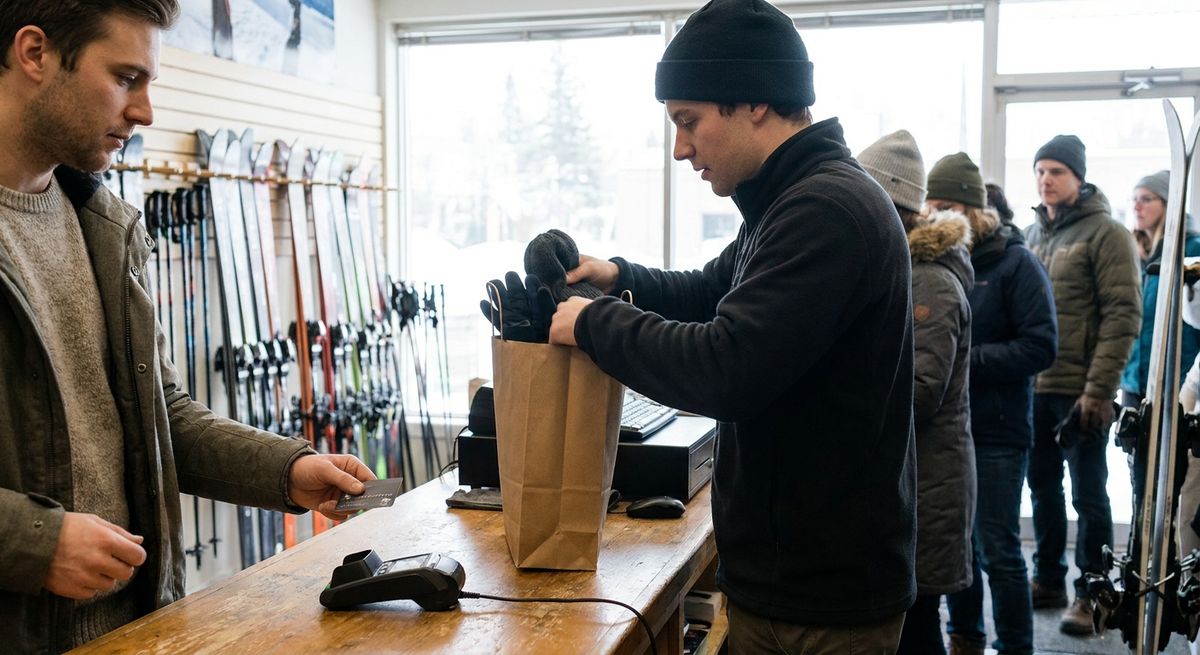
The terminal should connect. Online transactions should process. Deposits should be easy to identify. Employees should know what to do. Reports should reconcile. Funds should arrive where expected. And when something doesn't work, someone should be available to help. The best payment infrastructure tends to disappear into the business.
How Fizel approaches payments for ski shops
Fizel focuses on businesses in the outdoor economy because their operating models often don't fit neatly into conventional retail. A ski shop is a good example. It can be a retailer, ecommerce company, rental operation and service business simultaneously, with a large percentage of annual activity concentrated into a relatively short season.
Rather than requiring the business to rebuild around a particular payment product, Fizel starts with how the operation works today: the existing POS, ecommerce platform, rental or booking systems, transaction mix, seasonal volume and places where employees are doing unnecessary manual work.
From there, the objective is to bring together appropriate merchant-account, terminal, gateway and payment technology using established processing, banking and technology infrastructure. Keep the systems that make sense. Upgrade the parts that don't. And make the payment layer easier to understand. Shops that also sell at the mountain often read our guides on bike shops and ski resorts and Nordic centres for comparison.
Frequently asked questions
What is the best payment processor for a ski shop?
There isn't one processor or technology stack that is best for every ski shop. The right setup depends on whether the business combines retail, rentals, service, ecommerce or other activities, as well as its existing software, transaction volume and seasonality. Look for a provider that can evaluate the entire operation rather than simply replacing the terminal.
Can a ski shop keep its existing POS when changing payment processors?
Sometimes. Compatibility depends on the POS system, gateway, processor and specific integration, and it should be confirmed before changing providers. A payment provider should evaluate the existing technology before recommending that it be replaced.
Can ski shops take deposits for rentals?
Payment systems can support several approaches to advance payments, deposits and pre-authorizations. The appropriate method depends on the rental workflow, merchant account and applicable processor and card-network requirements.
Do ski shops need ecommerce payment processing?
Not necessarily, but ecommerce can be valuable even for businesses that primarily serve local customers. Customers increasingly research products, reserve equipment or purchase before arriving at the physical store.
What should a seasonal ski shop look for in payment pricing?
Look beyond the headline transaction rate. Consider monthly charges, equipment costs, annual fees, minimums, contract terms and what happens to those expenses during low-volume months.
How important is payment support for a ski shop?
It can be particularly important because ski-shop revenue is often concentrated into peak periods. Losing payment capability during a busy winter weekend can have considerably more impact than experiencing the same outage during the off-season.