

Mountain Bike Parks
Payment Solutions for Mountain Bike Parks
Passes bought in March. A rental picked up at eight. A lesson at ten, lunch at half twelve, a pair of gloves at two and a race entry for August. Fizel supports the different ways a mountain bike destination gets paid.
Advance online sales, terminals around the base area, rentals with deposits and pre-authorizations, several outlets on consolidated reporting, funding that generally lands the next business day, and month-to-month terms a seasonal park can pause in the off-season.
The operating reality
A bike park is not one business.
On a good summer Saturday, a mountain bike park can be running park access, a rental fleet, a coaching school, a retail floor, a service workshop, a food outlet and an event registration desk at the same time, for largely the same people, inside the same few hours.
Each of those has a different transaction shape. Access is often sold weeks ahead, online. Rentals involve a reservation, a deposit and a return. Lessons are booked, sometimes rescheduled, occasionally invoiced to a school or a corporate group. Retail is small and fast. Service is unpredictable. Food is dozens of taps an hour between eleven and two.
The trails get all the attention. The commercial complexity sits in the two hundred metres between the parking lot and the lift.
Lift-access and gravity parks
Uplift, a trail network, a rental fleet and a base area that has to move a thousand people through it before noon.
Resort summer bike operations
The same property that sold season passes in November, now selling day access, coaching and patio lunches in July.
Independent bike parks
Privately built, shuttle or lift served, often run by a small team who do the trail work and the till on the same day.
Trail centres with paid services
Access, parking, rentals, a café or a shop: a network that monetises the visit rather than only the trail.
Destination riding businesses
Somewhere people book flights for, arriving with a plan, a budget and a card issued in another country.
Multi-activity mountain destinations
Bikes are one significant business among several, and the finance office wants the whole property in one view.
One mountain. A lot of ways to get paid.
Mountain bike parks
One rider, one day
The same customer, seven times over.
An illustrative visit rather than a real merchant's numbers, but a recognisable one. A single rider can touch most of the park's revenue streams between opening and last lift, and every one of those moments is a payment somewhere.
- Weeks earlier
The purchase before the drive
Day access and a rental reserved online from a kitchen table three provinces away, on the operator's own booking system.
- 8:00
Arrival and check-in
The balance, the extra rider added last night, the pass upgrade nobody planned for at the time of booking.
- 8:20
Rental pickup
A bike, a full-face and pads. A deposit or a pre-authorization taken depending on how the park runs its fleet.
- 10:00
A lesson on the green zone
A private session booked in advance, or a walk-up coaching slot paid for on a wireless terminal at the meeting point.
- 12:30
Lunch at the base
Two coffees and a sandwich. A small, fast tap that still has to reconcile against the same day's numbers.
- 14:00
Gloves, and a shifted derailleur
Retail at the counter, and a service ticket in the workshop that has to be paid before the last lift.
- 16:30
One more lap, and next August
On the way out, an entry for the enduro in the autumn, and the whole cycle starts again for a different weekend.
Sound like your business? Tell us how you take payments today and we'll put together a quote built around it.
Before the rider arrives
Most of the summer is sold before the dust dries.
The commercial relationship usually starts long before the customer does. Season passes go on sale while the trails are still under snow. A family in another state books three days of access and two rentals in April for a week in July. A coaching camp fills in a weekend. An event sells out in an afternoon.
All of that arrives through the systems you already run, your online store, your pass platform, your booking software. Fizel sits underneath as the payment layer: ecommerce processing, gateways and hosted payment pages for the checkout, payment links for the balance or the late addition, and scheduled or recurring payments where a pass is genuinely sold that way.
Passes & access
Day access to season pass, on the same account.
Access products vary enormously by park: single-day, multi-day, afternoon, season, youth programs, camps, group rates. Some are bought online months ahead, some at a window at 8:04 in the morning by someone who decided to come on a whim.
Fizel supports both ends of that, online payments in advance and in-person terminals at the point of sale, under one merchant relationship, so a strong pre-season and a strong Saturday read as one business. What Fizel does not do is manage entitlement, access control, scanning or RFID. That belongs to your pass system. We handle the money moving through it.

Rentals
The fleet only earns while it is out.
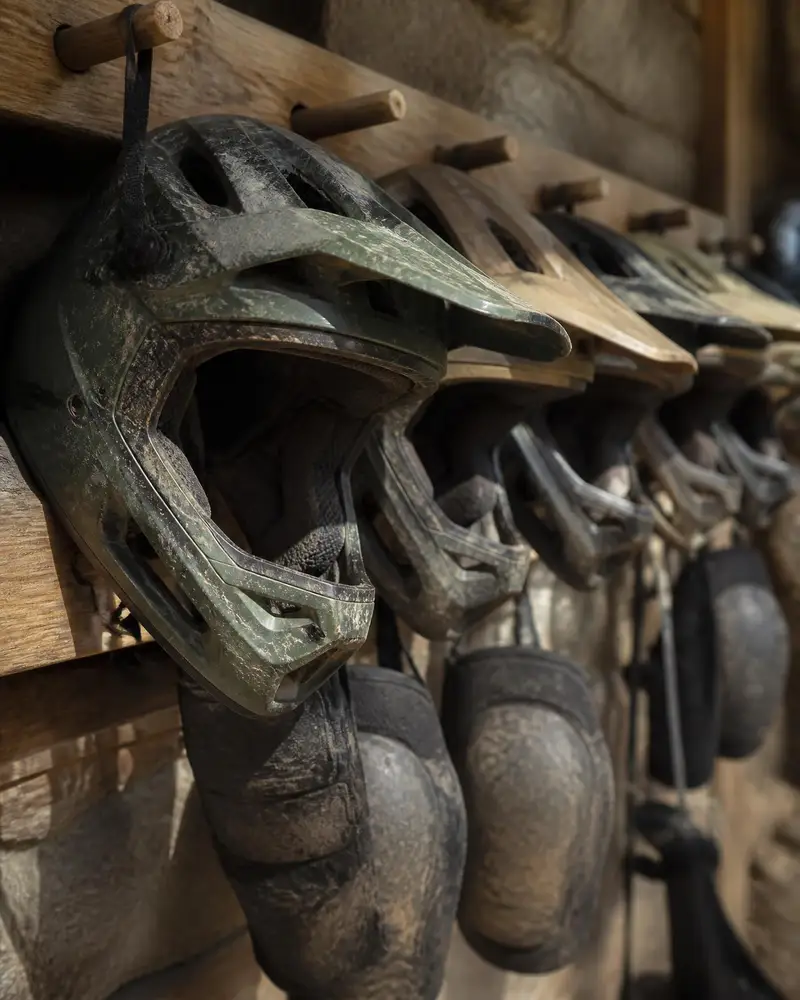
Downhill bikes, trail and enduro bikes, e-bikes where they are permitted, helmets, pads, goggles. A rental fleet is expensive, seasonal and depreciating, and the payment sequence around it is rarely a single tap: something at reservation, something at pickup, sometimes something at return.
Fizel supports advance payments and deposits at booking, in-person payments at the counter, payment links for anything settled remotely, and pre-authorizations at pickup where they fit your operation. A pre-authorization holds funds against a card. It is a payment tool, not a substitute for insurance, and it does not guarantee recovery for damage, theft or loss, your policies on that stay yours.
Rentals matter here, but they are one counter of several. Parks whose business is primarily fleet and guided experiences may find more of their story on Bike Rentals & Tours.
Lessons, coaching & camps
Teaching is a revenue stream, not a courtesy.
Private lessons, group sessions, women's clinics, youth programs, multi-day camps, corporate days, school groups. For many parks this is a meaningful line on the summer P&L and a reliable way of turning a first visit into a season pass three years later.
Commercially it behaves differently again: booked ahead, paid in full or in parts, occasionally invoiced to an organisation rather than an individual, sometimes rescheduled by weather. Fizel supports online payments, payment links, invoicing, a virtual terminal and scheduled payments where a program is sold that way. Scheduling, rosters and program management stay with whatever software your school already runs.

Field note
The trails are the draw. The base area is the business engine.
Watch a base area at eleven on a Saturday. Bikes leaned against every available railing. A queue at the rental shed that is half paperwork and half conversation about tyre pressure. A mechanic with three tickets and one stand. Someone buying gloves because they tore theirs on the second run. Coffee going out faster than anyone predicted, and a group of twelve trying to work out who is paying for what.
Nobody drove four hours for the base area. But almost everything the park earns beyond the price of access happens inside it, and the quality of that half hour decides whether the visit becomes a season pass.

A few hundred metres of gravel, and most of the day's revenue streams within sight of each other.
Retail, service, food and events
Four counters, four transaction shapes, one day.
Retail
Riders break things, forget things and misjudge the weather. Gloves, goggles, a spare tube, a tyre, pads, a jersey, a water bottle. Small, fast and frequent, countertop and wireless terminals, Tap to Pay on supported devices, and integration with the POS already running the shop. It is a different business from a dedicated bike shop, but the counter behaves the same way.
Service
A bent rotor at ten thirty is an emergency to the customer and a same-day ticket to the workshop. Service revenue is unpredictable, higher-ticket than retail, and often paid at collection rather than drop-off, which is exactly what payment links and a virtual terminal are for when the rider is already back on the hill.
Food & beverage
Coffee at eight, lunch at half twelve, something cold at four. High volume, low value, heavily concentrated into two windows of the day. It changes the shape of the park's payment mix more than operators expect. Fizel provides the payment acceptance and the integration into your existing food and beverage system: not the restaurant software itself.
Events & races
Downhill and enduro rounds, festivals, demo days, community series. An event weekend can change both the traffic and the transaction volume, and often needs temporary payment points where there is normally nothing at all. There is more on this on our Outdoor Events & Races page, and parks that also sell admissions to ziplines, ropes courses or mountain coasters should read our adventure park and outdoor attraction payment processing page.
The season
A year that arrives in a few months.
Snowmelt decides the opening date, not the calendar. After that it is weather, trail conditions, lift schedules, school holidays, tourism traffic and daylight. A park may earn a substantial share of its annual bike revenue inside a handful of months, having paid for the fleet, the trail crew and the lift maintenance well before any of it sold.
That shape varies enormously. A high-alpine park and a coastal trail center do not share a calendar, and plenty of destinations operate year-round. We do not assume one season for everybody.
What we can be clear about: funding generally lands the next business day, terms are month-to-month with no locked-in contracts, and a genuinely seasonal park can pause its merchant account in the off-season rather than carrying it through the winter for nothing.
Winter and summer, one property
Where a mountain resort runs both businesses, the property does not change but the payment mix does, lift tickets, ski school and equipment rental give way to bike passes, coaching, fleet rentals and a patio that suddenly matters. Different products, different average ticket, different peak hours, the same finance office. Fizel supports multi-revenue-stream seasonal environments across both halves of the year. See also Ski Resorts & Mountain Resorts.
Riders who flew in
Serious riding destinations draw from other provinces, other states and other continents. A visiting customer buying three days of access, a rental and a coaching session on a card issued abroad is ordinary business at a destination park, not an exception to be flagged. Fizel supports internationally issued cards, multiple currencies and FX/DCC, online in advance and in person at the counter.
Systems, scale & support
Your pass platform and rental software stay in charge.
A park may already run a resort or pass platform, rental software, a lesson booking system, retail POS, a food and beverage system and accounting software, usually chosen for good reasons over several seasons. Replacing all of that is not an improvement to the payment environment; it is a summer lost to a migration.
Fizel starts with how the property operates today. We have broad integration capability across retail, hospitality and commerce systems, and we confirm compatibility against your actual environment rather than a list. None of that software is ours. The payments are.
Scale & people
Credible at one till, and at fifteen.
Fizel supports multi-location environments with consistent acceptance and consolidated reporting: an independent park with one terminal, or a destination with rental, retail, service, several food outlets, an online store and an events operation across the property. Centralized visibility for the office; terminals that behave identically for seasonal staff trained in an afternoon.
And when something needs sorting on a Saturday in August, you get knowledgeable human payments support from people who already understand why one merchant runs passes, rentals, coaching, retail and food at once. You should not have to explain your business model before anyone will look at the problem.
Payment capabilities
Configured around the destination.
Before they arrive
- Ecommerce payment processing and gateways
- Hosted payment pages for advance access, passes and programs
- Payment links for balances, group bookings and add-ons
- Scheduled and recurring payments where a pass product calls for it
Around the base area
- Countertop terminals for rental, retail and food outlets
- Wireless and mobile terminals for meeting points and event weekends
- Tap to Pay on supported devices for temporary payment points
- POS and integrations across the outlets already running
Rentals, lessons and groups
- Deposits and advance payments on reservations
- Pre-authorizations on rental pickups where appropriate
- Virtual terminal and invoicing for groups, schools and corporate days
- Payment links for coaching, camps and program balances
Across the destination
- Merchant accounts sized to a concentrated operating season
- Internationally issued cards, multiple currencies and FX/DCC
- Multi-location environments with consolidated reporting
- Broad integration capability with the systems already in place

Everything the base area sold this morning is somewhere up here by five o'clock.
How Fizel fits
- Lift tickets
- Terminals at the ticket window and hosted checkout for passes bought the night before.
- Rentals & demos
- Pre-authorized holds on demo bikes, released when the bike is returned.
- Lessons & camps
- Deposits online hold a coaching slot or a week of summer camp.
- Base area
- Retail, food and service points process under one account with reporting by outlet.
Pricing
Quoted on the whole property, not one counter.
An independent park with a single terminal prices differently from a resort running rentals, coaching, three food outlets, a retail floor and an online pass store. We quote on real numbers: seasonal volume, the advance-online and in-person split, average and high ticket, deposits and pre-authorizations, international card share, the number of outlets and the systems already in place. Month-to-month, with no locked-in contracts.
Further reading
Payment Processing for Ski Resorts & Nordic Centres
How a mountain destination with tickets, rentals, lessons, retail and food should think about its payment environment, plus our guide to why concentrated, weather-driven revenue changes what a seasonal operator should expect from merchant terms.
Questions
Mountain bike park payments, answered.
- Can Fizel support online payments for bike park passes and advance purchases?
- Yes. A large share of a park's revenue can be collected before anyone reaches the parking lot, day access, multi-day access, season passes, rentals reserved ahead, lessons, camps and event entries. Fizel supports ecommerce payment processing, gateways, hosted payment pages and payment links, plus scheduled or recurring payments where a pass product is sold that way. Fizel is the payment layer underneath your existing online store, pass platform or booking system; entitlement, access control and ticketing remain with that software.
- Can Fizel support bike rentals, deposits and pre-authorizations?
- Yes. Rental payments rarely happen in one moment: something is taken at reservation, something at pickup and something at return. Fizel supports advance payments, deposits, in-person payments at the rental counter, payment links for remote balances and pre-authorizations where they suit how you run the fleet. A pre-authorization places a hold on available funds, it is a payment tool, not insurance, and it does not guarantee recovery for damage, theft or loss. Your deposit and damage policies remain yours to set.
- Can we use Fizel across rentals, retail, service and other base-area operations?
- Yes, and that is usually the point. A park can run a rental counter, a bike shop, a service workshop, a food and beverage outlet, a lesson meeting point and an event tent within a few hundred metres of each other. Countertop terminals, wireless terminals, Tap to Pay on supported devices and POS integrations cover those outlets, and they can sit under one merchant relationship with consolidated reporting, so a busy Saturday reads as one day of business rather than six unrelated statements.
- Can Fizel work with our existing resort, pass, rental or POS systems?
- That is where we start. Most parks already run some combination of a resort or pass platform, rental software, a lesson or booking system, retail POS, a food and beverage system and accounting software. Fizel has broad integration capability and builds the payment environment around what you already operate rather than asking you to replace it. None of that software is ours: the payments are. Compatibility with your specific systems is confirmed against your actual environment during setup.
- Can Fizel support multiple outlets or locations across a resort?
- Yes. Fizel supports multi-location environments with consistent payment acceptance and consolidated reporting, from a single-till independent park through to a destination with several revenue centres, an online store and event operations. Larger properties usually want two things at once: centralized visibility for the finance office and terminals that behave the same way at every counter for the seasonal staff running them.
- Can seasonal mountain bike parks pause their merchant account in the off-season?
- Yes. Fizel is month-to-month with no locked-in contracts, and a genuinely seasonal park can pause its merchant account outside the operating season rather than carrying it year-round. Where a property trades through winter as well, the account simply stays active and the payment mix changes with the calendar. During the season, funding generally lands the next business day, which matters when trail crew, lift maintenance and fleet costs land long before the revenue does.
Let's talk before the snow goes.
Tell us how the property actually earns, passes, rentals, coaching, retail, service, food and the event weekends, and we will build the payment environment around it. See the Resorts & Destinations category or the full solutions range.