

Adventure Parks & Outdoor Attractions
Payment Solutions for Adventure Parks & Outdoor Attractions
From advance bookings and admissions to groups, activities and payments around the property, Fizel supports the different ways outdoor attractions get paid.
Online reservations, walk-up admissions, group deposits and invoicing, mobile acceptance across the site, food, retail and internationally issued cards, on one merchant account, with funding that generally lands the next business day and month-to-month terms.
The operating reality
The experience starts before they arrive.
By the time a guest clips into a harness, the commercial part of the visit is largely over. They found the park online, chose a date and a time, picked the number of participants, paid, added someone's cousin four days later and arrived with a confirmation on their phone. The park has been selling that morning for weeks.
Then the operating day starts, and it is nothing like a retail day. Hundreds of people move through a property in waves. Groups arrive together and pay separately, or arrive separately and pay together. Equipment is fitted, sessions run on a clock, a second activity gets added at lunch, and the forecast has a vote in all of it.
Fizel specializes in the outdoor economy and brings enterprise payment capability to it. For an adventure park that means the online booking, the group invoice, the walk-in at the desk and the sale made at the base of a course are all part of one payment environment, not four separate problems solved by four vendors.
One destination. A full day of commerce.
Adventure parks & outdoor attractions
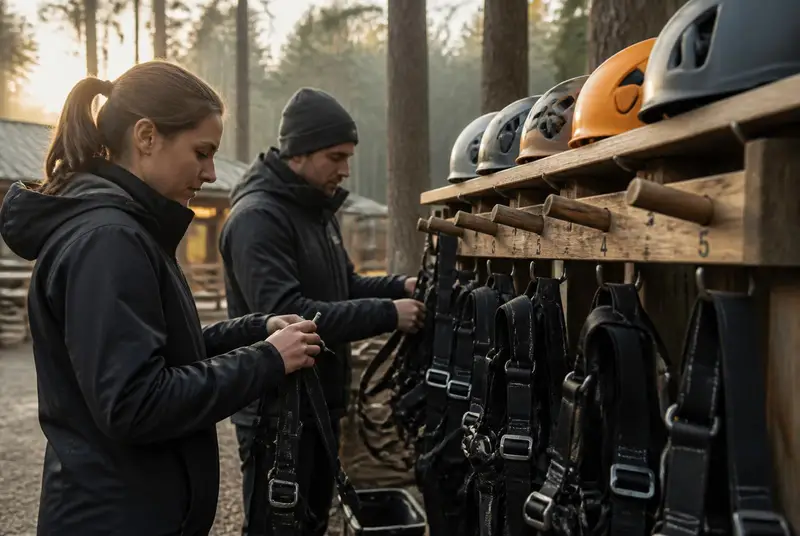
Harnesses sized and hung before anyone arrives. The day is largely decided by seven in the morning.
Before the gates open
The day is already sold before anyone is on site.
Long before the first car turns in, the day has a shape. Courses have been inspected and logged. Harnesses and helmets are sorted by size. Staffing is set against a booking sheet that was mostly filled weeks ago, and the schedule is built around sessions that were paid for by people who are still an hour up the highway.
That is the commercial reality of an attraction: the revenue arrives in advance and the cost arrives on the morning. Deposits taken in February pay for staff hired in May. A school group that confirms its final headcount on the Thursday changes how many guides are on the ground on the Saturday. Money and operations are the same conversation.
And then the property has to be ready to sell again from the moment it opens, because a guest who has already paid for one activity will buy three more things before they leave.
Sound like your business? Tell us how you take payments today and we'll put together a quote built around it.
Who this is for
One property, several businesses running at once.
Adventure operations differ in what they sell and how they staff it. They share a commercial shape: capacity sold in advance, a concentrated arrival window, and money that keeps moving after the guest is on site.
Zipline parks
Timed departures, guided groups, a fixed number of people per hour and a booking page that decides how the day is shaped before anyone arrives.
Aerial and treetop parks
Self-guided courses sold by session, graded by difficulty, with equipment fitted at the base and returned at the end of the visit.
Ropes courses and activity centers
Corporate outings, schools and camps booked months ahead, often invoiced, often with a headcount that changes the week before.
Multi-activity parks
Several activities on one property, sold individually or as a pass, each with its own capacity, staffing and check-in point.
Mountain adventure operations
Summer programs on winter terrain, sold alongside lifts, rentals, food and retail, the same guest paying in several places in one afternoon.
Multi-location operators
The same brand and the same booking flow across several parks, with local staff at each and one office reconciling all of it.
Not every park runs every revenue stream. Some sell one activity well. Others carry admissions, groups, food, retail, seasonal programs and events on the same property. Where an adventure operation sits on a mountain alongside lifts and lodging, our ski and mountain resorts page covers that wider destination environment, and guided trips that travel away from a fixed property are closer to adventure tour operators.
Online before on-site
Most of the revenue is committed before the gate opens.
For many operators the booking page is the busiest part of the business. A guest picks an activity, a date, a time and a number of participants, adds whatever the park offers alongside it, and pays, often on a phone, often late at night, often weeks ahead. Ecommerce payments, gateways and hosted payment pages sit under that, and payment links cover everything the checkout does not: the reschedule, the extra participant, the balance owed by someone who paid a deposit in April.
Deposits and scheduled payments matter when the booking window is long. A birthday party booked six weeks out and a corporate day booked in February are both real revenue that has not been collected yet, and the park still has to hold the capacity.
Fizel supports the payment layer of all of it. The reservation, capacity, scheduling and waiver systems are yours, we make sure money moves cleanly through them.
How the money arrives
- Individual admissions and timed sessions, paid in full online
- Multi-activity passes and day passes
- Deposits that hold a date, with a balance collected later
- Group and corporate bookings, invoiced to the organization
- Walk-ins, add-ons and second activities bought on the day
- Food, retail and merchandise around the property
- Seasonal programs, camps and events where the park runs them

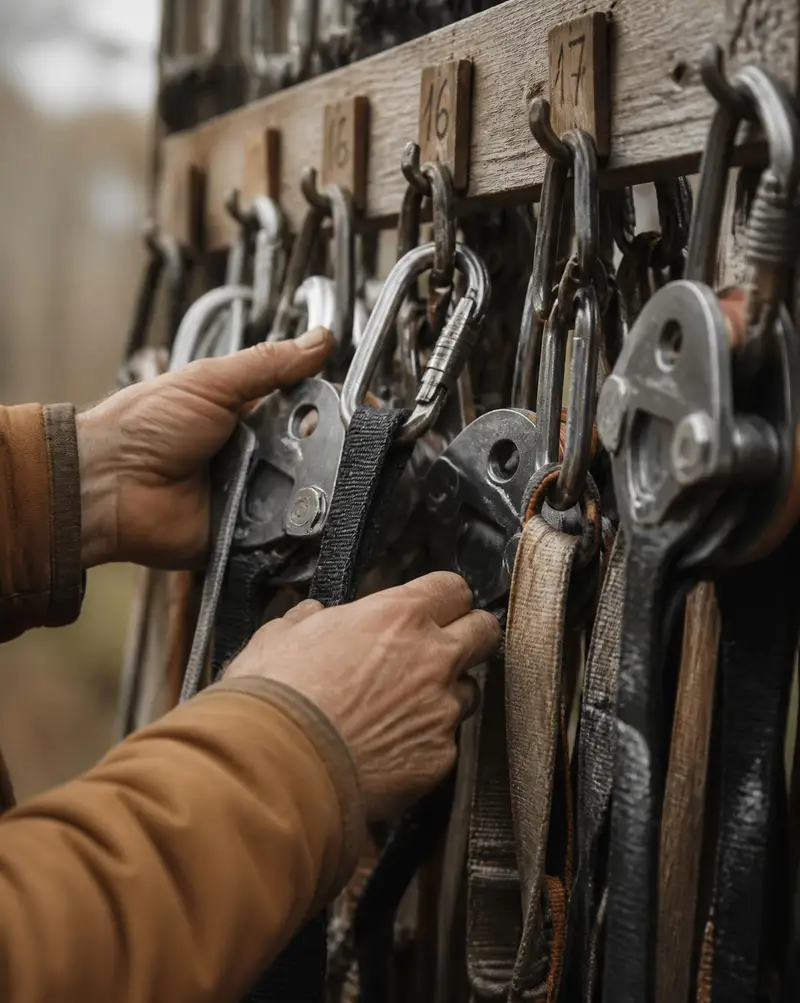
Capacity is the product.
A park cannot sell an eleven o'clock session twice, and it cannot get it back if nobody shows. That single fact explains almost everything about how these businesses take money: early, in advance, and in more than one installment.
One family, one Saturday
Book, arrive, climb, eat, add, shop, return.
Nothing here is unusual. That is the point, this is a normal good day, and every stage of it is a separate transaction with a different shape.
Three weeks out
Book
A date, a time, four participants and a card, usually on a phone, usually in the evening, sometimes with a deposit rather than the full amount.
09:00
Arrive
Check-in, a waiver on a tablet the park already owns, and a fifth person added at the counter who was not on the original booking.
09:30
First activity
Harnesses fitted, a briefing, and an hour on a clock that the park cannot sell twice.
11:30
Food and drinks
Coffee, a couple of sandwiches, cold drinks for children who have been in a canopy all morning. Small tickets, fast, at a different counter.
12:30
Add an experience
One of them wants the higher course. Sold at the base by a staff member with a wireless terminal, nowhere near the front desk.
15:00
Shop
A hoodie because it turned cold, a water bottle, something for the grandparents. Retail, on the way out.
16:00
Return
Equipment counted back in, and a booking for the same weekend next year made from the car park before they have left it.
Weeks, then minutes
the gap between when a summer session is paid for and the twenty minutes in which the guest is actually processed
Two kinds of customer
the individual who paid online and the organization that needs an invoice, a deposit and a final headcount
One forecast
can turn a sold-out Saturday into reschedules and refunds before the first group has been fitted
A checkout queue at eleven on a Saturday is not a payments problem. It is a capacity problem wearing a payments costume.
The commercial shape of an adventure park
The transaction mix
Six kinds of payment, one property, one afternoon.
Most businesses take one kind of payment well. An attraction takes all of these on the same day, often within the same hour, often from the same family.
Advance reservation
Paid online weeks ahead, card not present, sometimes in a currency the park does not hold.
Walk-up admission
Card present at the counter, at the busiest twenty minutes of the day.
Group deposit
Invoiced to an organization, part now, balance once the headcount settles.
Food purchase
Low ticket, high count, tap and gone, at a window that is not the front desk.
Retail purchase
Apparel and souvenirs, mid-ticket, often bundled with an activity add-on.
Additional activity
Sold on the property, away from any counter, on a wireless terminal or a phone.
Run through four processors and that becomes four statements, four settlement schedules and four support numbers, none of which can see the whole day. Fizel puts online bookings, counter admissions, group invoicing, food, retail and payments taken out on the property into one merchant account and one reconciliation, with funding that generally lands the next business day.

The base area is the shop floor. Admissions, food, retail and the next activity are all sold within fifty metres of each other.
On the property
The ticket is the beginning of the spend, not the end of it.
Once a guest is through check-in they are on site for hours, and an attraction that has built somewhere to eat, something to buy and something else to do captures a great deal more than the admission. A coffee at ten. Lunch for five. A hoodie when the wind picks up. A second course bought at the base by someone who was only going to watch.
Food and beverage is its own payment profile: small tickets, high count, and a queue that has to keep moving because the next session starts in twenty minutes. Retail sits somewhere in the middle, and often needs to be tied back to the activity that prompted it. Both belong on the same account as admissions, so the day reconciles as one day.
Terminals at fixed counters, wireless terminals for kiosks and seasonal windows, and mobile acceptance for staff working the property all sit under the same processing relationship, whether the attraction runs a snack window three months a year or a full kitchen and bar year-round.
Where money is taken on a single site
- Admissions desk and ticket windows
- Seasonal or overflow check-in counters at peak
- Food kiosks, snack windows and picnic-area service
- Retail and merchandise, indoors or from a cabin
- Course and activity bases, on wireless terminals
- Staff moving through a queue with a phone or handheld
- Event and program days that run outside normal hours
Groups
The most valuable booking of the week rarely pays like a guest.
A corporate outing for forty, a school with three classes, a camp running every Wednesday in July, a sports team, a birthday party with a parent trying to pay for eleven children who are not all confirmed yet. These bookings fill weekday capacity that would otherwise go unsold, and they behave nothing like the family that checks out online in ninety seconds.
They also come with a purchasing process. Someone needs an invoice with a reference number. Someone else needs to pay a deposit now and a balance once the headcount settles. A school needs a payment method that fits a board's procedures, and the coordinator who calls two days out to add four people is not going to be sent back to the booking page.
Deposits, invoicing, payment links, scheduled payments and a virtual terminal cover that whole range. Fizel supports how the money moves; how the group booking itself is managed stays inside the systems and agreements the park already uses.
Destination and international guests
A significant share of adventure park visits are made by people who are not from there.
Parks near a resort town, a national park or a busy coastline sell to travellers who booked from another country in March and arrive with a card issued somewhere else entirely, then buy lunch, a second activity and a hoodie before they leave.
Internationally issued cards, multiple currencies and FX/DCC are established Fizel capability, online in advance and in person on the day. A visiting customer is ordinary business, not a risk condition.
Acceptance where the work happens
Payments don't have to stay at the front desk.
The front desk is the busiest point of the operation and the worst place to send someone who just wants to add an activity. On a full day the transactions that matter happen at a course base, in the retail corner, at a food window, at an events space and in the hands of whichever staff member the guest found first.
Wireless terminals, mobile payments and Tap to Pay on supported devices move acceptance to where the guest is standing. Payment links cover the guest who would rather pay on their own phone, and countertop terminals still earn their place at the desk and the café. POS and integrations keep admissions, retail and food reporting into the same picture instead of three.
One practical caveat, because parks sit in forests and on mountainsides: mobile acceptance depends on usable coverage at that spot. Worth mapping where acceptance genuinely works during setup, it is a five-minute conversation that saves a bad Saturday.

Forty seconds. Everything else on the property exists to make them possible.
The only part of the day the guest will describe to anyone else, and the reason the booking page, the fitting station and the front desk all have to work.
Weather and seasonality
A rainy Saturday in July costs more here than anywhere else.
A park in the Carolinas, one in Quebec and one on Vancouver Island do not share a calendar. Some run most of the year. Some open in May, take school groups until the end of June, run flat out for nine weeks, hold on through the fall colours and close. What they share is compression: preseason bookings arrive before the courses have been recertified, and holiday weekends carry a disproportionate share of the year.
Then weather gets involved. A storm cell at nine in the morning turns a sold-out day into reschedules, credits and refunds, and the staff were already rostered. Meanwhile inspections, insurance, equipment replacement and seasonal payroll all arrive on their own schedule, indifferent to the forecast.
Funding that generally lands the next business day is worth more in a business like this than in a flat one, and Fizel is month-to-month with no locked-in contracts. A payments relationship should not be the most rigid thing about an operation that reshapes itself four times a year.
For operators who genuinely close, accounts can be paused over the off-season and brought back before the preseason booking window opens, without closing the account, without reapplying, and without paying for months in which nothing is processed. For multi-season destinations that run a summer attraction and a winter operation on the same property, the account simply stays open and the mix of transactions changes.

Payment capabilities
Matched to how the park actually runs.
Not a feature wall, these are the tools the booking page, the front desk, the property and the office each need on a full day.
Before arrival
- Ecommerce payments, gateways and hosted payment pages
- Payment links for deposits, balances and group bookings
- Deposits and scheduled payments across a long booking window
- Virtual terminal for bookings taken over the phone
At check-in and on the property
- Countertop terminals at the front desk and ticket window
- Wireless terminals and mobile payments away from the counter
- Tap to Pay on supported devices for staff working the base area
- POS and integrations so admissions, retail and food stay in one flow
Across the operation
- Merchant accounts, invoicing and recurring payments where programs call for them
- Internationally issued cards, multiple currencies and FX/DCC
- Multi-location environments with consolidated reporting
- Broad integrations with the systems already running the park
The full range is on our solutions page.
Start with how the park already operates
The reservation platform stays. Payments build around it.
By the time an operator talks to us there is a reservation or ticketing platform holding the calendar, a waiver system, a POS at the desk and probably another in the café, a website taking bookings and accounting software everything has to agree with. Fizel integrates broadly across booking, ticketing, retail, commerce and business systems. We start from how the park runs today, keep what works and build the payment environment around it. The specific integration for your stack is confirmed during setup, and none of that software is ours; the payments are.
See the platforms Fizel works with for a sense of the booking, POS, ecommerce and accounting systems payments can connect to.
Scale works the same way. One course with a single desk, one property with six payment points, or five parks under one company can all run consistent acceptance with consolidated reporting, local workflow at each site, centralized visibility for administration, one relationship rather than one per location. Outdoor specialization and enterprise payment capability are not a trade-off here; a growing operator needs both.
And when something needs sorting, you reach people who understand what is happening around the problem. A payment question on a quiet Tuesday is not the same question when four hundred people are booked, a school bus is idling and the desk has a line to the door. Knowing the difference is most of the job.
From the base area
The last hour before opening.
Someone is walking the course with a clipboard and a torch, tapping bolts that were fine yesterday. The radio crackles from the top platform. Harnesses hang in three sizes on numbered pegs, helmets are drying in a row, and there is a laminated sheet by the door with the day's bookings, two names crossed out and one added in pen. The espresso machine in the café is warming up. Someone says it will probably rain around four, and everyone hears it, and nobody replies.
How Fizel fits
- Gate & admissions
- Terminals at the gate take tap, chip and contactless when a queue builds on a peak Saturday.
- Tickets in advance
- Sell timed admission and season passes online through hosted checkout before anyone arrives.
- Groups & parties
- Hold a booking with a deposit, then send the balance as an emailed invoice with a payment link.
- Across the park
- Food, retail and activity points process under one account with reporting by location.
Pricing
Quoted on your actual payment environment.
A single-course park prices differently from a multi-activity property with a café, a retail corner and a group calendar, and differently again across several locations. We quote on real volume, ticket profile, channel mix between online and on-site, group and deposit structure, seasonality, international card share and the systems already in place. Month-to-month, with no locked-in contracts.
Further reading
Best Payment Processing for Outdoor & Recreation Businesses
What to look for in a payments partner when your business sells admissions, sessions and programs rather than shelf inventory, plus how seasonal operators think about funding, terms and the cost of a rained-out weekend.
Questions
Adventure park payments, answered.
Can Fizel support online reservations and advance payments?
Yes. Ecommerce payments, gateways, hosted payment pages and payment links let guests choose a date and time, pick participants and pay before they arrive, in full, or as a deposit with a balance collected later. Phone bookings can be taken through a virtual terminal. Fizel is the payment layer: your booking, ticketing, capacity and waiver systems stay yours, and we fit payments into them.
Can we take deposits for group bookings and events?
Yes. Corporate outings, schools, camps, teams and birthday parties usually do not pay like an individual walk-in. Fizel supports deposits to hold a date, invoicing for the organization rather than the attendee, payment links sent to whoever actually holds the budget, scheduled payments toward a balance, and a virtual terminal for the coordinator who calls to confirm a final headcount two days out.
Can we accept payments at different locations around the property?
Yes. Countertop terminals make sense at the front desk, but wireless terminals, mobile payments and Tap to Pay on supported devices let staff take payment at a course base, in the retail area, at a food outlet or wherever guests actually are. Acceptance away from the desk depends on your site having usable network coverage at that spot, which is worth mapping honestly during setup rather than discovering on a busy Saturday.
Can Fizel work with our existing reservation, ticketing or POS systems?
That is where we start. Most parks already run a reservation or ticketing platform, a waiver system, a POS at the desk and in the café, an ecommerce site and accounting software. Fizel integrates broadly across booking, retail, commerce and business systems. We look at how the park operates today, keep what works and build the payment environment around it. The specific integration for your stack is confirmed during setup.
Can Fizel support multiple adventure park locations?
Yes. Several activities on one property, several payment points, or several parks under one company all run on consistent acceptance with consolidated reporting, local workflow at each site, centralized visibility for the office, and one payments relationship rather than one per location. Fizel combines outdoor specialization with enterprise payment capability, which is exactly what a growing multi-site operator needs.
Can one account handle admissions, food and retail?
Yes. An attraction usually sells three different things in three different ways on the same day: a timed admission bought weeks ago online, a five-dollar coffee at a kiosk window, and a hoodie at the retail counter on the way out. All of it can run through one merchant account with consistent acceptance and one set of reporting, so the day reconciles as a single day rather than as three unrelated businesses that happen to share a car park.
Can we pause the account during the off-season?
Yes. Many outdoor attractions close for part of the year, and accounts can be paused over the off-season and reactivated before the preseason booking window opens, without closing the account or reapplying. Multi-season destinations that run a summer attraction and a winter operation usually keep the account open year-round and simply change the mix of transactions running through it. Fizel is month-to-month with no locked-in contracts either way.
How quickly do funds generally settle?
Funding is generally next business day. That matters in a business where a decisive share of the year can be earned across a handful of summer weeks and holiday weekends, while payroll, insurance, inspections and maintenance run on their own schedule. Fizel is also month-to-month with no locked-in contracts, which suits an operation whose volume changes shape between July and November.
Something specific to your operation? Contact us and we will give you a straight answer. More on how we work with destinations is on the resorts and destinations industry page.
From the booking page to the last group off the course.
Tell us how the park gets paid today, online bookings, groups, admissions, food, retail and the shape of your season, and we will build a quote around it.