
Fishing & Tackle Shops
Payment Processing for Fishing & Tackle Shops
Accept payments in-store, online and on the move with payment solutions built around how fishing retailers sell.
Independent tackle shops, bait and tackle stores, fishing equipment retailers, ecommerce sellers and multi-location operations across Canada and the United States.
Built around fishing retail
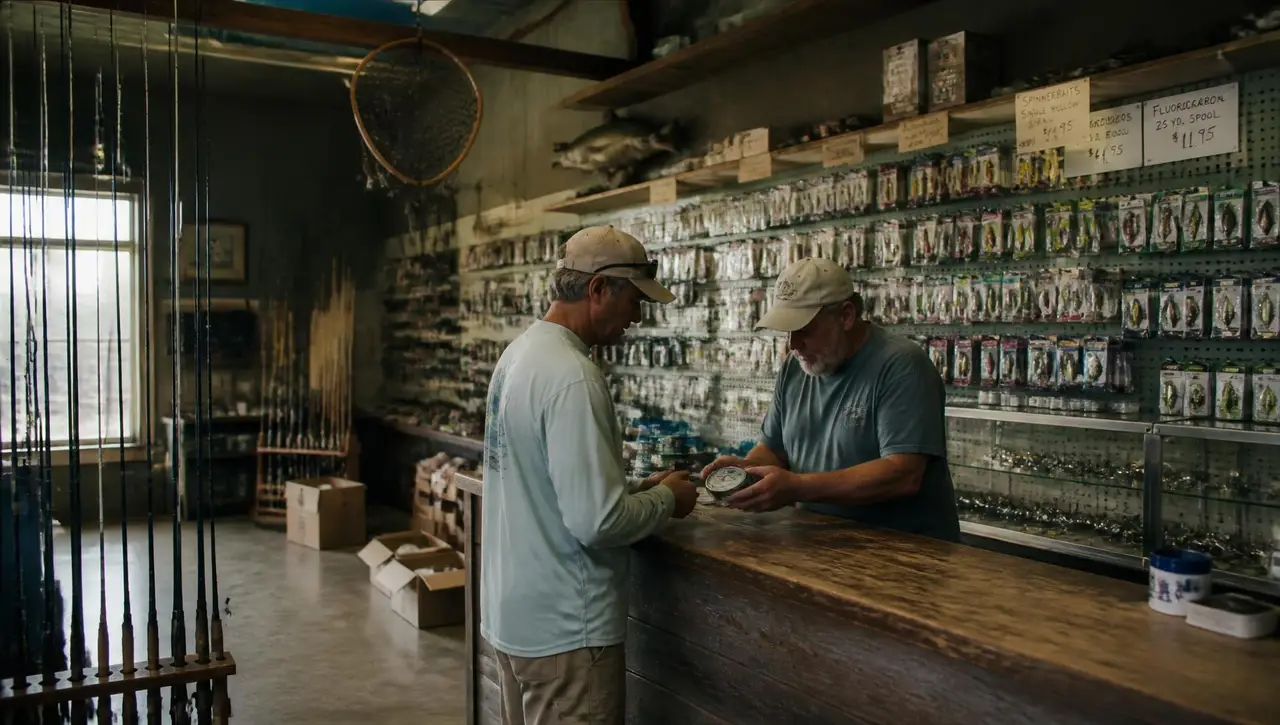
A tackle counter is not a conventional shop counter
A fishing retailer can run a deeper and more varied payment environment than most small stores its size. The same morning includes a five-dollar packet of hooks, a rod and reel combination, a deposit on a custom build and an online order being packed in the back.
Add seasonality, a very large SKU count, phone orders, event selling, returns on waders and boots, and, in destination markets, visiting and international customers, and the payment setup has more to do than take a card at a till.
Fizel starts with how the shop already operates. Where practical, keep the systems that work and improve the parts that don’t. Fishing stores sit inside Retail & Service, the category Fizel works across most.
Deep SKU counts
A small shop can carry tens of thousands of individual items, hooks, line, leaders, soft plastics, flies and hard baits in every size and colour.
Two-dollar and two-thousand-dollar sales
A packet of hooks and a premium reel or fish finder ring through the same terminal on the same morning.
Sharp seasonality
Openers, runs, tournaments and ice season concentrate a large share of annual revenue into a small number of weeks.
Repeat consumables
Terminal tackle and bait bring the same customers back weekly through the season, at small ticket sizes.
Special and phone orders
Custom rod builds, back-ordered reels and brand-direct requests often need a deposit or a remote payment.
Online and in-store together
Customers research a reel online, come in to hold it, then buy replacement tackle from the same shop online a month later.
Returns and exchanges
Sizing on waders and boots, warranty rod replacements and gear that did not suit the water all generate refund activity.
Visitors and tourists
Destination fishing markets bring seasonal, out-of-region and international customers to the counter.
More than one revenue line
Many shops combine retail with rod repair, reel service, licences, instruction, rentals or a guiding arm.
Accept payments where your customers buy
At the counter, online and away from the store
Most fishing retailers sell in more than one place. The counter is still the centre of the business, but the website, the phone, the show booth and the special-order file all take money too.
Fizel provides the payment acceptance for those channels under one merchant relationship, configured around the products, the ticket sizes and the locations that actually exist in the business.
In-store payments
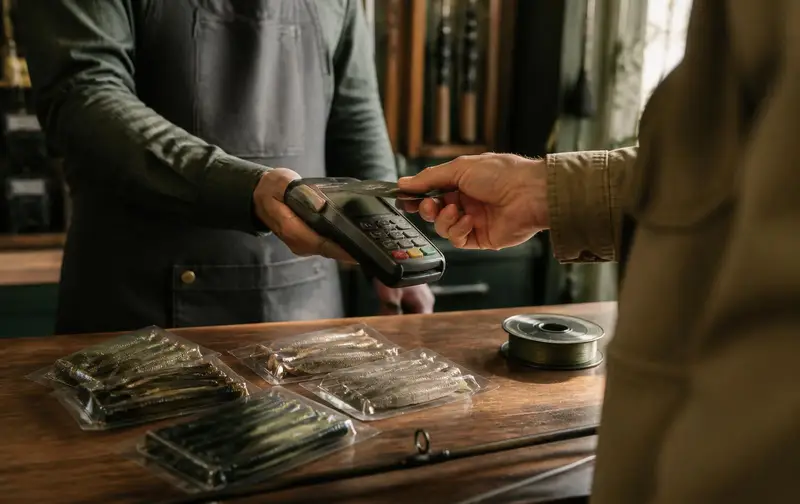
Accept credit and debit payments at the tackle counter with modern payment terminals suited to a busy retail floor.
Ecommerce
Accept online payments for rods, reels, tackle, apparel, accessories and other supported products.
Mobile payments
Take payments away from the counter at fishing shows, club events and other supported selling environments.
Multi-location
Support retailers running more than one store or selling across more than one channel.
Sound like your business? Tell us how you take payments today and we'll put together a quote built around it.
From terminal to ecommerce
One business, several ways money arrives
These are the everyday situations a fishing retailer's payment setup has to cover. Fizel handles the acceptance side of each of them, it does not replace your inventory, order management or CRM systems.
A customer researches a reel online and buys it in-store.
A regular buys replacement tackle from your website between trips.
The shop takes a deposit on a special-order rod that has to be built.
A staff member sells from a booth at a fishing show or club event.
An established customer pays remotely for gear held behind the counter.
A retailer with two or three stores wants the same acceptance in each.
An online fishing brand also runs a showroom or outlet location.
High-ticket and everyday
The same terminal handles both ends of the range
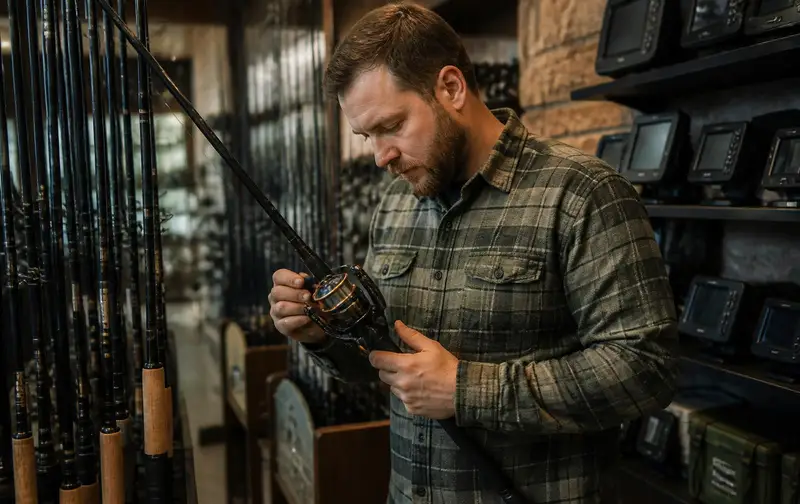
Very few retail categories span the spread that fishing does. A shop can sell a two-dollar packet of hooks and a marine electronics package in the same hour, and the payment setup should make sense across both.
Everyday and repeat
High transaction counts, small baskets, thin margin per sale. Per-transaction cost matters more here than a headline rate.
Hooks, line, lures, flies, leaders, terminal tackle, bait-related products, accessories.
Mid-range
Considered purchases where the customer often wants to handle the product before buying, and may pay in-store after researching online.
Apparel, footwear and waders, tackle storage, rods, reels, rod and reel combinations.
Higher-ticket
Larger single transactions that should not sit awkwardly inside an account configured for a convenience-store average ticket.
Premium rods and reels, fish finders, marine electronics, trolling equipment, specialized gear.
Seasonality
A large share of the year lands in a small number of weeks
Fizel Research puts May, June and July together at roughly 36% of annual fishing gear revenue in North America. Reporting, staffing and payment systems all have to cope with a curve that steep.
Openers and runs
Regional season openers, salmon and steelhead runs and stocking schedules can concentrate demand into specific weeks.
Spring and summer peaks
Spring rigging and the summer season carry a large share of the year for most fishing retailers.
Ice fishing
Northern shops run a genuine second season, with a pre-season build in late autumn and a January peak.
Tourism and destinations
Shops near well-known water see visitor demand tied to travel patterns rather than the local calendar.
Weather and regulations
A wet opening weekend or a changed regulation can move a month of revenue without warning.
Holiday purchases
Gift buying gives many shops a December lift that behaves nothing like the rest of the off-season.
Practically, that means an account structured with peak months in mind rather than an annual average, and reporting that lets you compare this June with last June instead of guessing. Seasonal patterns by month are covered in more detail in the Fishing Industry Statistics 2026 report.
Field note
Opening weekend decides the quarter.
The week before the opener, the counter runs deep from before daylight, the phone rings with special orders, and the customer buying a reel has been reading about it since February.
A payment setup that behaves the same on that Saturday as it does in November is worth more to a tackle shop than any feature list.
Online fishing sales
Payment processing for ecommerce and DTC fishing brands
Fizel Research estimates the core North American fishing gear and tackle retail market at approximately US$10.8 billion in 2026, with about 34% of it sold online, roughly US$3.7 billion across an estimated 54 million orders at an average order value near $68. Full methodology is in the Fishing Industry Statistics 2026 report.
That average order size is the number worth sitting with. A fishing basket is roughly half the size of a general outdoor basket, so per-transaction cost and checkout reliability matter more than they would in a category selling fewer, larger orders.
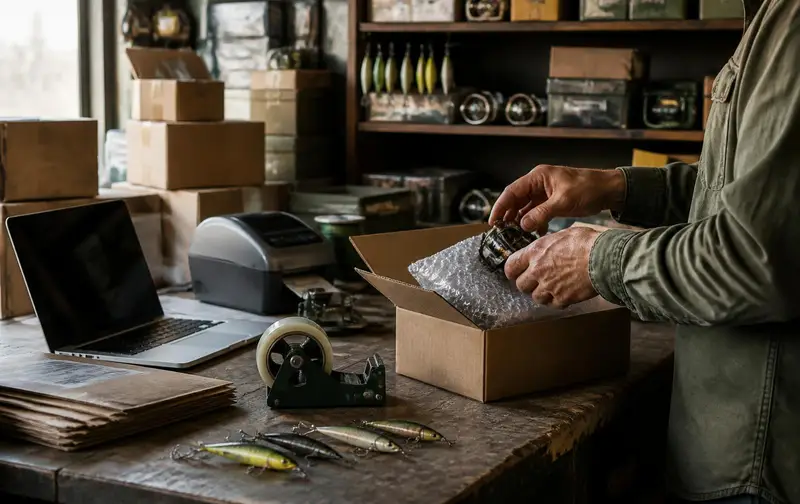
Fizel supports ecommerce checkout through an appropriate gateway setup, hosted payment pages, payment links and mobile checkout, for online tackle retailers, direct-to-consumer fishing brands and shops that sell both online and in-store. For the wider picture, see our outdoor ecommerce and outdoor retail research.
Payment solutions
One payment setup, multiple ways to sell
The pieces fishing retailers actually use, configured to the products, channels and locations in the business.
In-store payments
Credit and debit acceptance at the counter with modern payment terminals.
Ecommerce
Accept online payments for fishing gear, apparel, accessories and other supported products.
Mobile payments
Take payments away from the counter, at events, shows or other selling environments.
Tap to Pay
Where supported and appropriate, accept contactless payments using compatible mobile devices.
Payment links
Send customers a secure way to pay remotely.
Virtual terminal
Take appropriate remote payments through a browser-based payment environment.
Invoicing
Useful for special orders, commercial customers or other transactions where invoicing makes sense.
Multi-location
Support retailers operating more than one store or selling across multiple channels.
See the full range on our solutions page, or the platforms Fizel works with for POS, ecommerce and business systems payments can connect to.
Keep what works
Work with the systems you already use
Your payment setup should fit your business, not the other way around.
Fizel starts by understanding how you accept payments today, the systems you use and where you are having problems, the POS at the counter, the ecommerce platform, the gateway, the terminals, the reconciliation workflow at the end of the day and, where relevant, how more than one location rolls up.
Where practical, we help businesses keep what already works and improve the parts that don’t. Compatibility with a specific platform is confirmed during setup rather than assumed.
What to look for
Ten things worth checking before you sign anything
Useful whether or not you end up working with Fizel.
In-store reliability
Terminals that behave the same on the busiest Saturday of the season as on a quiet Tuesday.
Ecommerce support
An online payment setup appropriate to the products, platform and channels the business actually sells through.
Mobile capability
A way to take payment away from the counter when the selling environment supports it.
Range of ticket sizes
An account configured with both the everyday basket and the peak ticket in mind.
Reporting and reconciliation
Reporting that reflects the whole business rather than a set of unrelated setups.
Multi-location capability
Where more than one store is involved, a structure that rolls up rather than fragments.
Fit with existing systems
Compatibility with the POS, ecommerce platform and gateway the business already runs, confirmed rather than assumed.
Clear processing costs
A quote you can actually read: rate structure, per-transaction cost and what changes as volume moves.
Responsive support
Someone reachable when the terminal at the counter is the thing that has stopped working.
Fit with the sales model
A setup that accommodates how the shop really sells, including special orders, events and remote payments.
How Fizel fits
- At the counter
- Terminals for tap, chip, contactless and mobile wallets across everything from a packet of hooks to a premium reel.
- Online
- Hosted checkout for the web store, with in-store and online revenue reported in one place.
- Special orders
- Deposits, payment links and invoicing for custom rod builds and back-ordered gear.
- Shows & events
- Wireless terminals and Tap to Pay on supported devices for selling away from the shop.
Why Fizel
Payments built for the outdoor economy
Fishing retail operates differently from conventional retail. Product mix, seasonality, transaction range, special orders and multiple sales channels all shape the payment environment.
Fizel starts by understanding those realities before determining the right payment setup.
Outdoor-focused
We understand the operating realities of businesses across the outdoor economy.
Flexible payment options
In-store, ecommerce, mobile and remote payment options depending on what the business requires.
Start with your current setup
Understand what is already working before recommending changes.
Canada & United States
Fizel works with businesses in Canada and the United States.
Built for range
A payment environment that suits both a two-dollar packet of hooks and a high-ticket electronics sale.
Human support
Talk about your payment environment with someone who understands the business.
Pricing
Quoted on your operation, not an average.
A single tackle shop prices differently from a multi-location retailer with an online channel. We quote on real volume, average ticket, channel mix, locations and the systems already in place. Month-to-month, with no locked-in contracts.
The fishing business ecosystem
Other businesses on the water we work with
Fizel works across the fishing economy, from the tackle counter to the dock. Guide and charter businesses are covered on their own pages.
Fly Fishing Shops
Specialty fly retail, rods, lines, tying materials, instruction and shop-run trips.
Hunting & Outdoor Sporting Goods
Broader sporting goods stores where fishing sits alongside hunting and archery.
Outdoor Retailers
General outdoor specialty retail, apparel, footwear, camping and equipment.
Guides & Outfitters
Trip operators taking deposits and balances, often alongside a retail counter.
Fishing Guides & Outfitters
Charter and guide businesses where the trip, not the merchandise, is the product.
Marinas
Fuel, slips, ship stores and service counters on the water.
Boat Dealers
Unit deposits, parts counters and service departments.
Outdoor Brands & Manufacturers
The wholesale and direct-to-consumer side for businesses that build product.
Questions
Fishing and tackle shop payments, answered.
What payment processing options are available for fishing and tackle shops?
In-store payment terminals, ecommerce payments, mobile acceptance, Tap to Pay on supported devices, payment links, a virtual terminal, invoicing and multi-location support. The right combination depends on how the shop sells, so the setup is determined during the quote rather than assumed up front.
Can Fizel support both in-store and online fishing sales?
Yes. In-person payments and ecommerce can sit under one merchant relationship, with reporting that reflects the whole business. Fizel is the payments layer, it does not provide inventory synchronization, CRM, ERP or order management, though it can work alongside systems that do.
Can fishing stores accept mobile payments?
Where the selling environment is supported, yes. Wireless terminals and Tap to Pay on compatible mobile devices allow a shop to take payment at fishing shows, club events, parking-lot demo days and other locations away from the main counter.
Can Fizel work with my existing POS system?
That is where we start. We look at the POS, terminals, ecommerce platform and gateway already in place, keep what works and build around it. Specific compatibility is confirmed during setup rather than promised in advance; the platforms Fizel works with are listed on our integrations page.
Can I take payments for special orders?
Yes. Payment links, a virtual terminal and invoicing cover deposits and balances on custom rod builds, back-ordered reels and other special orders where the customer is not standing at the counter when payment is taken.
Does Fizel support multi-location fishing retailers?
Yes. Multiple stores, a seasonal location and an online channel can be structured as one payment environment with reporting across them, while each location keeps the hardware and configuration it actually needs.
Can fishing brands use Fizel for ecommerce payments?
Yes, for eligible businesses. Direct-to-consumer fishing brands, online tackle retailers and brands running both a website and a physical location can accept online payments through an appropriate ecommerce and gateway setup.
How are seasonal swings in volume handled?
Seasonality is part of the conversation from the beginning. We look at peak months, average and peak ticket, and channel mix when structuring the account. Individual merchants remain subject to applicable underwriting and processing requirements.
Does Fizel work with fishing businesses in Canada and the United States?
Yes. Fizel works with outdoor businesses in both countries, including fishing and tackle retailers, fly shops, guides and outfitters, marinas and boat dealers.
How do I get a payment processing quote for my tackle shop?
Request a quote and tell us what you sell, how customers pay, what systems you use today and what you would like to improve. Quotes are based on real volume, average ticket, channel mix and locations rather than a published average.
Payments built around your fishing business
Tell us how you accept payments today and what you would like to improve. We’ll help you determine an appropriate setup for your store, ecommerce business or multi-location operation.
Or email info@fizel.com