
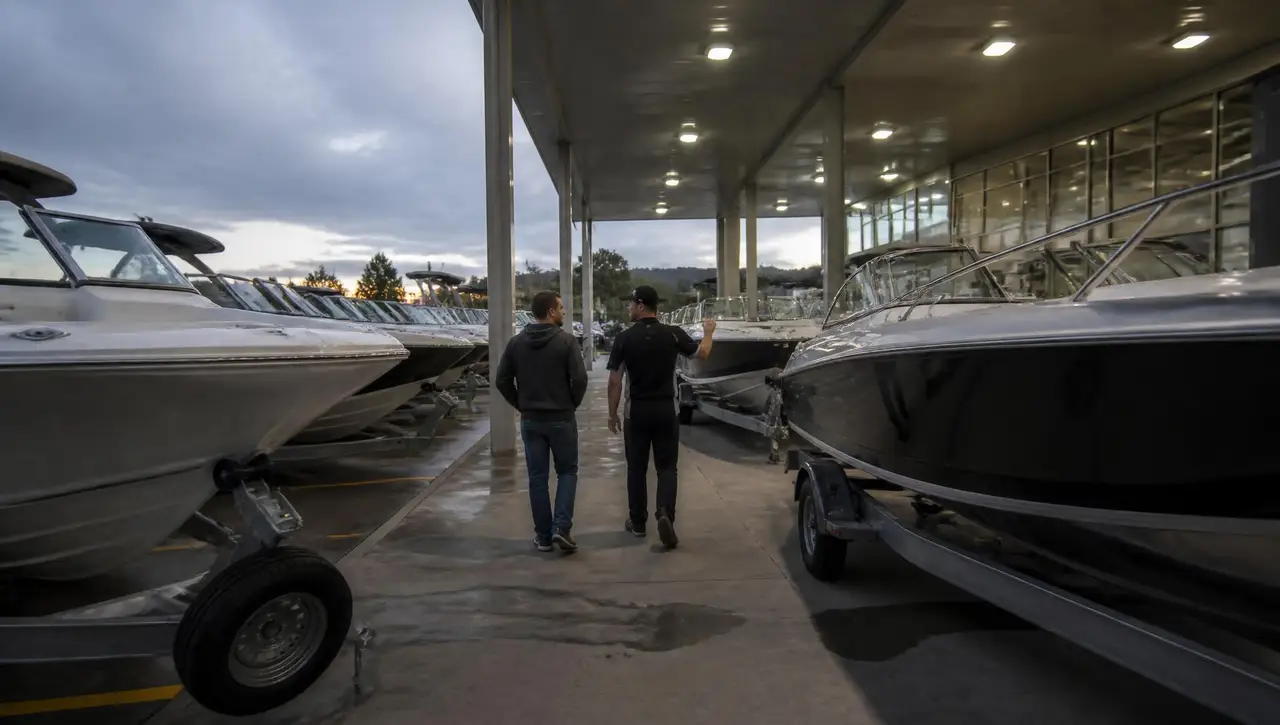
Marine & Marinas
Payment Processing for
Boat Dealers
A deposit taken at a boat show, a unit sale funded by a lender, a winterization invoice, a storage contract renewed every October: the same dealership collects all of it, on its own schedule, at its own counter.
Fizel brings those payment moments into one environment, with settlement that generally lands the next business day and month-to-month terms.
The dealership reality
A boat dealership collects money in a dozen different ways.
A deposit is taken at a boat show three towns over. A lender wires the balance on a new outboard package a month later. The service bay closes out a winterization invoice the same afternoon the yard bills a customer for dry storage. Each of those has a different ticket size, a different timeline and a different customer standing in front of it, but they all land in the same bank account by nightfall.
Most payment setups are built around one of those patterns. A dealership runs all of them at once, often across unit sales, parts, service, storage, online orders, boat shows and more than one location.
Fizel specializes in the outdoor economy and works across the wider Marine & Marinas category. That includes dealerships, marinas and marina service and boatyards.
Sales, parts, service, storage
Four ways a dealership gets paid.
Each department has its own ticket size, its own peak hour and often its own software. None of that has to mean four unrelated payment relationships.
Unit sales & lender funding
A deposit at the desk, a trade appraisal, a lender wiring the balance and a rigging package added before the sale is written up.
Parts & accessories
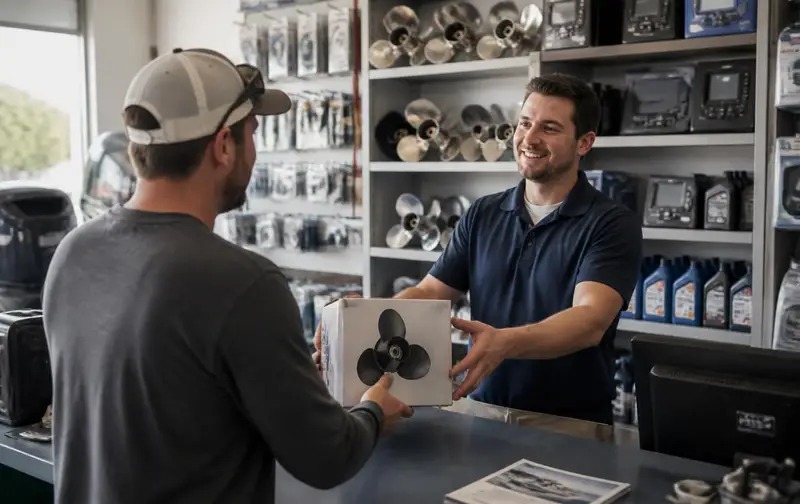
Props, electronics, safety gear, oil, covers and trailer hardware. Small tickets and large ones at the same counter, all day through the season.
Service, rigging & winterization
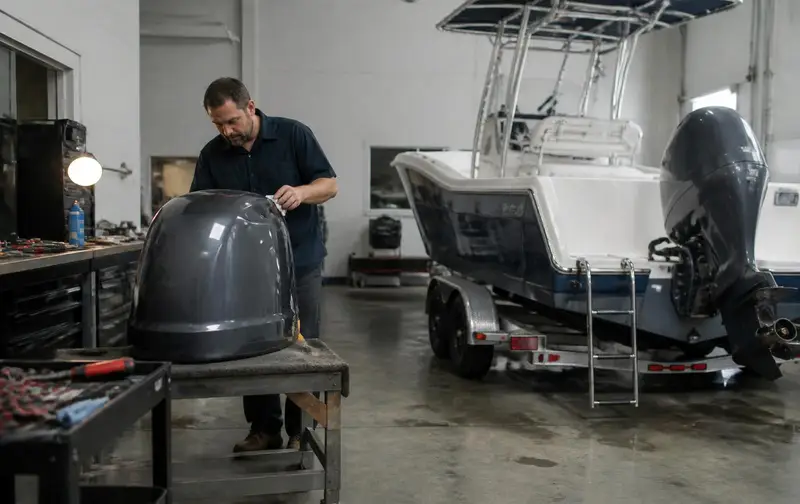
Commissioning in spring, winterization in fall, and everything in between quoted, approved and invoiced by the shop.
Storage & dry-stack contracts
Winter and dry storage billed on a schedule, priced by boat length and season, with shrink-wrap and haul-out fees attached.
Weeks
between a deposit taken in the showroom and the day the boat is delivered
Daily
parts, accessory and service payments running underneath every boat sale
Seasonal
demand set by launch season, haul-out, storage and boat show calendars
Sound like your business? Tell us how you take payments today and we'll put together a quote built around it.

Everything the dealership sold ends up here.
The ramp on a Saturday morning is the reason the parts counter was busy on Thursday.
Unit sales, deposits and lender funding
A boat sale rarely closes in one payment.
A dealership can ring a $40 parts sale in the morning and close a six-figure unit sale that same afternoon: deposit at signing, trade appraised, lender funding the balance, rigging and electronics added before the boat leaves on its trailer. Fizel builds the payment setup around that actual mix, not a generic retail template.
Deposits are their own workflow. A customer holds a hull sold at a boat show, commits to a rigging package, or authorizes a major repower. That deposit can be taken at the desk, sent as a payment link, collected through a hosted payment page or keyed through the virtual terminal, with the balance handled the same way once the lender funds and the boat is ready for delivery.
For larger dealerships and dealer groups, custom pricing is available based on processing volume, transaction mix, locations and payment channels. See pricing for the $10M+ path.
Fizel provides payment acceptance. We do not finance or lend against boat purchases.

Pre-owned boats accounted for 79.7% of US boat unit sales in 2025, which is why service and trade-in activity often holds up when new units slow. The full sales mix is in our Recreational Boating Industry Statistics 2026 report.
Parts, accessories and delivery-day upsell
The counter that runs all season, plus the sale that happens on the dock.
Props, plotters, safety gear, oil, covers, trailer hardware and rigging accessories move constantly: sometimes attached to a unit sale, sometimes rung up on delivery day when a customer adds a cover or electronics package at the last minute, sometimes shipped to someone who has never set foot in the dealership.
These are fast, frequent transactions living inside a business that also funds very large ones through a lender. Both belong in the same payment environment, with in-person acceptance covered under accepting payments and online orders under selling online.
Payment capabilities
Payment tools for how the dealership already operates.
Not every dealership needs every piece. Most start with what carries launch season and add the rest as departments and locations grow.
On the property
- Countertop terminals for the showroom, parts counter and service desk
- Wireless terminals for the yard, rigging bay and delivery dock
- Tap to Pay on supported devices for boat shows and off-site sales
- Merchant accounts configured around the dealership's real transaction mix
Away from the counter
- Payment links for deposits, special orders and completed service work
- Virtual terminal for card details taken over the phone
- Invoicing for service, rigging and commercial accounts
- Deposits and pre-authorizations where the workflow calls for them
Online and across locations
- Ecommerce payments, gateways and hosted payment pages
- Recurring and scheduled payments for storage and repeat charges
- Multi-location payment environments with consolidated reporting
- Funding that generally lands the next business day
The full range is on our solutions page. Invoicing, recurring billing and reporting sit under running your business.
Keep the systems that work
We start with how the dealership already runs.
Most dealerships have already built the year around something: a retail point-of-sale, a work-order system for the service bay, an inventory system for units and trailers, an accounting process a controller trusts. Replacing that between commissioning and launch season is nobody's idea of a plan.
So we start with where payments actually touch the operation: what rings the parts counter, what closes a repair order, what a lender needs to fund a unit sale, what the bookkeeper needs at month end. We connect to compatible existing systems where practical and improve the payment pieces that need improving.
Fizel is the payment layer. Your inventory, service history and customer records stay exactly where they are, and the right integration for your setup is confirmed with you before anything changes.
Winter storage and dry-stack contracts
Revenue that arrives on a schedule, not at a counter.
Winter and dry storage, shrink-wrap and spring commissioning behave less like a sale and more like a billing cycle. They are agreed early, priced by boat length and storage type, and often collected in stages before a single line is written on a work order.
Recurring and scheduled payments let those storage contracts bill themselves where that suits the dealership, with a deposit taken up front to hold a rack or a spot in the shed.

Billed on a schedule
Winter storage and instalment arrangements collected on a set cadence instead of chased each cycle.
Deposits up front
Hold a rack, a bay or an incoming unit sale with a deposit taken at the time of agreement.
Fewer manual reminders
Less office time spent chasing statements, phone calls and cheques through the off-season.
Clear reporting
Visibility into what has been collected, with funds generally landing the next business day.
From the lot
The season starts long before the water is warm.
By late winter the yard is still full of shrink-wrapped hulls, but the phone has already started. Someone wants the boat they put a deposit on at the winter boat show, another customer's lender is asking for a bill of sale before funding, and the service manager is booking commissioning slots against a spring calendar that fills faster every year.
Then the whole thing compresses. Commissioning, rigging, delivery day and the first good weekend of the season all land in the same few weeks, and the person running the till at the parts counter works the same long days as the technician prepping units for launch. By October it reverses: boats come out on trailers, the storage lot fills up, and winterization invoices follow the customers home.
Larger dealerships and dealer groups
One payment environment across departments and locations.
Sales, parts, service, storage, online and, where applicable, several locations, each with its own rhythm, all reporting to the same business.
Departments
Showroom, parts, service and rigging each keep the acceptance method that suits their counter and their ticket size.
Storage and dry-stack
Winter storage charges billed on a schedule while the yard still takes in-person payments where it needs to.
Online
Ecommerce, hosted payment pages and payment links for parts, deposits and customers who order remotely.
Multiple locations
Multi-location processing with consolidated reporting, so each site runs its own way under one relationship.
Boat shows and off-site events
Wireless terminals and Tap to Pay on supported devices for deposits and sales taken away from the dealership floor.
Existing systems
Connect to compatible dealer management and work-order systems already in use rather than replacing what the dealership depends on.
How Fizel fits
- Showroom
- Take deposits and customer payments on boat purchases without treating a high-value transaction like an exception.
- Parts & accessories
- Fast in-person payments for everything from maintenance supplies to electronics and major equipment.
- Service & rigging
- Send invoices or payment links for repairs, installations, winterization and completed service work.
- Storage & repeat payments
- Recurring and scheduled payments where they suit seasonal storage and other repeat charges.
Pricing
Transparent pricing, quoted on your volume.
Dealership pricing depends on the mix: deposits, unit sales, service invoices, storage billing and online orders all behave differently. Rather than publishing a rate that will not apply to your operation, we quote on your actual volume, channels and card mix. Pricing is month-to-month, with custom pricing for dealerships and groups processing $10M+ annually.
Further reading
Payment Processing for Boat Dealers: A Complete Guide
Boat show deposits, high-ticket unit sales, lender funding, service invoices, parts and storage contracts: how the payment environment fits together across a dealership.
Read the guideAlso useful: How to Choose the Right Payment Processor.
Questions
Boat dealer payments, answered.
Can Fizel handle high-value boat dealership transactions?
Yes. A unit sale with a deposit, a trade and a lender funding the balance is ordinary business at a dealership, and Fizel supports high-ticket payment environments. We set the account up around your actual profile: average ticket, peak ticket, volume, channels and payment mix, so a boat sale is handled as reliably as a parts sale, not against a generic retail template.
Can we keep our existing dealership or business software?
That is the starting point. Fizel integrates broadly across point-of-sale, ecommerce, accounting, inventory and service or work-order systems. We look at how the dealership already runs, keep what works, and confirm the right integration for your specific setup before anything changes. Fizel is the payment layer, not your management software.
Can Fizel support our showroom, parts and service departments?
Yes. Terminals cover the showroom, parts counter and service desk, while payment links, invoicing and the virtual terminal cover the payments that happen away from a counter. Everything runs in one payment environment with reporting across it.
Can customers pay deposits before coming into the dealership?
Yes. A deposit taken at a boat show booth, over the phone, through a payment link or on a hosted payment page all settle into the same account, with the balance collected the same way or in person on delivery day.
Can we send customers invoices or payment links for completed service work?
Yes. Repairs, rigging, installations and winterization can be invoiced by email with a payment link so the customer settles before pickup, or paid in person when they collect the boat. More on this is under running your business on the solutions page.
Can Fizel support recurring payments for storage?
Yes. Seasonal storage and other repeat charges can be billed on a recurring or scheduled basis instead of being invoiced and chased each cycle, where that suits how the dealership bills.
Can Fizel support multiple dealership locations?
Yes. Multi-location payment environments with consolidated reporting are supported, so a dealer group can see showroom, parts, service, storage and online revenue across every location while each site keeps the terminals and workflows it needs.
How does pricing work for a high-volume boat dealership?
Pricing is quoted on your actual volume, transaction mix, channels and locations rather than published as a single rate, and terms are month-to-month. Dealerships and dealer groups processing $10M or more annually are quoted through the custom pricing path on our pricing page.
Something specific to your dealership? Contact us and we will give you a straight answer. Nearby marine businesses we work with include marinas, boat rentals and charters, marina service and boatyards and powersports dealers.
Deposits, unit sales, service and storage on one payment environment.
Tell us how the dealership takes deposits, funds unit sales, rigs boats and bills storage today, and we will build a quote around it.