
Guides & Outfitters
Payment Processing for
Guides & Outfitters
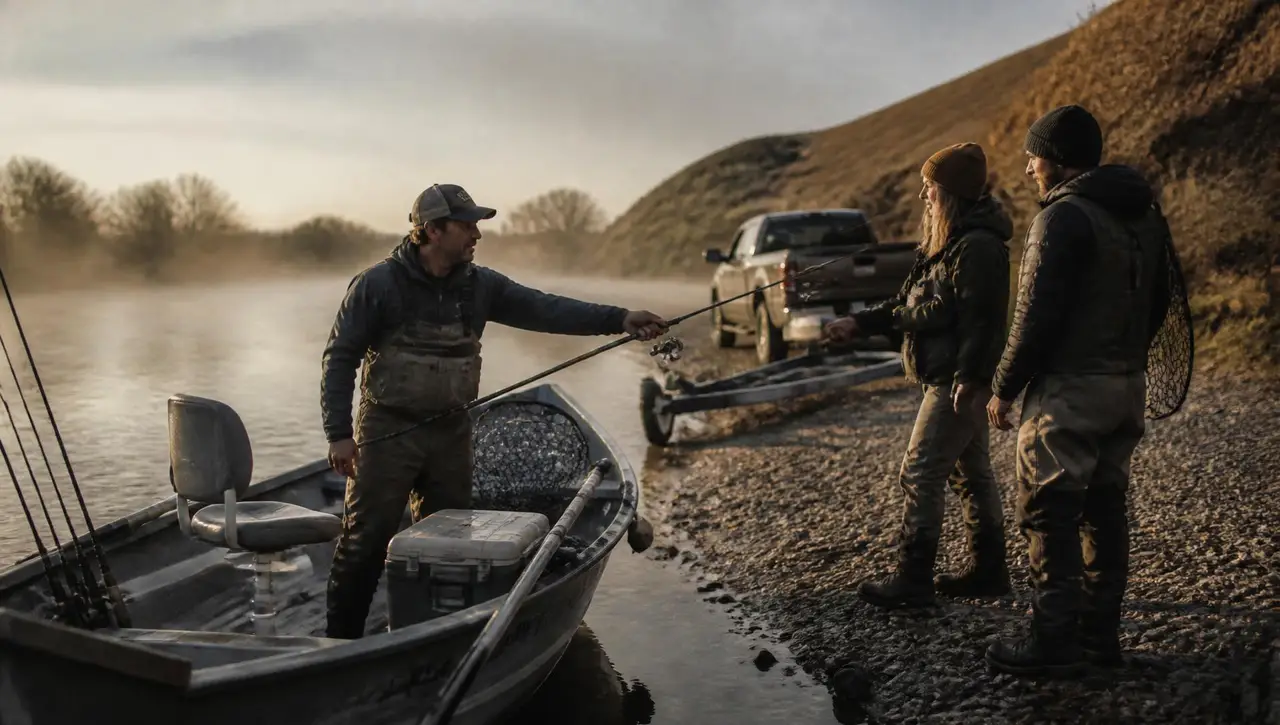
The person running the trip is usually the person running the business. The same hands answer the enquiry, take the deposit, rig the gear, meet the clients, guide the day and settle the balance before anyone drives home.
Fizel sets payments up for that, a business run from a phone, a truck and a launch, not from a back office.

This is the part everyone sees.
A guiding business is sold in a phone call, months before the trip happens, by someone who is also about to go rig the boat.
The merchant reality
One business, six jobs, mostly the same pair of hands.
A guiding business is not a small version of a resort. There is no front desk, no reservations team and no finance department, there is an owner who is also the head guide, and a season that has to pay for the whole year.
01
The enquiry
An email at 9pm, a text on the drive home, a call while the boat is on the trailer. The answer decides whether the date gets held.
02
The booking
A deposit takes the date off the calendar. It usually needs to be paid in the same conversation, before the customer's attention moves on.
03
The preparation
Gear checked, permits confirmed, licences sorted, food packed, shuttle arranged, second guide confirmed for the bigger party.
04
The day itself
The owner is on the water, on the rock or in the bush, out of signal, and not in a position to answer anything about money.
05
The settle-up
The balance, an extra rod, a rental, a T-shirt, the add-on day someone decided on halfway through, taken at a truck tailgate.
06
The books
Reconciling, invoicing the corporate group, chasing the one balance that never arrived, all after dark or in the off-season.
Guides and outfitters are one of the ten industries Fizel works across , see the wider category on Guides & Outfitters. River operators running commercial trips have a dedicated page for rafting companies and outfitters.
Field note
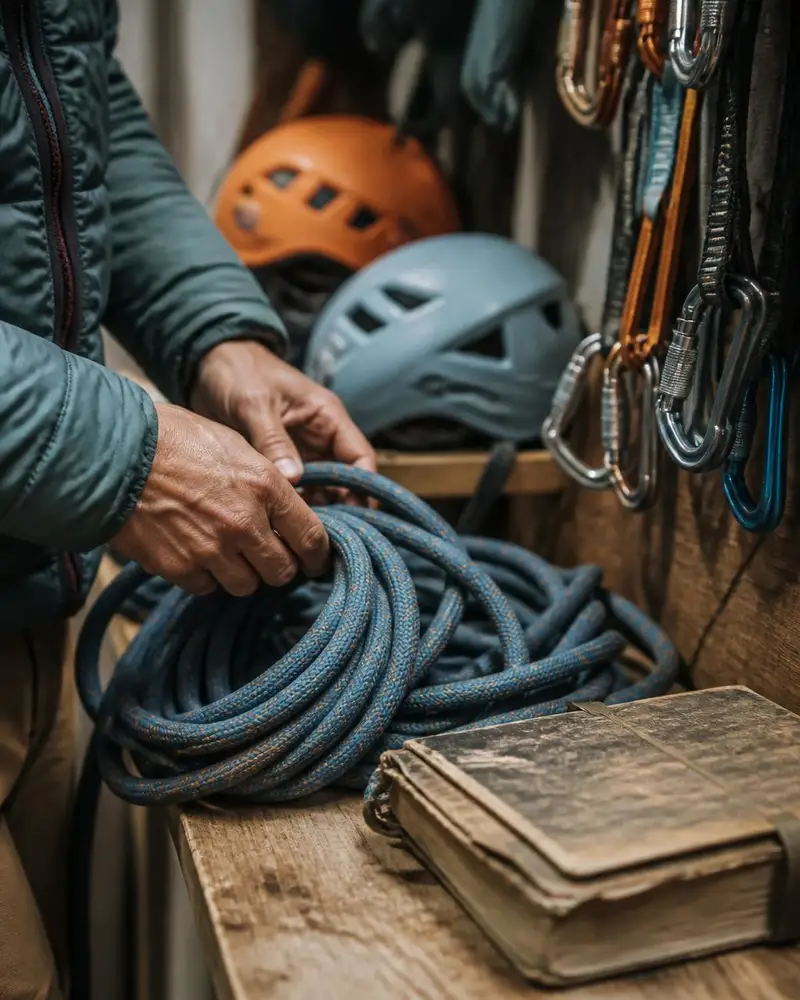
The gear room tells you everything about the season.
Ropes get coiled the same way every time, not out of habit but because a tangled rope on a ledge costs minutes nobody has. Helmets go back on the same hook. The logbook in the corner has more handwriting in it than any spreadsheet ever will, because the person filling it in is thinking about tomorrow's weather window, not the software.
Most of a guiding business's best clients are repeats, the same family every August, the same two friends who book the hardest route on the calendar each year. A short season means every one of those relationships has to be earned again before the snow melts.
How the money moves
Three places a guided trip gets paid for.
Very few guiding businesses collect everything one way. Most need a remote method, an in-person method and something for the loose ends, under one account and one set of books.
Before the trip
Money comes in remotely, from someone you have not met, in the small window where they are ready to commit.
- Deposits taken online or by payment link
- Card details taken over the phone through a virtual terminal
- Invoices for corporate, lodge and group bookings
- Scheduled balances ahead of longer trips
At the meeting point
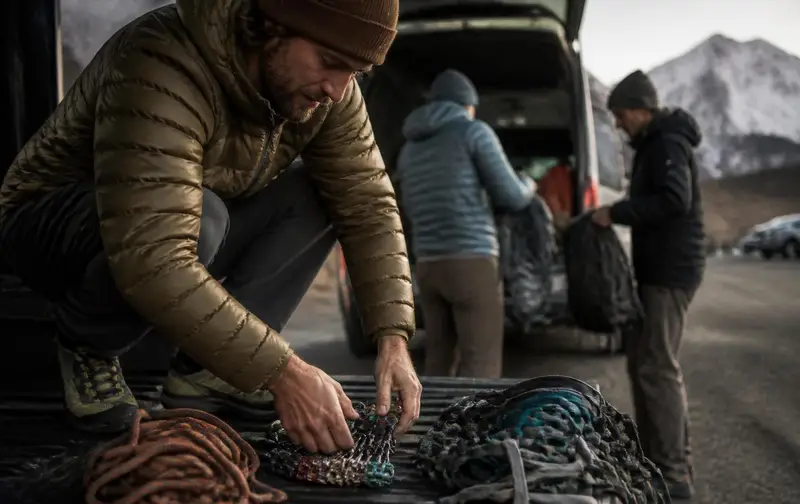
Not a counter. A gravel pullout, a boat launch, a trailhead, a base camp, wherever the day actually starts.
- Tap to Pay on a supported phone
- Mobile card acceptance where there is signal
- A payment link sent for the client to pay from their own phone
- A terminal at the shop, lodge or base for the days that start there
After the day
The trip is over but the transaction often is not, and by then the guide is unloading gear, not doing paperwork.
- Balances and add-ons settled after the fact
- Equipment rentals and gear sales
- Refunds and adjustments when weather rewrites the plan
- Rebookings for next season from returning clients
Sound like your business? Tell us how you take payments today and we'll put together a quote built around it.
Payment capabilities
A short list that covers a long day.
Most guides and outfitters use three or four of these, not all of them. The point is that the ones you use behave the same way and land in the same place.
Taken remotely
- Hosted payment pages and online checkout
- Payment links for deposits and balances
- Virtual terminal for phone bookings
- Invoicing for groups, corporate and lodge work
Taken in person
- Tap to Pay on supported devices
- Mobile and wireless card acceptance
- Countertop terminals for a shop, office or base
- Pre-authorizations where a hold on rental gear makes sense
Taken over a season
- Deposits at the time of booking
- Scheduled payments where a trip is paid in stages
- Merchant accounts set up for seasonal volume, month-to-month with no locked-in contract
- Multiple guides or operating locations under one account
Clients booking from abroad pay on internationally issued cards, with multiple currencies and FX/DCC built into the setup for trips that draw travelling guests. The full range is on our solutions page. Deposits, mobile payments and Tap to Pay in the field are covered under accepting payments in person.
Start with what you already run
Fizel is not booking software.
By the time most outfitters talk to us, something is already holding the calendar, a booking platform, a website form, a waiver tool, a spreadsheet that has survived nine seasons. It works, the guides know it, and mid-season is the worst possible moment to replace it.
So we look at that first: what takes the enquiry, what confirms the date, what sends the balance, what your bookkeeper reconciles in the off-season. Then we work out where payments should sit inside it.
Fizel integrates broadly across booking, scheduling, waiver and accounting systems, so the tools your season already runs on keep working. We review your setup with you and confirm the right configuration before anything changes.
See the platforms Fizel works with for a sense of the booking, POS, ecommerce and accounting systems payments can connect to.
What makes this different
The payment has to work with one hand full of gear.
Most payment setups assume someone is standing at a till, or that a customer is sitting at a laptop. A guiding business is neither for most of the day, and the person taking the money is also the person launching the boat.

No back office
There is rarely someone at a desk to fix a failed payment at 7am. That is why support at Fizel is knowledgeable people who understand how a guiding operation runs, reachable when it matters, not a ticket queue you wait on while the client is standing at the tailgate.
Two ways to take it, not one
Coverage at a meeting point varies from one morning to the next, so Fizel gives you an in-person method for when there is signal and a remote method for when there is not. One business, two working ways to get paid, and you use whichever one fits the day.
Small business, real tickets
A multi-day trip for a party of four is a substantial transaction from a business with one truck and two guides. Both things are true at once.
The season is short
Volume arrives in a few concentrated months, month-to-month with no locked-in contract, and an account should be set up expecting that pattern rather than reacting to it. Settlement generally lands the next business day, so a week of trips is funding the next week's fuel, permits and second guide rather than sitting somewhere out of reach.
None of that is exotic. It is just the shape of the business, and a payment setup should be built around it from the start.
How Fizel fits
- Securing the date
- A deposit at booking holds the day and covers permits and prep already committed.
- At the meeting point
- Tap to Pay on supported devices takes the balance at the trailhead or parking lot.
- Booked by phone
- Virtual terminal and payment links close trips arranged over a call or an email thread.
- Groups & splits
- Collect from several people on one trip without carrying the balance yourself.
Pricing
Quoted on how you actually take payment.
A guide taking most bookings by phone prices differently from an outfitter selling online to travelling clients. Rather than publishing a rate that will not match your mix, we quote on your real volume and the way your payments come in.
Further reading
Payment Processing for Guides & Outfitters
The longer guide: how deposits, balances and field payments work for guided businesses, and what to compare when you are choosing a provider.
Read the guideQuestions
Guide and outfitter payments, answered.
Can we keep the booking software we already use?
Yes. Fizel integrates broadly across booking, scheduling, waiver and accounting systems, so the tools you already run keep working. We review your specific setup with you and confirm the right configuration.
Can we take a deposit at booking and the balance later?
Yes. A deposit can be taken online, by payment link or over the phone when the date is booked, with the balance invoiced, scheduled or collected in person closer to the trip.
How do we take payment at a trailhead or boat launch?
Where there is mobile coverage, you can accept a card on a phone using Tap to Pay on supported devices, or on a mobile terminal. Where coverage is unreliable, a payment link the client pays from their own device once they are back in signal is often the more practical option.
Can we take a card over the phone?
Yes. A virtual terminal lets you key a card from a phone call or an email enquiry, which is still how a lot of guided trips get booked.
What about rental gear and add-on sales?
Rentals, gear and merchandise run through the same merchant account as trips. Where you would rather hold an amount against rented equipment than charge it outright, you can place a pre-authorization and release or capture it when the gear comes back.
We only operate part of the year. Is that a problem?
Seasonal operating patterns are normal across the outdoor economy and we set accounts up expecting them. We describe how your season actually runs at the outset rather than leaving it to be discovered mid-summer.
Something specific to your operation? Contact us and we will give you a straight answer.
Built for the way you actually work.
Tell us how your trips get booked and paid for today, and we will put together a quote around it.
If you already take deposits and balances through another processor, our free statement analysis reads a recent statement and shows what each booking costs you once online and keyed rates are counted.