

Surf Shops
Payment Solutions for
Surf Shops
A bar of wax before dawn. A rental board out the door by ten. A cracked rail on the repair bench. A wetsuit ordered online from four time zones away, and a customer who walks out with two boards. Fizel supports the different ways a surf shop gets paid.
Retail, rentals, repairs, lessons and ecommerce on one merchant account, with funding that generally lands the next business day and month-to-month terms.
The surf shop reality
The shop is only part of the business.
A surf shop that has been open more than a few years is rarely only a place that sells surfboards. It is a specialty retailer, a rental operation, a repair bench, an online store, a source of local knowledge, often a lesson desk, and the first stop for anyone who arrived in town with a board bag or without one.
One customer can be four transactions. Wax and a leash in the morning. A soft-top rented for the afternoon. A cracked nose dropped at the counter on the way home. A wetsuit ordered online two weeks later from somewhere else entirely.
Fizel specializes in the outdoor economy and brings enterprise payment capability to it. That combination matters here: people who understand what happens between the rack, the bench and the website, with the capability to support what all of it processes, from one independent shop to a multi-location surf retailer.
Where the revenue comes from
One counter, six businesses behind it.
Independent surf shops, board-sports stores, destination surfing retailers and multi-location operators sell some combination of these, usually all in the same week, and in July, all in the same hour.
Boards
Shortboards, longboards, fish, mid-lengths, soft-tops and custom orders: the single largest tickets in the building, sometimes several at once.
Wetsuits and rubber
Fitted at the shop because sizing is unforgiving, replaced on a cycle, and bought before a trip rather than after one.
Hardware and consumables
Fins, leashes, traction, wax, board bags and fin keys. Small tickets, constant frequency, the reason locals come in weekly.
Rentals
Soft-tops, performance boards, longboards and wetsuits going out by the hour, the day or the week, with reservations and deposits attached.
Repairs
Ding and board repair taken in at the counter, quoted at the bench, paid across two moments that can be days apart.
Ecommerce and apparel
Online orders shipping well past the local break, plus the apparel and footwear that carry the floor between swells.
$4 to $4,000
the everyday spread between a bar of wax and a multi-board purchase at the same till
Four payment types
retail, rental, repair and online, frequently from the same customer in the same season
Two moments
how a repair actually gets paid: drop-off and completion, often days apart
Sound like your business? Tell us how you take payments today and we'll put together a quote built around it.
Boards, rubber and hardware
A wide transaction range at a single counter.
Surf retail spans a bigger range than most specialty categories. Wax, fin keys, leashes, traction, sunscreen and fins sit at one end. Wetsuits, boots, hoods, board bags, apparel and footwear sit in the middle. Boards sit at the top, and the customer who has been thinking about it all winter does not buy one board; they buy a board, a leash, fins, a bag and a new suit while they are standing there.
Fizel supports higher-ticket payment environments as a normal part of the merchant setup. We configure the account around the shop's real transaction profile rather than a generic retail assumption (average ticket, high ticket, peak days, channel mix), so the largest sale of the summer goes through like any other.
Worth saying plainly
A surfer buying two boards and a wetsuit is the business model, not a red flag. Tell us what your biggest days and biggest tickets look like and we will build the account around them.
The same goes for the swings. A shop doing several times its shoulder-season volume in one holiday week is behaving exactly as a surf shop behaves.
Rentals
Boards only earn while they are out of the rack.
A rental fleet is inventory that has to be paid for once and recovered a few hours at a time. Soft-tops for first-timers, performance boards and longboards for visitors who left theirs at home, wetsuits in every size that never fully dry in August. Some of it is booked online days ahead. Most of it walks in.
Advance reservations can be paid online or by payment link, walk-in rentals go through the terminal, deposits hold equipment, and pre-authorizations can be used where the workflow calls for them. Mobile acceptance handles the rentals that happen at the rack, the van or the sand rather than the counter. Where rentals are a large part of the operation, our outdoor equipment rentals page goes deeper into the full lifecycle.
One honest note: a pre-authorization is a payment tool, not a guarantee that a damaged board is paid for. It is worth deciding at setup how you want deposits and damage handled, rather than working it out on the busiest Saturday of the year.

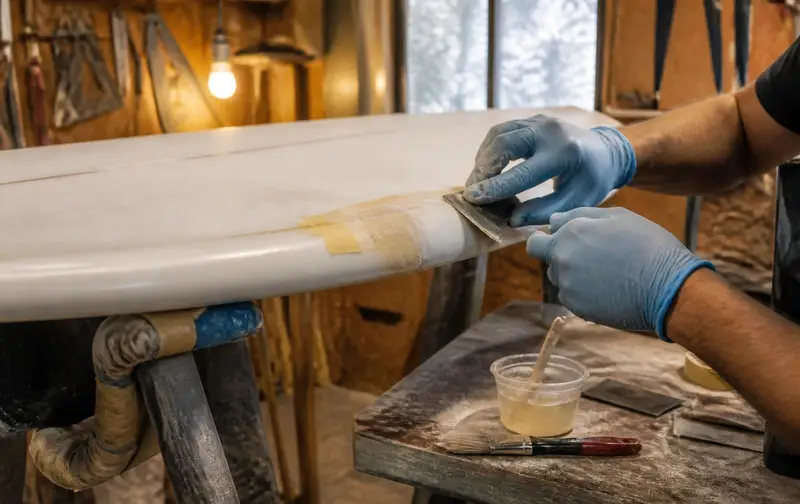
Repairs
Taken in on Tuesday. Paid for on Friday.
Repair is where a surf shop stops looking like retail. A board comes in with a cracked rail or a pushed-in deck. Someone looks at it, gives a number, takes a deposit or an approval, and the board goes into the queue. Days later the work is done, the balance is different from the estimate about a third of the time, and the customer is at work.
Deposits at drop-off, invoicing or a payment link for the balance, and virtual terminal payments over the phone mean a finished board can be paid for before pickup instead of occupying rack space while someone finds time to come in. Everything reconciles to the same merchant account as the floor and the website.
Fizel supplies the payment layer here, not the work-order system. Whatever you use to track repairs, software, a whiteboard, tags on the boards, stays exactly as it is.
A retail counter, a rental fleet, a repair bench and an online store: four different payment behaviours, one small building, one merchant account.
The commercial shape of a surf shop
Ecommerce and destination customers
The customer base is bigger than the break.
Surf shops build reputations that travel. A shop known for a particular shaper, a specific suit fit or hard-to-find sizes sells nationally and internationally on that reputation alone. Boards, wetsuits, apparel and accessories can add up to a substantial online business for a single-location shop, shipped from the same stockroom the floor sells out of.
Ecommerce payments, gateways, hosted payment pages, payment links and customer-not-present transactions cover that side. Running it on the same merchant account as the counter means the store and the website are one business commercially, not two systems that happen to share a name.
The travelling customer shows up in person too. Surf towns fill with people who came to go surfing, arrive with cards issued somewhere else, and buy or rent a full setup in one visit because their plans changed or their board didn't survive the flight. Internationally issued cards, multiple currencies and FX/DCC are established Fizel capability, not an exception we hedge.
Lessons, where the shop runs them
Plenty of shops teach, or coordinate instructors who do. That adds another payment pattern: advance bookings paid online, deposits holding a spot, group and private sessions, multi-day programs, and payments taken at the beach rather than the shop.
Payment links, deposits, scheduled payments and mobile acceptance cover it on the same account as everything else. Fizel is the payment layer; your scheduling and lesson management stay with whatever you already use.

Every transaction in the shop exists so this happens more often.
The reason the rack empties, the bench stays busy and the phone rings at seven in the morning.
Seasonality
No two coastlines share a calendar.
A shop in Southern California, one on the North Shore, one on Vancouver Island, one in Florida and one on the Atlantic coast of Nova Scotia do not have the same year. Some peak with summer tourism and school breaks. Some peak with winter swell and cold water, when the rubber sells and the rental fleet turns over. Water temperature, holiday travel, events and local conditions all move the number.
What surf shops share is that volume moves materially through the year while costs do not. Boards are ordered ahead of the season, rental fleets are bought before they earn anything, staff are hired before the traffic arrives, and rent is indifferent to the forecast. Funding that generally lands the next business day is worth more in that business than it is in a flat one.
Fizel is month-to-month with no locked-in contracts. A payments relationship should not be the most rigid thing about a business that changes shape four times a year.
Payment capabilities
Matched to how the shop actually works.
Not a feature list for its own sake: these are the tools the counter, the rack, the bench and the website each need.
In the shop
- Countertop terminals at the sales counter
- Wireless terminals for the rental rack, the yard and the repair bench
- Tap to Pay on supported devices when a summer line forms
- POS and inventory integrations so the floor keeps the workflow it knows
Online and remote
- Ecommerce payments, gateways and hosted payment pages
- Payment links for custom board orders, repair balances and lesson bookings
- Virtual terminal for card details taken over the phone
- Invoicing for schools, clubs, camps and wholesale accounts
Across the business
- Merchant accounts configured for higher-ticket transactions
- Internationally issued cards, multiple currencies and FX/DCC
- Deposits, scheduled payments and pre-authorizations for rentals and repairs
- Multi-location environments with consolidated reporting
The full range is on our solutions page.
Start with how you already operate
Your POS, your inventory, your repair tracker. Payments fit around them.
By the time a shop talks to us there is a POS on the counter, an ecommerce platform running the online store, an inventory system that knows how many size-medium suits are left, possibly a rental or booking tool, something tracking repairs, and an accountant with opinions. Fizel integrates broadly across retail, commerce and business systems, and we confirm the right integration for your stack rather than asking you to rebuild the shop around a processor.
Scale works the same way. A single shop, a destination retailer with a serious online channel, and a multi-location surf retailer can all run consistent payment environments with consolidated reporting across stores and channels: central visibility for the owner, local workflow at each counter.
When something needs sorting, you reach people who understand the business behind the transactions. A shop running retail, ecommerce, rentals and repairs should not have to re-explain all four every time it calls about payments. That context is where the conversation starts.
From the floor
Before the shop opens.
Someone checks the buoy readings on their phone while the coffee is still too hot. Wetsuits from yesterday's rentals are still damp on the rail. There is a board on the trestles in the back with tape on the rail and a name written on it, a box of fins that arrived late, and an argument about whether the swell fills in before noon. The gear on the walls is inventory. What people come in for is the read on the conditions.
How Fizel fits
- Shop floor
- Terminals for wax, wetsuits and a board sale in the same morning.
- Board & suit rentals
- Deposits and pre-authorized holds released when the board comes back.
- Lessons & camps
- Take lesson bookings and surf camp deposits online through hosted checkout.
- On the beach
- Tap to Pay on supported devices for instructors working away from the shop.
Pricing
Quoted on your actual payment environment.
A shop carried by hardware volume and rentals prices differently from one built on premium boards, ecommerce and destination customers, and differently again across several locations. We quote on real volume, ticket profile, channel mix, seasonality, international card share and the systems already in place. Month-to-month, with no locked-in contracts.
Further reading
Payment Processing for Surf Shops: A Complete Guide
How surf shops actually get paid, board sales, apparel, rentals, lessons, ding repair and online orders, plus what to compare on pricing structure, deposits and holds, POS systems and support.
Questions
Surf shop payments, answered.
Can Fizel support both our surf shop and our online store?
Yes. Counter sales, ecommerce orders, payment links for custom board orders and phone payments through a virtual terminal can all run on one Fizel merchant account and report together. The floor and the website become two channels of the same business rather than two separate processing relationships you reconcile at month end.
Can we take payments and deposits for surfboard rentals?
Yes. Advance reservations can be paid online or by payment link, walk-in rentals go through the terminal, and deposits or pre-authorizations can be used where the workflow calls for them. Mobile acceptance covers rentals handed out at the rack or the van rather than the counter. A pre-authorization is a payment tool, not a guarantee of recovery for lost or damaged equipment, so it is worth agreeing how you want damage handled at setup.
Can Fizel support payments for surfboard repairs?
Yes. Repair work is usually two payment moments: a deposit or approval at drop-off and a balance on completion. Deposits, invoicing, payment links and virtual terminal payments let you collect the balance before pickup so a finished board is not sitting in the rack waiting on a card. Fizel provides the payment layer; your repair or work-order system stays yours.
Can Fizel handle higher-ticket surfboard purchases?
Yes. A premium board, or two boards plus a wetsuit and hardware, is a normal specialty-retail transaction rather than an edge case. Fizel configures the merchant account around your actual profile (average ticket, high ticket, seasonal peaks and channel mix), so a legitimate large sale is expected rather than treated as an anomaly.
Can we accept internationally issued cards?
Yes. Internationally issued cards are established Fizel capability, along with multiple currencies and FX/DCC where it makes sense for the shop. Surf towns run on travelling customers, and a card issued in another country buying a board for the week should be an ordinary transaction at the counter.
Can Fizel work with our existing POS, ecommerce or rental system?
That is where we start. Fizel integrates broadly across retail POS, ecommerce platforms, inventory, rental and booking tools and accounting software. We look at how the shop runs today, keep what works and build the payment environment around it. The specific integration for your stack is confirmed during setup.
Something specific to your shop? Contact us and we will give you a straight answer. More on how we work with specialty stores is on the retail and service industry page and the outdoor retailers page.
The counter, the rack, the bench and the website.
Tell us how the shop makes money today: retail, rentals, repairs, lessons, online and seasons, and we will build a quote around it.