

Hunting Guides & Outfitters
Payment Solutions for Hunting Guides & Outfitters
From advance deposits and multi-day trips to international customers and seasonal operations, Fizel supports the payment environment behind professional guides and outfitters.
Higher-value bookings treated as ordinary business, internationally issued cards, funding that generally lands the next business day, and month-to-month terms you can pause through the off-season.
The commercial shape of an outfitting business
The trip may last a week. The business starts months earlier.
For a great many outfitters, the days spent guiding are the shortest part of the commercial relationship. The inquiry can arrive the better part of a year ahead. The reservation holds capacity that cannot be sold twice. A deposit moves before the season exists in any practical sense. Then comes the long middle: correspondence, logistics, staffing, supplies, during which nothing is transacted at all.
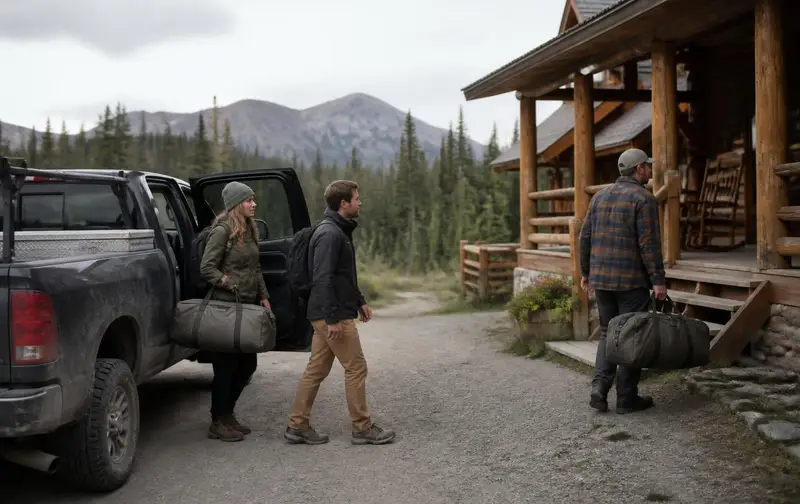
By the time a guest steps out of a vehicle at a lodge or a trailhead, most of the money has usually already moved, and most of the work has already been done. A payment provider that understands an outfitting business has to be comfortable with that distance between the sale and the service.
Fizel is the payment layer under that arc: deposits, balances, advance and customer-not-present acceptance, internationally issued cards and in-person payments where they belong. The booking calendar, the licensing, the permits and the guide roster stay in whatever you already use.
Inquiry to arrival
Six steps, and only the last one happens in the field.
Exactly how this runs depends on the outfitter's own policies. The shape is recognisable across most professional operations.
01
Inquiry
A message arrives about a week that is eleven months away. Nothing has been paid, and the commercial relationship has already started.
02
Reservation
Dates held against limited capacity: a guide, an accommodation, a stretch of the operating window that can now be sold only once.
03
Deposit
Paid online, by payment link, or over the phone by someone who has never seen the place and may live on another continent.
04
Planning
Months of correspondence, logistics and preparation, none of which generates a transaction.
05
Final balance
Settled ahead of arrival on the outfitter's own terms: an invoice, a scheduled payment, a link, a card taken by phone.
06
Arrival
The guest reaches the lodge or the staging point, usually after a long journey, and the trip finally begins.
Ecommerce and gateways, hosted payment pages, payment links, a virtual terminal, invoicing, deposits and scheduled payments where appropriate cover that whole sequence inside one merchant environment.
Sound like your business? Tell us how you take payments today and we'll put together a quote built around it.
Limited capacity
An outfitter is not selling from an unlimited shelf.
This is the idea that separates outfitting from most other commerce. A retailer can reorder. An outfitter is selling a finite number of days, delivered by a finite number of people, in a finite window.
Season
The window is finite.
An operation may sell within a concentrated period that depends on location, access, weather, applicable regulations and the experiences offered. What is not sold inside it is not sold later.
People and place
Capacity is physical.
Guides, beds, camp space and transportation are all countable. A single multi-day booking can consume several of them at once, for several days.
Commitment
Preparation happens in advance.
Staff, supplies and logistics are often committed before a guest arrives. Once capacity is held, replacing it late in the calendar can be difficult.
That is precisely why reservations and deposits carry so much commercial weight here, and why the payment side has to be dependable long before anyone arrives. Deposits, payment links, invoicing, a virtual terminal, online payments and scheduled payments where they suit the operation all sit in the same environment. What a deposit costs, when the balance is due and what happens if plans change remain the outfitter's policies to write.
The trip may last a week. The business starts months earlier.
Guided and outfitted trips
Long booking horizons
The reservation may be a year old before it is used.
Destination guests plan a long way out, because they have to. Limited operating windows, vacation schedules, travel arrangements, group availability, guide availability and accommodation all have to line up on a single set of dates. In practice that means an outfitter is often taking money in one part of the year for a service delivered in another.
A merchant account set up on the assumption that payment and delivery happen the same afternoon does not fit that. Ours is set up around the way you actually sell: ecommerce and gateways for online reservations, hosted payment pages and payment links for deposits, a virtual terminal for the booking taken by phone, invoicing for the balance, and scheduled payments where those suit.
Fizel is the payment layer, and only that. We do not provide booking software, licensing, permit management, guide scheduling or camp and lodge management, and we would not pretend otherwise.
Reserve
Limited trip capacity is secured against a specific set of dates.
Deposit
Payment collected well ahead of the operating season, on your terms.
Prepare
Guides, transportation, accommodation, supplies and logistics.
Final balance
Completed according to the merchant's own payment schedule.
Arrival
The guest reaches the operation, often after a considerable journey.
Transaction profile
Fewer transactions is not the same as a simple payment environment.
An outfitting business may process a fraction of the transactions a retailer or an attraction sees in a year, while each individual booking represents a substantially larger purchase. A small number of customers can account for a meaningful share of annual revenue.
That combination, low frequency, high value, long horizons, internationally issued cards, and volume concentrated into part of the calendar, is exactly the profile that generic processing treats as anomalous. Fizel configures the payment environment around how the merchant actually operates, and higher-ticket transactions are set up as normal business rather than something to be explained after the fact. Specific outcomes always depend on the individual business.
The guest arrives last.
Before the season
Before the guest arrives
What the customer sees is the end of a long list.
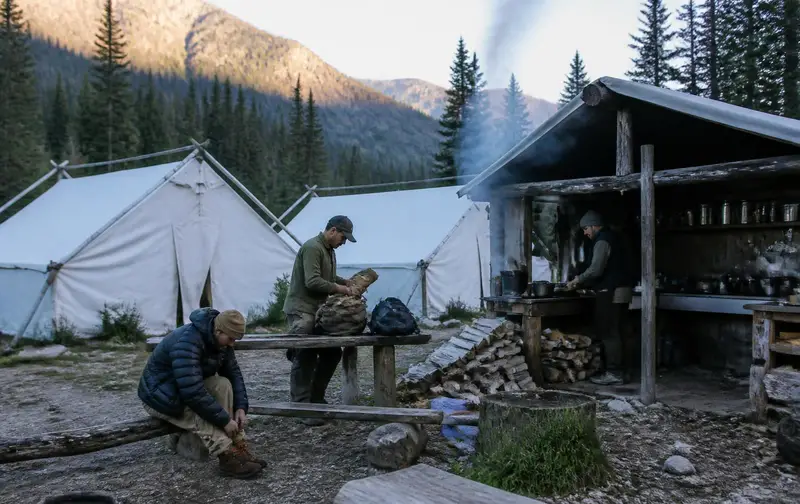
Guides are confirmed and rostered around a calendar that has been moving since spring. Accommodation is opened up, aired out, cleaned, stocked and heated. A camp is packed in, canvas goes up, wood gets split, water is sorted out. Vehicles are serviced, trailers checked, fuel arranged for places where fuel is not simply available.
Food is ordered for a specific number of people for a specific number of days, and then carried somewhere difficult. Equipment is inspected and repaired. Radios are charged. Someone answers a fortnight of emails about layering, boots, baggage and arrival times, then drives four hours to collect a guest whose connecting flight moved.
None of that is billable separately, and none of it is visible in a booking confirmation. It is simply what the business is. The guest arrives last, into something that has been running for months without them.

Multi-day trips
One payment. A week of delivery.
A multi-day outfitted package is not a single service with a single cost. Depending on the operation it may combine guiding, accommodation, meals, transportation, equipment where applicable and other legitimate services into one price, delivered over several consecutive days by several people.
Commercially, that means the outfitter is often collecting one significant payment (usually in two movements, months apart) for something complex. Fizel supports higher-ticket environments, deposits, invoicing, payment links, a virtual terminal and internationally issued cards so that the size and timing of those payments are unremarkable. How the package is assembled and managed is your business and your software; we handle what happens to the money.
Camps and lodges
When you also provide the roof.
Accommodation changes an outfitting business. It might be a remote spike camp, a cabin, a wilderness lodge or something in between, and wherever it sits on that range it tends to increase booking value, lengthen the booking horizon, add operational complexity and raise the importance of deposits and final balances.
Fizel supports the payment environment around those operations. We do not provide property management systems, accommodation booking systems or lodge-management software, those belong to their vendors, and most operators are rightly attached to the ones that work. Operators whose accommodation side is the larger half of the business may also find our fishing & wilderness lodges page relevant.
Destination customers
They pay before they ever meet you.
Research, contact, reserve, deposit, plan travel, final payment, arrive. Somewhere in the middle of that sequence a guest commits a substantial sum to a business they have only seen photographs of, in a place they have never been. The payment has to work first time, from anywhere, on the first attempt: a declined deposit at that moment is not a technical inconvenience, it is a doubt.
Ecommerce, hosted payment pages, payment links, invoicing, a virtual terminal and customer-not-present acceptance cover the whole of that journey without the guest ever standing in front of a terminal.
International customers
Cards issued somewhere else entirely.
Canadian and U.S. outfitters can draw guests from well beyond North America. Not every operation does, and the account should be built around what yours actually sees. Where international guests are part of the business, Fizel supports internationally issued cards, multiple currencies and FX/DCC where relevant, alongside advance and customer-not-present payments.
What we will not do is offer travel, customs, licensing or regulatory advice. That is not a payment provider's place, and an outfitter already knows their own jurisdiction far better than we do.
Remote operations
The service is remote. The payment does not have to be.
The work may happen from a rural base, a wilderness lodge, a seasonal camp, a trailhead or a staging point chosen for reasons that have nothing to do with commerce. It is tempting to imagine the answer is a terminal carried deep into the backcountry. Mostly it is not.
The more durable answer is that the significant money moves before anyone leaves the road. Deposits and balances settled online, by payment link, by invoice or through a virtual terminal mean the transaction is complete while everyone still has signal. Where connectivity allows, wireless terminals, mobile payments and Tap to Pay on supported devices handle what is left: a lodge desk, a base of operations, an add-on settled on arrival. We are not going to guarantee coverage in a valley we have never stood in.

Seasonality
A concentrated window, carrying a disproportionate year.
Most outfitting businesses operate inside a limited season. What that season is depends entirely on the location, the operation, access, weather, the experiences offered and the rules that apply where you are: we are not going to publish a calendar or give regulatory guidance, and no two operators run the same one.
The commercial consequence is universal, though. When a meaningful share of annual revenue is generated in a limited window, when the money lands matters as much as how much of it there is. Funding generally arrives the next business day, and terms are month-to-month with no locked-in contracts.
Seasonal merchant accounts
Seasonal business? Pause your merchant account in the off-season.
- Pause through a genuine off-season instead of carrying a dormant account
- Restart ahead of booking season rather than starting over
- Funding generally next business day while you're operating
- Booking-season volume spikes expected, not flagged as unusual
- Advance reservations and deposits still supported year-round
- Pricing quoted on your season, not a flat annual average
The off-season
The operating season and the selling season are not the same season.
This is the detail most payment providers miss. When no guests are arriving, an outfitter is still answering inquiries, still taking reservations for next year, still collecting deposits, still maintaining relationships with people who came three seasons ago, and already preparing for a window that opens months from now.
So the calendar has two rhythms running against each other, and they rarely align. Pausing a merchant account is a decision about a genuinely quiet stretch: not a constraint on selling. An operator taking deposits through the winter should be set up for advance transactions through the winter, and that is a conversation we would rather have before the account is configured than after.
Private parties and groups
Often one organiser, one payment, several guests.
Guests book individually, as families, with friends or as private groups, and depending on the outfitter a single organiser may handle the whole thing: a deposit for the party, a balance for the party, and a set of questions on behalf of people who have not been introduced yet.
Deposits, payment links, invoicing and a virtual terminal cover that comfortably, and group bookings tend to be among the largest transactions an operation processes. How the group settles up between themselves is their own arrangement.
Multi-guide and larger operations
One guide, or several camps.
Fizel should be equally credible for an independent guide running a season out of one truck and for an established outfitter with several guides, more than one camp or lodge, and multiple operating locations.
That means multi-location environments, several points of payment acceptance, consolidated reporting and centralized visibility across the operation. Scheduling guides, running camps and moving people and equipment around remain yours to manage: we are not going to claim software we do not build.
An observation
Most of the calendar is filled by people who have already been.
Outfitting is a referral business almost by definition. A guest who trusts an operation comes back another season, asks for the same guide, books a different experience, brings a brother or a daughter or two friends from work, and mentions the place to someone at a dinner two provinces away. Some outfitters barely advertise at all. The relationship can outlast several trucks and more than one camp, and it is built on how the trip was run rather than on anything commercial. That is worth understanding about a merchant before you start making decisions about their account.
Payment capabilities
Advance, remote, and on the property.
At reservation: ecommerce, gateways, hosted payment pages, payment links and deposits. Between booking and arrival: payment links, a virtual terminal, invoicing, scheduled payments where appropriate and internationally issued cards. At the operation: terminals where they make sense, wireless terminals, mobile payments and Tap to Pay where connectivity allows.
Across the business that means merchant accounts built for higher-ticket environments, multiple currencies and FX/DCC, multi-location environments, consolidated reporting and broad integrations. The full range is on our solutions page. Mobile payments and Tap to Pay in camp are covered under accepting payments in person.
Existing systems
Booking software stays. Payments run underneath it.
By the time an outfitter talks to us there is usually booking or reservation software in place, sometimes tour or lodge systems, an ecommerce site, a POS, a CRM and accounting software that everything reconciles into. Replacing that stack is almost never the improvement anyone is asking for.
Fizel integrates broadly across commerce and business systems. We start with how the operation runs today and build the payment environment around it; the specific integration for your stack is confirmed during setup rather than promised in a brochure. That software belongs to its vendors: Fizel is the payment layer underneath it.
See the platforms Fizel works with for a sense of the booking, POS, ecommerce and accounting systems payments can connect to.
Who this is for
Professional outfitting operations across Canada and the United States.
Legitimate commercial operations of very different sizes, sharing advance money, limited capacity and guests who travel a long way.
Independent guides
One person, a truck, a season and a client list built almost entirely on referral. Small operation, significant individual bookings.
Backcountry and wilderness outfitters
Trips that begin where the road ends. Transport, camps, food and staff committed weeks before the first guest arrives.
Lodge-based outfitters
Accommodation, meals and guiding sold as a package. Longer booking horizons, larger transactions and a fuller operational calendar.
Remote camp operators
Seasonal camps reached by road, water or air, where the selling happens in one place and the service happens in another.
Destination outfitters
Operations whose guests fly in specifically, plan their year around the trip and pay long before they travel.
Multi-guide operations
Several guides, more than one camp or location, and a business that needs consolidated visibility rather than scattered arrangements.
For guiding and outfitting more broadly, our guides & outfitters page is the wider commercial page. Operations whose season is built on the water should read fishing guides & outfitters, and those selling a broader range of guided experiences may want adventure tour operators.

Limited seasons. Real business.
The reason someone commits a significant sum to a place they have only seen in photographs.
Support, settlement and terms
Support that already knows what an eleven-month deposit is.
A generic support queue does not know why an outfitter takes deposits in one calendar year for trips in the next, why a single transaction can be worth a month of retail, why the cards are issued in four countries, why the volume disappears entirely for part of the year, why the business keeps selling while the operation is closed, or why the service itself is delivered a long way from anything resembling a storefront.
Fizel provides knowledgeable human payments support from people who understand the business behind the transactions. Funding generally arrives the next business day, terms are month-to-month with no locked-in contracts, and seasonal accounts can be paused. We do not publish response-time guarantees or SLAs, because we would rather be judged on the conversation than on a number.
Background reading: payment processing for guides & outfitters.
How Fizel fits
- Season deposits
- Hunts booked a year out are held with a deposit taken at the time of agreement.
- Balances on a plan
- Scheduled payments collect the remaining balance across the months before the season.
- In camp
- Mobile acceptance for tags, gear, processing and add-ons where there is no counter.
- Outfitter admin
- Email invoicing and reporting keep multi-guide, multi-camp bookings straight.
Questions outfitters ask
Deposits, multi-day trips, international guests and the off-season.
Can Fizel support deposits for guided and outfitted trips booked months in advance?
Yes, and for most outfitting businesses that is the normal case rather than the exception. A deposit taken in one calendar year for a trip that happens in the next is a single payment relationship, and Fizel supports the whole arc of it: deposits, hosted payment pages, payment links, online payments, invoicing, a virtual terminal for the booking taken over the phone, and scheduled payments where they suit how you already work. Your merchant account is configured with your real booking pattern in mind, so a booking-season spike months ahead of the operating season is expected rather than treated as unusual activity. The terms stay yours, deposit amounts, payment timing, cancellation and refund policy are the outfitter's decisions. Fizel handles the movement of money, not the booking rules, and is not booking, licensing, permit or guide-scheduling software.
Can Fizel support higher-value multi-day outfitting transactions?
Yes. A multi-day package that combines guiding, accommodation, meals, transportation and equipment can be many times an average outdoor retail transaction, and it is entirely legitimate business. Fizel supports higher-ticket payment environments and sets the merchant account up around your actual transaction profile, average ticket, high ticket, seasonal volume, and the split between advance and in-person payments, during setup. Fewer transactions in a year does not mean a simple payment environment: long booking horizons, substantial deposits and internationally issued cards all matter to how the account should be configured. Underwriting outcomes are always specific to the individual business.
Can outfitters accept payments from international customers?
Yes, where the operation serves them. Canadian and U.S. outfitters often host guests who travel from other countries specifically for the trip and pay with cards issued elsewhere, frequently long before they arrive. Fizel supports internationally issued cards, multiple currencies and FX/DCC, alongside advance and customer-not-present acceptance through hosted payment pages, payment links, invoicing and a virtual terminal. A guest settling a substantial balance from another continent before they have ever entered the country is ordinary business for a destination operation, and we set the account up on that basis. Not every outfitter serves international guests, and the account is configured around what yours actually does. Travel, customs, licensing and regulatory questions sit outside what a payment provider should be advising on.
Can Fizel work with our existing booking or lodge software?
That is the starting point. Most operations already run booking or reservation software, sometimes tour or lodge systems, an ecommerce site, a POS, a CRM and accounting software that everything reconciles into. Fizel does not build, own or replace any of it. We integrate broadly across commerce and business systems, start with how the operation runs today, and confirm the specific integration for your stack during setup rather than promising a named integration in advance. Keep the systems that already work; we improve the payment layer around them.
Can Fizel support payments for remote outfitting operations?
Yes, and the most useful point is that much of the commercial relationship does not have to happen in the remote location at all. Deposits and final balances can be settled online, by payment link, by invoice or through a virtual terminal well before a guest travels, which means the payment is complete before anyone is out of signal. Where connectivity allows, wireless terminals, mobile payments and Tap to Pay on supported devices cover payments taken at a lodge desk, a staging point or a base of operations. We cannot guarantee connectivity in any particular location, and we would not design a payment setup that depends on it.
Can seasonal guides and outfitters pause their merchant account during the off-season?
Yes. Fizel works month-to-month with no locked-in contracts, and seasonal merchant accounts can be paused through a genuine off-season and restarted ahead of the next one, rather than carrying a dormant account through months with no operating activity. Pausing is a decision about a quiet stretch of the calendar, not a restriction on how you sell: an outfitter that takes reservations and deposits year-round can be set up for advance transactions accordingly, because the selling season and the operating season rarely start and stop on the same date. Funding generally lands the next business day while you are operating, and pricing is quoted against your season rather than a flat annual average.
Next step
Tell us how your season actually runs.
A short conversation about booking horizons, deposits, transaction sizes and where your guests come from is usually enough to shape a payment setup that fits your season.