
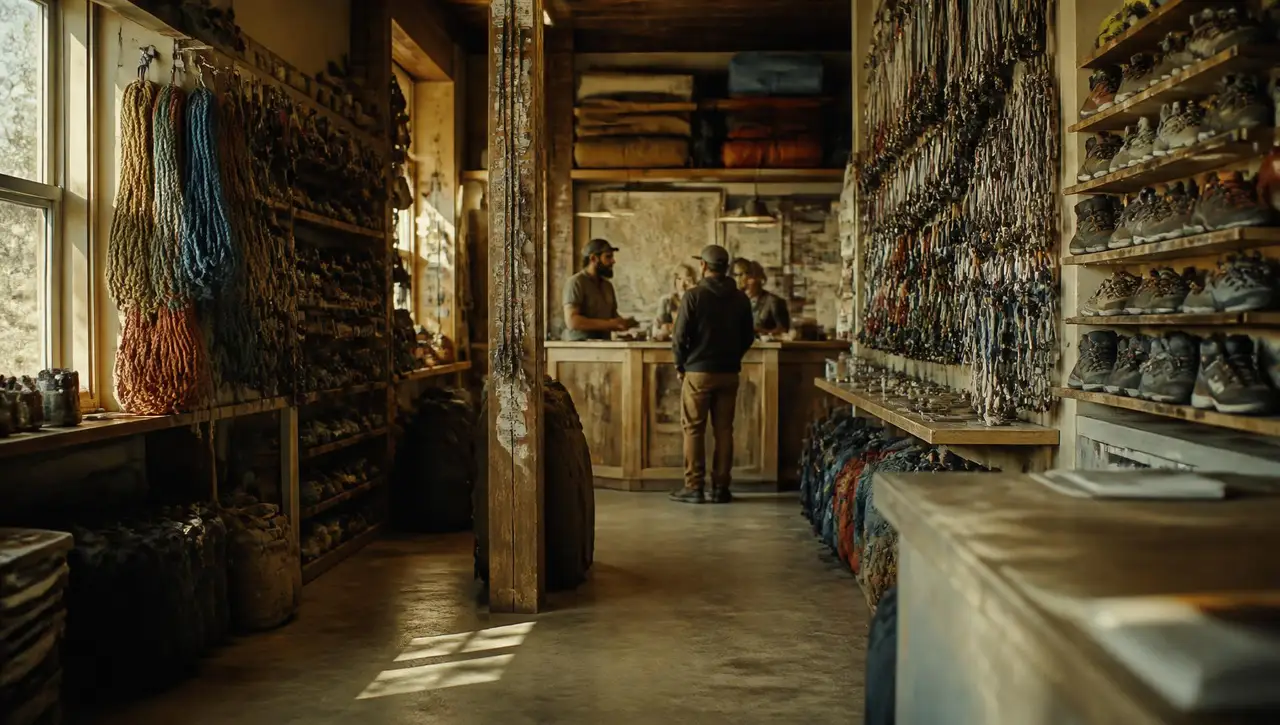
Climbing, Hiking & Camping Shops
Payment Solutions for Climbing, Hiking & Camping Shops
Technical gear, expert fitting, online orders, special orders, rentals where you offer them, and a receipt that might read eleven dollars or two thousand. Fizel supports the different ways a specialty outdoor shop gets paid.
One merchant account across the counter, the website and the phone, with higher-ticket purchases treated as ordinary business, funding that generally lands the next business day, and month-to-month terms you can pause through a genuine off-season.
The operating reality
The gear is technical. The business is too.
Someone walks in for a carabiner and leaves with a rope. Someone else needs a pack fitted for eight days of food. A third customer is replacing a tent that failed, and the trip starts tomorrow morning. In the back, two people are packing online orders that are going to addresses four provinces away.
None of those transactions look alike. They run on different amounts, different channels, different amounts of staff time and, often, different expectations about when money changes hands. The shop that handles all four well is doing something considerably more difficult than moving inventory across a counter.
Fizel specializes in the outdoor economy and brings enterprise payment capability to it. For a technical shop that means one merchant account that can carry a four-dollar sale and a two-thousand-dollar setup, a website and a phone order, a deposit on a special order and a rental hold, without any of it being treated as an exception.
Who this is for
Specialty shops that sell knowledge alongside the gear.
Most real merchants span several of these at once, which is exactly why they belong on the same page. A climbing shop that also outfits backpackers is not two businesses.
Climbing shops
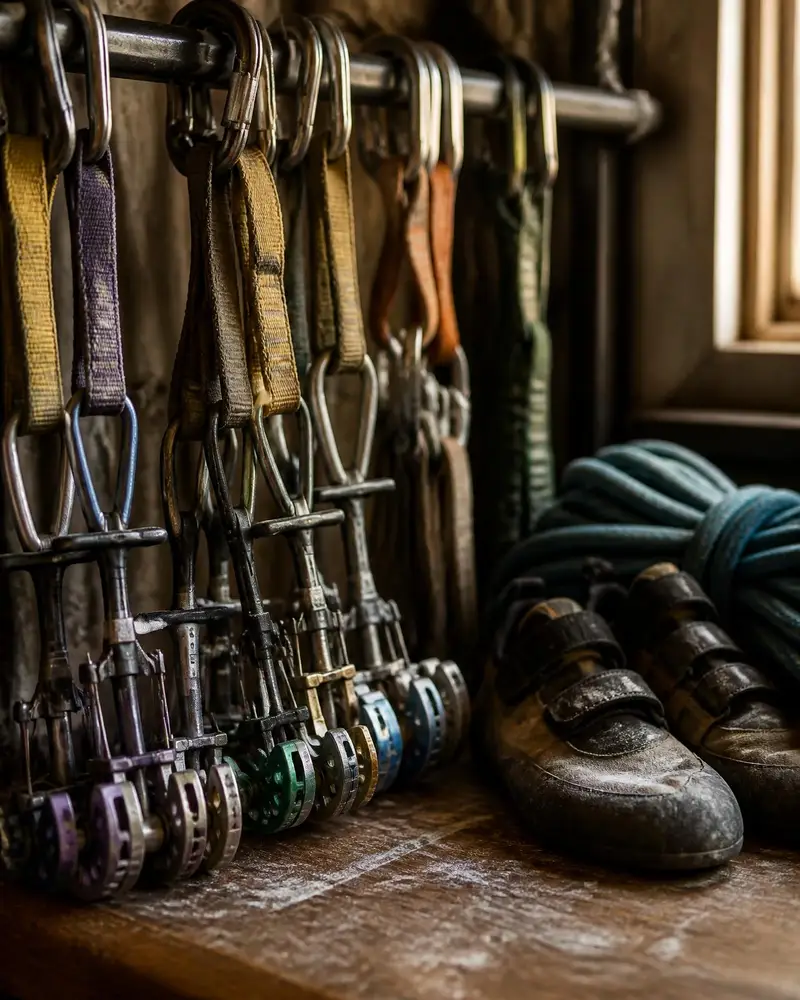
Hardware, ropes, shoes and crash pads, sold to people who will ask what you actually think of the thing they are holding.
Mountaineering and alpine stores
Boots, axes, layering systems and the long conversation before an objective that someone has been planning since February.
Hiking and backpacking shops
Packs fitted properly, sleep systems weighed against each other, and a trip list that gets bought over three separate visits.
Camping retailers
Tents, stoves, fuel, coolers and the Friday-evening customer who leaves in an hour and needs everything to work.
Technical outdoor retailers
Deep specialty inventory rather than broad category coverage, often with a website that reaches far past the local market.
Multi-location specialty retailers
Several stores, one buying team, one ecommerce operation and a finance office that wants the whole picture in one place.
For broader multi-category outdoor retail, apparel, footwear, service departments and large omnichannel operations, our outdoor retailers page covers that wider environment. This page stays with technical mountain retail.
Sound like your business? Tell us how you take payments today and we'll put together a quote built around it.
Expert service
The advice is part of what's being sold.
A commodity retailer competes on price and availability. A technical shop competes on whether the person behind the counter can tell you which of two similar-looking harnesses is right for what you are about to go and do, and is honest enough to say when the cheaper one is fine.
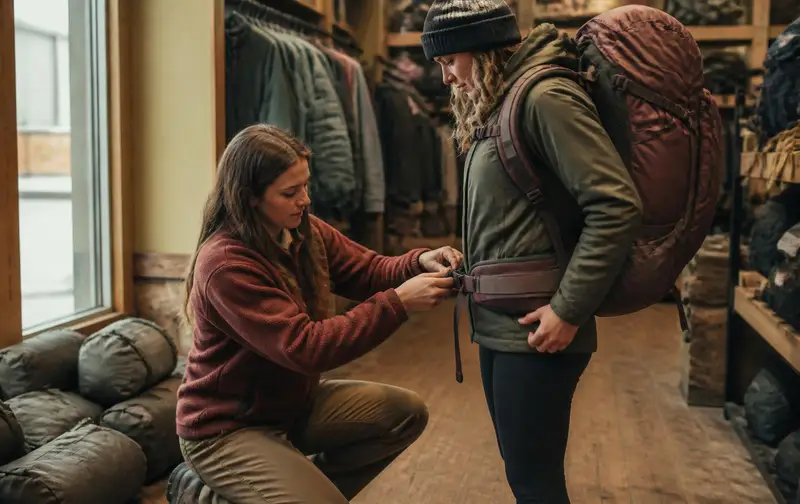
That changes the economics of the floor. Staff spend real time fitting shoes to a foot that is not shaped like the last, sizing a pack to a torso, walking someone through a sleep system for shoulder-season temperatures, or building a first rack out of a budget that has to cover a rope as well. Some of those conversations end in a purchase that day. Some end in a customer who comes back for the next eleven years.
It also means the counter is the last thirty seconds of a much longer interaction. Nobody's opinion of the shop is formed there, but a payment that stalls, declines or has to be split awkwardly can undo half an hour of good work.
Nobody has ever bought their first rope from a product description.
Technical outdoor retail
Transaction range
Four dollars and two thousand, from the same shelf wall.
Chalk, fuel, socks, freeze-dried meals, carabiners, shoes, packs, bags, tents, ropes, crash pads, technical apparel, alpine hardware, and complete setups that combine a dozen of them at once. Very few retail categories cover that spread in one afternoon.
$4
A chalk block, a fuel canister, a freeze-dried dinner. Small, frequent, and the reason people come in on a Thursday.
$180
Climbing shoes fitted over half an hour, or a pair of boots someone will walk five hundred kilometres in.
$700
A pack, a bag and a tent bought together, because the trip is in three weeks and the list has to be finished.
$2,400
A complete climbing or mountaineering setup (rack, rope, harness, boots, hardware) on one card, in one visit.
The large purchases are not unusual customers behaving strangely. They are the most committed customers the shop has: someone outfitting for a first alpine season, replacing a system that has worn out, or buying the whole list at once because the trip is booked and the time for deliberating is over.
Fizel supports higher-ticket payment environments and sets the merchant account up around the shop's actual transaction profile: average ticket, high ticket, volume and channel mix. A complete equipment setup should clear the way an ordinary sale does, because commercially that is exactly what it is.
Inventory and season
The gear arrives months before the money does.
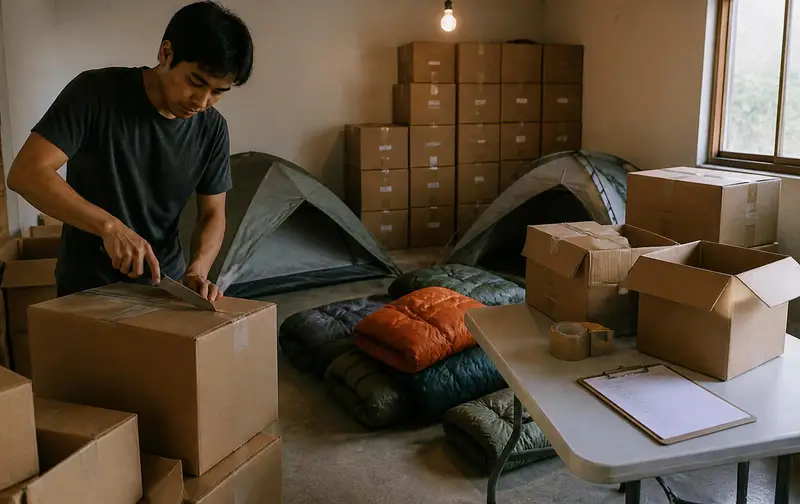
Depending on where the shop sits, the year moves through spring hiking and rock season, summer camping and backpacking, an alpine window, fall climbing, winter mountaineering and a holiday retail push, with shoulder weeks in between that pay for none of it. Each of those needs inventory on the floor before the customers show up.
So the buy is a bet placed early, in volume, against a season that has not happened yet. A strong stretch of weeks has to convert into usable working capital quickly, because the next order is already being written while the current one is still selling. Funding that generally lands the next business day is worth considerably more in that pattern than in a flat retail year.
Built around the season
If the shop closes for the off-season, the merchant account can too.
Fizel is month-to-month with no locked-in contracts, and where a business has a genuine off-season the merchant account can be paused rather than carried through months with no trading. A shop that runs hard from April to October should not be maintaining an active account through a January it never opens in.
It is a small thing on paper and a real one in practice, and it is the kind of arrangement a processor only offers when it understands seasonal businesses well enough to expect them.
What that looks like in practice
- Month-to-month terms, no locked-in contract to work around
- Pause the merchant account through a genuine off-season
- Restart ahead of the season rather than re-applying from scratch
- Funding that generally lands next business day while you're trading
- Pricing quoted on your real calendar, not a flat annual average
Special orders
Half the good sales aren't on the floor.
A boot in a size nobody stocks. A rope length for a specific objective. A pack that only comes in one torso size in that colourway. A customer three hours away who called because you were the only shop that knew the answer. None of these fit a standard tap-and-go checkout.
Deposits hold the order. A payment link collects the balance without the customer driving back in. A virtual terminal handles the phone order taken while the shop is open. Invoicing and scheduled payments cover the larger or longer arrangements. All of it is customer-not-present business, and all of it is ordinary here.
Ecommerce
The website is the same shop, further away.
A well-regarded technical shop sells far past its own valley. People buy online because of what the store knows, not because it was closest: a reputation built over a counter turning into orders from people who will never stand at it.
Ecommerce payments, gateways, hosted payment pages and payment links sit under that, on the same merchant relationship as the terminals on the floor. One picture of the business, whether the week was strong in the store, on the site or both.
Rentals, where you offer them
Some shops rent. Not all of them do.
Where a shop rents crash pads, camping kit, tents, packs or mountaineering equipment, the payment shape changes: an advance payment or deposit to reserve, a hold at pickup, a settlement at return. Fizel supports advance payments, deposits, pre-authorizations, payment links, in-person acceptance and online payments across that sequence. A pre-authorization holds funds on a card, it is not a guarantee of recovery for lost or damaged equipment, and it works best alongside whatever agreement the shop already uses.
If rentals are a substantial part of the business rather than a service alongside retail, our outdoor equipment rentals page goes deeper into that operation, and shops attached to a facility may also find the climbing gyms page relevant.

Every item they are carrying was chosen at a counter by someone who asked the right questions.
This is the part the shop never sees, and the reason the half-hour spent on a hip belt was worth it.
Destination customers
The customer who flew in for the week.
Shops in mountain towns, trailhead communities and climbing destinations serve two populations at once: locals who come in all year, and visitors who arrived specifically to climb, hike, backpack or camp and who buy differently. They buy more at once, they buy urgently, and they often pay with a card issued somewhere else.
Internationally issued cards, multiple currencies and FX/DCC are established Fizel capability, in person and online. A visitor replacing a tent the night before a trip is one of the best customers of the week, nothing about that should feel like an edge case at the terminal.
One shop or eleven
Fizel should be equally credible to a legendary independent and to a regional retailer with multiple stores.
Multi-location environments run consistent acceptance across every store, with consolidated reporting so the office sees one business rather than a stack of unrelated statements, and ecommerce sits inside the same picture rather than beside it.
Outdoor specialization and enterprise payment capability are not a trade-off. A shop opening its third location should not have to change payments companies to do it.
Payment capabilities
Matched to how the shop actually trades.
Not a feature wall, these are the tools the floor, the website, the phone and the back room each need in an ordinary week.
At the counter
- Countertop and wireless terminals
- Tap to Pay on supported devices for fitting-room and floor sales
- POS and integrations across the retail environment
- Higher-ticket acceptance configured to your real transaction profile
Online and off the floor
- Ecommerce, payment gateways and hosted payment pages
- Payment links for special orders, balances and phone customers
- Virtual terminal and invoicing for customer-not-present transactions
- Deposits and scheduled payments across a long order window
Across the business
- Merchant accounts, plus deposits and pre-authorizations for shops that rent
- Internationally issued cards, multiple currencies and FX/DCC
- Multi-location environments with consolidated reporting
- Broad integrations with the systems already running the shop
The full range is on our solutions page.
Existing systems
Your POS and inventory system stay exactly as they are.
By the time a shop talks to us there is a retail POS the staff know cold, an inventory system the buyer lives in, an ecommerce platform, accounting software everything has to reconcile with and sometimes rental software as well. Replacing that stack is rarely the improvement anyone is actually looking for.
Fizel integrates broadly across retail, commerce and business systems. We start with how the shop operates today, keep what works and build the payment environment around it; the specific integration for your stack is confirmed during setup. That software belongs to its vendors: the payments are ours.
And when something needs sorting, you reach people who understand what sits behind the transaction. A shop running a full Saturday, a backlog of online orders, three special orders and a two-thousand-dollar equipment sale should not have to explain what kind of business it is every time it picks up the phone.
From the shop floor
Nine in the morning, first week of June.
The delivery came yesterday and half of it is still in boxes by the back door. Someone is up a ladder moving winter stock to the high shelf. The espresso machine by the register is louder than it should be. A guy comes in holding a twelve-year-old harness he has clearly been talked into replacing, and the person who takes it off him turns it over, looks at the wear on the belay loop, and says nothing for a second, which is its own answer. Somewhere in the back a printer spits out four online orders for places nobody in the shop has been.
How Fizel fits
- Sales floor
- Terminals for boots, packs and a full kit-out on a Friday afternoon.
- Gear rental
- Deposits and pre-authorized holds released when the gear comes back.
- Online orders
- Hosted checkout for ecommerce and click-and-collect on the same account as the shop.
- Courses & clinics
- Payment links and deposits secure avalanche courses, clinics and guided days.
Pricing
Quoted on your transaction profile, not an average.
A single climbing shop with a strong website prices differently from a three-store regional retailer with rentals and a large special-order book. We quote on real volume, average and high ticket, the split between in-store and online, special orders, rentals if you run them, international card share, your season and the systems already in place. Month-to-month, with no locked-in contracts.
Further reading
Payment Processing for Outdoor Retailers: A Complete Guide
How specialty outdoor retailers evaluate a payments partner across the store, the website and everything sold off the floor, plus how seasonal shops think about funding, terms and inventory paid for months ahead of the revenue.
Questions
Specialty outdoor retail payments, answered.
Can Fizel support both our physical store and our ecommerce business?
Yes, and we would rather not treat them as two businesses. Countertop and wireless terminals, Tap to Pay on supported devices and POS integrations cover the floor; ecommerce payments, gateways, hosted payment pages and payment links cover the website and the phone. It runs on one merchant relationship with consolidated reporting, so a strong online week and a strong Saturday read as one business rather than two unrelated statements.
Can Fizel handle higher-ticket equipment purchases?
Yes. A complete climbing, mountaineering or backpacking setup can be many times the value of an average retail sale, and it is entirely legitimate business. Fizel supports higher-ticket environments and configures the merchant account around your actual transaction profile (average ticket, high ticket, monthly volume and channel mix) during setup, rather than leaving you to discover the ceiling on a Saturday afternoon. Underwriting outcomes are always specific to the business.
Can Fizel work with our existing POS, inventory and ecommerce systems?
That is where we start. Most specialty shops already run a retail POS, an inventory system, an ecommerce platform, accounting software and sometimes rental software. Fizel integrates broadly across retail, commerce and business systems. We look at how the shop operates today, keep what works and build the payment environment around it. The specific integration for your stack is confirmed during setup, none of that software is ours; the payments are.
Can we take deposits or payments for special orders and rentals?
Yes. Special orders are ordinary work in technical retail: a boot in a size nobody stocks, a rope for a trip in six weeks, a custom or drop-shipped item. Deposits, payment links, invoicing, a virtual terminal and scheduled payments cover the whole sequence without the customer having to come back in to pay a balance. Shops that rent equipment can also use deposits, pre-authorizations and advance payments: a pre-authorization holds funds, it is not a guarantee of recovery for lost or damaged gear.
Can we accept internationally issued cards?
Yes. Shops in mountain towns and trailhead communities sell to people who flew in for the week, and a visiting customer buying a replacement tent the night before a trip is normal business, not a risk condition. Fizel supports internationally issued cards, multiple currencies and FX/DCC, in person and online in advance.
Can seasonal outdoor shops pause their merchant account during the off-season?
Yes. Fizel is month-to-month with no locked-in contracts, and where a shop has a genuine off-season the merchant account can be paused rather than carried year-round. Tell us the shape of your calendar and we will set the account up around it. During the season, funding generally lands the next business day, which matters when this year's inventory was paid for well before it sold.
Something specific to your shop? Contact us and we will give you a straight answer. More on how we work with specialty retail is on the retail and service industry page.
From a four-dollar carabiner to a complete setup.
Tell us how the shop trades today: the floor, the website, the special orders, rentals if you run them and the shape of your season, and we will build a quote around it.